Blog for the international research project "Our Mythical Childhood… The Reception of Classical Antiquity in Children’s and Young Adults’ Culture in Response to Regional and Global Challenges", financed by the ERC Consolidator Grant led by Prof. Katarzyna Marciniak, Faculty of "Artes Liberales" of the University of Warsaw. Team members: Prof. Susan Deacy and Steve K. Simons, University of Roehampton; Prof. Elizabeth Hale and Dr Miriam Riverlea, University of New England; Prof. Lisa Maurice and Dr Ayelet Peer, Bar-Ilan University; Prof. Daniel A. Nkemleke, Dr Divine Che Neba and Dr Eleanor A. Dasi, University of Yaoundé I; Dr Elżbieta Olechowska, Dr Hanna Paulouskaya, Dr Sonya Nevin, Dott. Edoardo Pecchini, Marta Pszczolińska, Angelina Gerus and the Project Officers: Magdalena Andersen, Maria Makarewicz, and Olga Strycharczyk from the Faculty of "Artes Liberales" UW.
“Big Picture Book of General Knowledge” [“Wielka księga wiedzy. Cały ten świat”] is a children’s encyclopedia written by James Maclaine and illustrated by Annie Carbo. In Poland the book was published by Wydawnictwo Zielona Sowa in 2018.
The book is rich in interesting facts about the world, nature, history, sport, technology, art, etc. It is divided in different sections (see below):
This encyclopedia can be very attractive for children who can already read, as well as for toddlers. Inside, the young recipients can find many funny stories, unobvious information, and creative illustrations.
In a few chapters of the book we can also find some references to Classical Antiquity. For example, on the main cover we see the Roman Emperor Claudius:
The cover of “Big Picture Book of General Knowledge” [source]
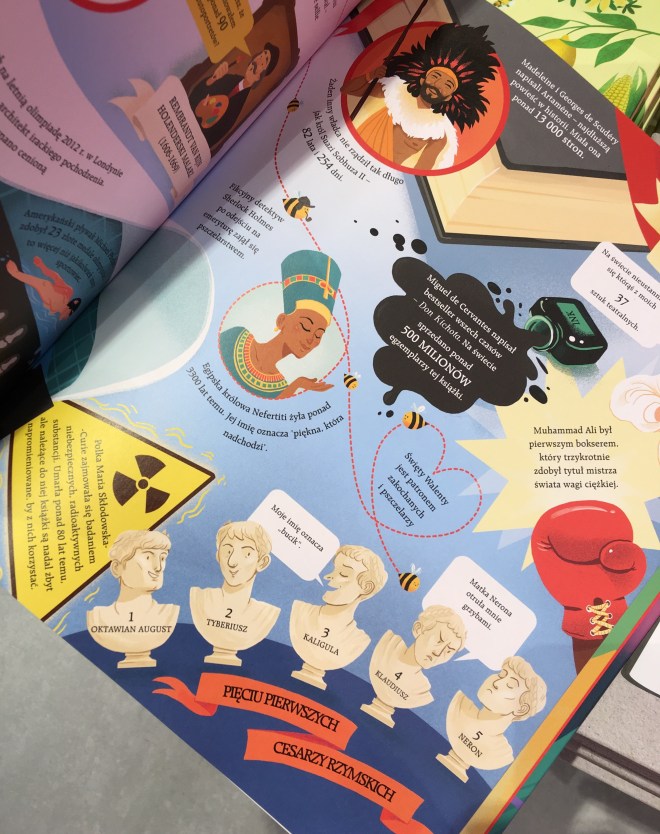
Inside the section “Who’s who?” children can get to know the first five Roman Emperors (and the meaning of Caligula’s name):
“Who’s who?” chapter fragment from the Polish edition of the book [picture taken by the author of the post]
There is also a chapter that focuses on the “Myths and Monsters”, where the young readers can get to know the Trojan horse:
“Myths and Monsters” chapter fragment from the original edition of the book [source] “Myths and Monsters” chapter fragment from the Polish edition of the book [picture taken by the author of the post]Found by Dorota Bazylczyk
On October 25, 2018 I had an opportunity to participate in a workshop for school teachers and to attend an open lecture about mythology for the 6th grade General Mariusz Zaruski 231st Primary School in Warsaw. The workshop was organized by two teachers – Anna Czernik (the 231st Primary School) and Agnieszka Czernik (the 387th Primary School). As I am not a school teacher, it was for me a great honour and pleasure to be invited to the workshop – all thanks to “Our Mythical Childhood” project!
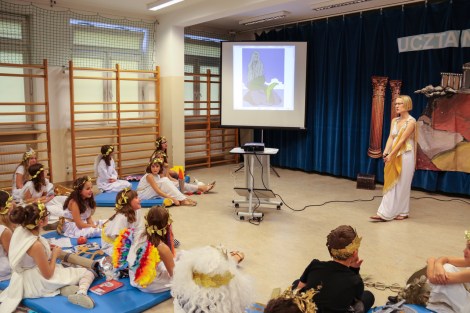
I was most impressed by the lecture prepared by Anna Czernik. It was an example of a class given every year after finishing a course on mythology. For two hours the students – all extremely brave, active, and involved! – became Greek goddesses and gods. Each of them had a short presentation about the main mythical stories and features of gods, as well as their attributes.
Some students were more courageous than others, but all had very interesting presentations and divine appearances. They made their costumes themselves and prepared their own roles – it was their homework to find out about their particular deities and tell everybody what they learned. Some of them did it in verse, some were very theatrical, and all identified themselves with their gods. The students have transformed into gods to such an extent that during the following competition, solving riddles, they confused Irenka, Maciej, and Marysia, etc., with Demeter, Asclepius, and Athena.
And there were plenty of competitions, and questions, and riddles. The students were skilled, knowledgeable, and enthusiastic. Some had greater knowledge than others, some were quicker giving answers, some were as serious as gods should be, but it seemed that all of them liked the make-belief world they were in and the gods they impersonated.
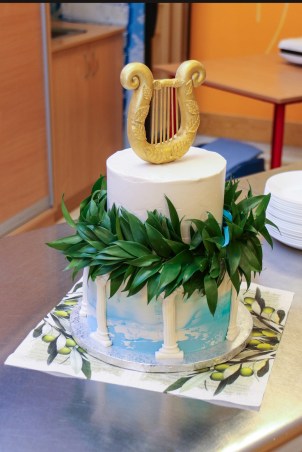
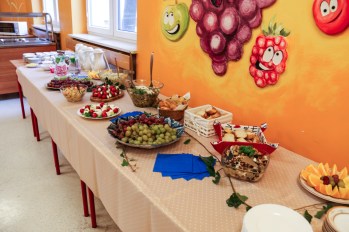
And afterwards, there was a feast on Olympus for gods and goddesses:
After the class Anna Czernik said that these classes look different every year, because students are different, as are their interests and attitudes, but each time all of them are usually very involved and manage to create wonderful and great learning opportunity.
And of course, such events require a significant amount of work, but maybe this is why students are so committed and engaged.
Thank you, Anna and Agnieszka, for doing it for your students and for sharing it with us!
Post by Hanna Paulouskaya, Postdoctoral Researcher in the “Our Mythical Childhood” Project
Pictures – courtesy of the School. We wish to thank also the UW Office of Research Administration for the contact with this School.
Every Wednesday, a Seminar within the Our Mythical Childhood project takes place at the Faculty of “Artes Liberales”, University of Warsaw. The Seminar on December 12, 2018 was a special one, for it was joined by our colleagues from the Cluster The Past for the Present – International Research and Educational Programme, created by the Faculty of “Artes Liberales” UW, Dipartimento di Storia Culture Civiltà and Dipartimento di Filologia Classica e Italianistica of the Università di Bologna, and Fakultät für Sprach- und Literaturwissenschaften of the Ludwig-Maximilians-Universität München, in May 2017.
The Seminar began with a presentation of the invited guests and regular participants – the students of the Faculty’s curricula: Cultural Studies – Mediterranean Civilization, Artes Liberales, and PhD programmes. The University of Bologna was represented by Prof. Giovanna Alvoni, the University of Munich – by Prof. Markus Janka and his assistant Raimund Fichtel, the University of Vienna – by Dr. Sonja Schreiner, and, last but not least, there were also two members of the OMC team from the University of Roehampton: Dr. Sonya Nevin and Steve K. Simons, and Ulrich Rausch – a German magician and author of educational spectacles. Prof. Katarzyna Marciniak started with the introduction of the Seminar’s main topic: Caesar and particularly the biography of Caesar in the context of the reception theme in the cultural texts for young audiences.
At the Seminar, phot. K. Marciniak
The main presentation was given by Dr. Sonja Schreiner who showed to the participants a sample of relevant illustrated books: among the images there were some illustrations of Caesar painting graffiti, Caesar playing soccer, and even Caesar ordering hamburger in Latin.
Dr. Sonja Schreiner at her presentation, phot. K. Marciniak
Dr. Schreiner presented also some books about slavery in ancient times. The participants discussed the presence and the importance of this motif in the reception aimed at youth.
A slide from the presentation by Dr. Sonja Scheiner, phot. K. Marciniak
Furthermore, Dr. Schreiner discussed also the following books: Frank Schwieger’s Ich, Caesar, und die Bande vom Kapitol, Heinz Parigger’s Caesar und die Fäden der Macht, Carl Lindber’s Caesar: Ein Leben für Roms Macht und Glanz. The presentation by Dr. Schreiner is available here.
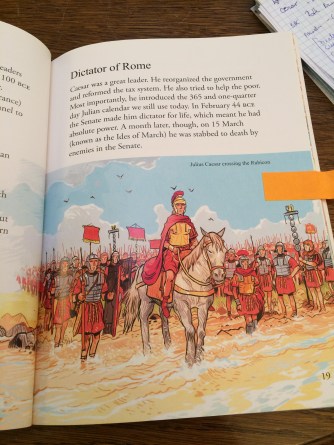
Next Dr. Sonya Nevin talked about a book from the famous UK series “Ladybird Histories”, with a whole spread dedicated to Caesar, his image also on the book cover:
Romans, book cover, phot. K. MarciniakRomans, fragment, phot. K. Marciniak
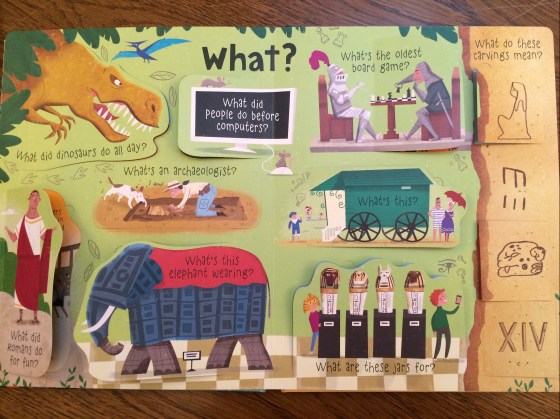
Dr. Nevin presented also the picturebook Questions and Answers about Long Ago:
Questions and Answers about Long Ago, fragment, phot. K. Marciniak
Then, Prof. Markus Janka gave the participants some information about a recent theatrical drama staged at Deutsches Theater Berlin: Rom (nach Coriolan, Julius Cäsar und Antonius und Cleopatra von William Shakespeare), dir. Karin Henkel.
A sample of texts discussed at the Seminar, phot. K. Marciniak
Next, Prof. Marciniak showed some theatrical posters featuring Caesar from the Polish School of Posters. Dr. Hanna Paulouskaya gave a brief talk about illustrations for Belarussian books about Caesar published in 1934, 1943, and 1954. Then, Agnieszka Maciejewska, a PhD student in the Our Mythical Childhood project who is working on Cleopatra in children’s literature, discussed a book by Alain Surget and Fabrice Parme from their series “Children of the Nile”, entitled Caesar, Who’s He? The general discussion that followed was joined by other scholars and students.
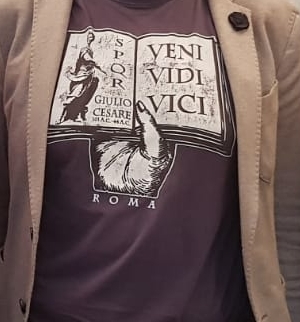
Profs. Katarzyna Marciniak, Markus Janka, Giovanna Alvoni, phot. Raimund FichtelProf. Markus Janka’s Caesarean outfit;-), phot. Raimund Fichtel
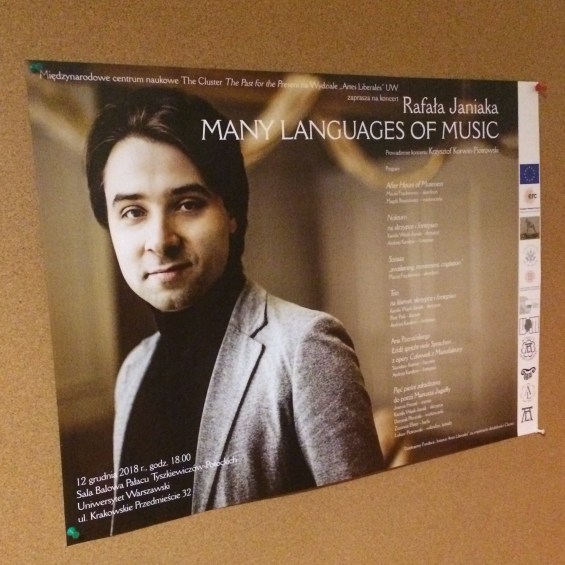
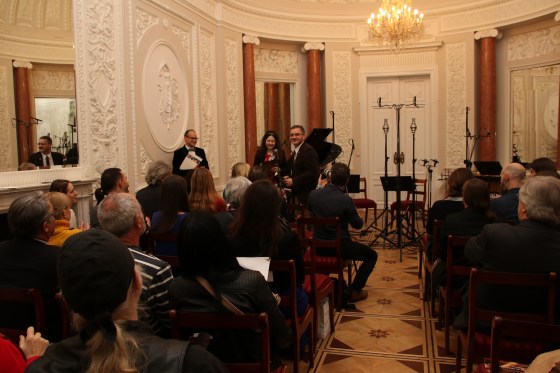
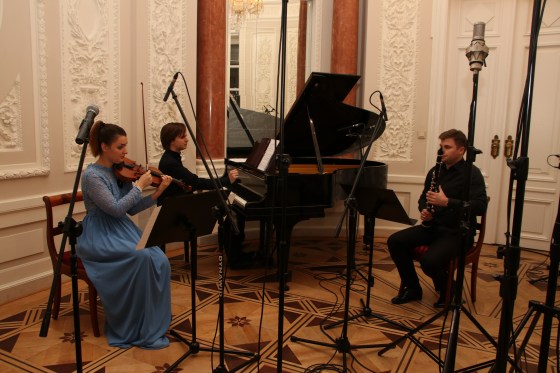
In the evening the Cluster members and invited guests attended the concert Many Languages of Music by Rafał Janiak from the Fryderyk Chopin University of Music:
Poster by Zbigniew Karaszewski, phot. K. Marciniak
The concert was organized by the Fryderyk Chopin University of Music and the Faculty of “Artes Liberales” UW / Cluster The Past for the Present and took place in the Ball Room of the Tyszkiewicz-Potocki Palace UW. The Master of Ceremonies was Krzysztof Korwin-Piotrowski – TV, musical, and film director and a lecturer at our Faculty. Rafał Janiak, a laureate of numerous prizes and grants, is a young composer and conductor. Recently, he won an opera composition competition organized by the Teatr Wielki in Łódź. The Jury chaired by Prof. Krzysztof Penderecki awarded the Grand Prix in a unanimous vote. In addition, the composer won the audience award. The premiere of the opera Człowiek z Manufaktury [The Man from Manufaktura] will take place in 2019.
Gallery from the concert, phot. Jan Krzysztof MiziołekGallery from the concert, phot. Jan Krzysztof MiziołekGallery from the concert, phot. Jan Krzysztof Miziołek
Post prepared by Katarzyna Marciniak & Elżbieta Olechowska with the use of the report about the Seminar written by Tomasz Kunicki-Goldfinger, PhD-student from the Faculty of “Artes Liberales” UW
A short presentation of the workshops The Present Meets the Past within the Cluster and the Our Mythical Childhood project in May 2018 in Warsaw: https://www.youtube.com/watch?v=2RizUWYMW0Q
A reportage about the Cluster:
We wish to acknowledge the support received from the “Artes Liberales Institute” Foundation in the organization of the Cluster’s endeavours.
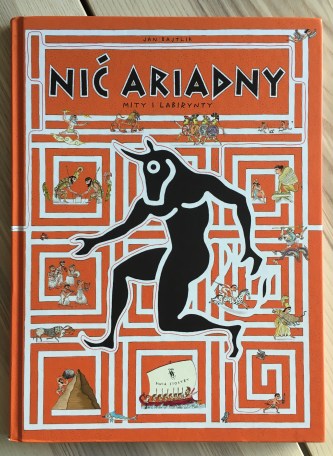
“Nić Ariadny: Mity i labirynty” (“Ariadne’s Thread: Myths and Labyrinths”) by Jan Bajtlikis a Polish children’s book published by Wydawnictwo Dwie Siostry (specialising in artistic projects) in October 2018.
“Nić Ariadny” is a big format book, similar to the “Mapy” (“Maps”, 2012) by Aleksandra and Daniel Mizielińscy or “Pszczoły” (“The Book of Bees”, 2014) and “Drzewa” (“The Book of Trees”, 2018) by Piotr Socha and Wojciech Grajkowski (also published by Wydawnictwo Dwie Siostry). In “Nić Ariadny” two great ideas meet: one is a presentation of the classical world, both mythical and historical, in an attractive graphic form. The other is a popular form of activity (not only in children’s books) in which one must draw the way through a maze.
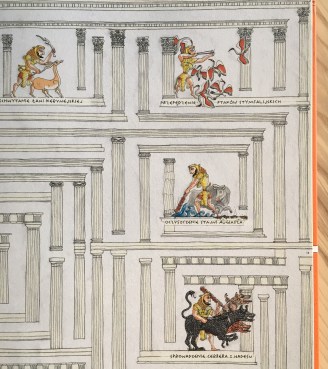
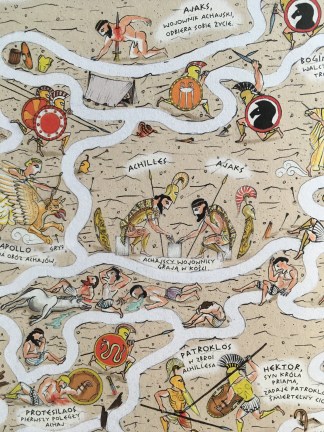
Each two-page spread in the first part of the book is dedicated to another topic from ancient Greek mythology or history: the Twelve Labours of Heracles, the Labyrinth of Crete, the Palace of Knossos, ancient beasts, Argonauts’ quest for the Golden Fleece, Trojan War, Odysseus’ journeys, the Acropolis of Athens, and Greek theatre, among others. The latter part includes some brief encyclopaedia-like entries explaining the most important characters, terms, and events.
World according to the Greeks (fragment), illustration by Jan Bajtlik.The Twelve Labours of Heracles (fragment), illustration by Jan Bajtlik.Trojan War, part II: Siege spread (fragment), illustration by Jan Bajtlik.Houses of ancient Greeks (fragment), illustration by Jan Bajtlik.
Also Wydawnictwo Dwie Siostry published – as a gadget – a newspaper-like promotional publication, entitled “Greckie Fakty” (“Greek Facts”). The name and graphic form is a clear reference to the Polish tabloid “Fakt” (similar to British “The Sun” and German “Bild”); the “articles” are short versions of “Nić Ariadny” – they invite us in an attractive and funny way to read the book: the headlines of the “news” are, for example, the following: “Is Tartarus Appropriate for Children? Uranus Doesn’t Comment”; “No Progress in Sisyphus’ Work”; “Thrilling News from Crete: He Entered the Labyrinth – and Survived!”.
“Greckie Fakty” (“Greek Facts”), designed by Tomasz Domański from Wydawnictwo Dwie Siostry (based on “Nić Ariadny”)
“Nić Ariadny” is not only an activity-book, but it also contains many facts about ancient Greece usually absent in children’s literature, such as information about the dance (γερανός, geranos) linked with Theseus or the image of Medusa as a flying creature with monstrous face (as she was presented on some Greek vases). It is worth mentioning that Jan Bajtlik used the help of a historian of Antiquity Prof. Marek Węcowski from the Department of Ancient History of the Institute of History, University of Warsaw.
Prepared by Krzysztof Rybak
See more:
More details on the “Nić Ariadny” on the official official website of Dwie Siostry publishing house – link
Sometimes while looking for the examples of reception in children’s culture I tend to look too far away from the pretty obvious cases. My latest discovery was made by accident when I was googling ‘Cerberus Cartoon’. This discovery have opened the door not necessarily to Hades, but certainly to the world full of Antiquity: American cartoon series brimming with ancient concepts, heroes, beasts… In the next few posts I would like to present some of those examples, in my opinion worth recommendation: firstly, for wonderful examples of reception – as such, and as a lot of fun, according to the intention of the creators.
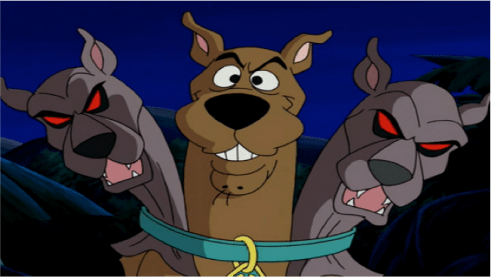
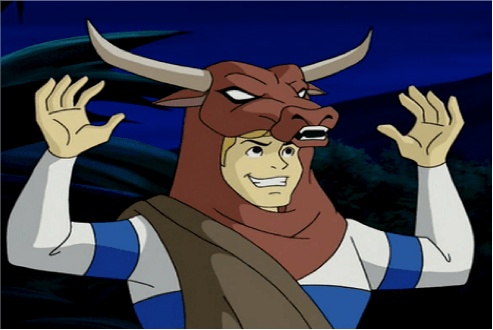
First example would be It’s All Greek to Scooby directed by Russell Calabrese, from the TV-series What’s New Scooby-Doo? (2002–2006). In this episode Mystery Inc. goes to Greece just for vacation, but unfortunately – the work follows them. As usual they have to solve a case of a disguised villain. This time it is the mythical centaur harassing an archaeologist who looks for the lost city of Atlantis. To defeat the monster, the members of Mystery Inc. dress up as mythical beasts: Minotaur, Medusa, hydra, Cyclops and – Cerberus. The concept of defeating a mythical monster, in a way – by its own weapon (fighting “monster with monster”), reminds me of the strategy of facing your own fears by making them less scary, making fun of them, deconstructing them, and uncovering their true nature. At the end, Cerberus is just a human in a costume. But it does not mean that Atlantis is not real.
Figure 1 – Scooby-Doo as Cerberus [source] Figure 2 – Fred as Minotaur [source] Figure 3 – Daphne as Medusa [source]Prepared by Anna Mik
If you walk up to any child or teen anywhere in the United States and ask them to tell you the story of the Odyssey, they will all tell the exact same story. A hero named Odysseus goes on a long sea voyage. Along the way, he encounters monsters, usually a man-eating Cyclops and a group of fishtailed sirens, and he defeats them. Odysseus might also meet a witch who falls in love with him and tries to keep him on her island. In the end, he arrives home and is reunited with his wife.
While this story initially seems like a reasonable version of the Odysseus myth, on closer inspection it is not the story preserved in Homer’s Odyssey. At best, it represents about four books (9–12) out of the twenty-four books of Homer’s epic. The Odysseus in the US story is alone on his voyage and almost never has children or allies waiting for his return. His home only appears as a goal, whereas in Homer’s epic half of the narrative actually takes place on Ithaca. The US version of the Odyssey is not Homer’s Odyssey; it is a transformed version of the classical myth that is still an active part of American oral culture.
The Odyssey: A BabyLit® Monsters Primer is a good example of how the modern Odyssey appears in US children’s media. The narrative is distilled into a series of encounters with monsters and magical women. The person reading the book must supply the narrative around the encounters for the listener [source of the image – private archive].
I am the primary investigator on a research study called the Living Odyssey Project: Greek Myth in 21st Century Folklore that uses anthropological data gathering techniques to quantify and describe modern transformed myths. I have chosen to use Odysseus’ nostos as a case study because its features are easily identifiable. In the project’s first stage, I am collecting quantitative data through survey to describe the myth’s modern North American form. The project surveys children between the ages of ten and thirteen. American children of this age have a solid grounding in their own oral culture, but have usually not read or studied Homer’s Odyssey. Therefore, any aspects of the myth that they recognize will be familiar from their own local tradition, not the ancient text.
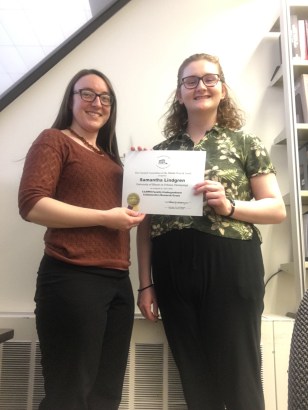
The survey was made possible thanks to a grant from the Classical Association of the Middle West and South awarded jointly to me and one of my research team leaders, Samantha Lindgren [source of the image – private archive].
Participating children are asked to identify any familiar creatures, characters, and gods from the Odysseus story as it can be constructed from ancient sources. The survey was developed in conjunction with two cultural anthropologists, Carolyn Behrman and Isa Rodriguez-Soto of University of Akron, and beta-tested with a group of 42 children between the ages of ten and eleven. In fall of 2017, a team of 17 undergraduates from the University of Illinois, Urbana Champaign, and I conducted a wide study of the school population in Champaign and Urbana, IL.
The San Firenzo-Rodriguez family has been very supportive of the project. The eldest was our most helpful beta reader [source of the image – private archive].
So far, the results of the survey match my hypothesis. Around 20% of the children surveyed recognize most of the creatures mentioned in Odyssey books 9–12, with the exception of the Laestrygonians, Scylla, and Charybidis. That number increases to 48% for the sirens, and 75% for the Cyclops. However, only 29% of children surveyed recognized the name Polyphemus. It is possible that participants may recognize descriptions or images of Scylla and Charybidis. The two appear in children’s television shows produced in North America, but are not named.
Nearly all of the gods who appear in Homer’s epic were familiar to participants, with the exception of Eos and the sea goddess Leucothea. However, since the gods are a major part of many myths, participants might know them from multiple contexts, not just the Odysseus myth. At least 20% of survey participants were familiar with the minor goddesses/witches Calypso and Circe, as well as the lotus-eaters. The only other characters to achieve that level of recognition were Odysseus himself, Penelope, and Helen. A cursory survey of American children’s media suggests that Helen is present in today’s oral and popular culture as an extension of her long-time role as the personification of beauty, but the matter needs further study.
At this stage of the survey, it is impossible to draw many firm conclusions about the transmission of the myth, but some correlations do emerge. All of the children who knew the name Polyphemus had also read the Percy Jackson series by Rick Riordan, or seen the movie versions of the first two books. The type of school that the children attended did not affect their level of familiarity with the myth, although their age did. Older children showed a greater familiarity with all aspects of the myth related to the wanderings of Odysseus, although they did not show any greater knowledge of the other portions of the myth present in Homer’s epic.
Finally, I would like to conclude with a request for help. I have complied a list of English juvenile and young adult novels that are inspired by Greek mythology that I am offering to participants as an incentive to take the survey. I would be happy to provide the list to anyone who is interested and would be grateful if you would email me any titles that I may have omitted. My email address is ksburns@uic.edu.
Prepared by Krishni Burns (University of Illinois Chicago)
In the previous part, I outlined that a pre-occupation with rigid stylistic categories might hinder creative thinking. In this part, I explore the possibility of a bold and beautiful combination of images and stories from different timeframes, cultures and geographical locations.
A striking and recurrent theme of Classical Mythology is the propensity of mythical actors to transform themselves. The quintessential god of transformations is, of course, Dionysos, the god whose many roles include that of god of wine. In one peculiar incident known from ancient texts and art, Dionysos sails away while pirates turn into dolphins and the mast of his ship into a vine. Transformations are characterised by swift and continuous action. Indeed, in the book Dionysos, the Merry God[1] (my translation) by Filippos Mandilaras (author) and Natalia Kapatsoulia (illustrator) from 2013, Dionysos’ life is characterised by incessant movement, including travel to and from distant lands.
Recent museum exhibitions about polychromy – the colours, patterns and metal attachments that adorned the sculptures in Antiquity – have helped us to revise the story of Classical art and to move away from Winckelmann’s ideas about Classical beauty, especially the simplicity and purity associated with white marble.[2] For children and adult learners polychromy offers multiple opportunities for creative thinking. Polychromous statues are aligned more with the art and consumer goods of western societies, as is also implied in the recent thought-provoking exhibition The Classical Now.[3] Reconstructions of painted statues, with their kitsch and quasi-plastic looks, negate idealisation and hierarchies of value. Learners are also prompted to think about different colour combinations in educational museum activities.[4]
More remarkably perhaps, when statues’ colour palettes and patterns mismatch in a bold way, polychromy creates a new aesthetic principle. The idea of a mismatch or blend, moreover, may allow for the marrying of the styles of the Classical world with incongruent elements from cultural assemblages in far-away places. The lithographs and etchings of New Zealand artist Marian Maguire, for example, exhibit a fine blending of ancient Greek culture with that of colonial New Zealand.[5] Earlier this summer Maguire exhibited works that show Greek goddesses.[6] The style of these works is reminiscent of Greek vase painting. Their meaning, however, reflects (post)modern concerns about the established status quo. Athena, for example, looks as if she is fed up with her militaristic role that supports imperialism. She wants to remove her armour and walk away from her role:[7]
Figure 10: Athena tires of her shield and spear by Marian Maguire. Lithograph on Velin Arches 250g paper from the 2017 series Goddesses. Courtesy of Marian Maguire
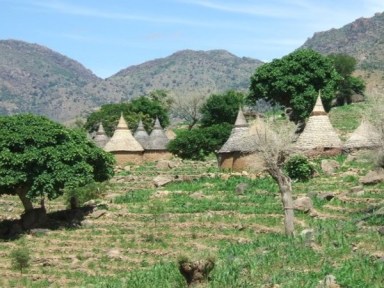
It was during this year’s OMC workshops in Warsaw that I was prompted further to combine images of Classical artefacts with contemporary material culture from outside the Classical world. I was inspired by Divine Che Neba’s presentation about people-object interactions in today’s Cameroon. Professor Che Neba’s slides included photographs of: traditional mud huts with cone-shaped thatched roofs (Fig. 11); and wooden and beaded souvenirs, most of them bearing eye-catching colours, such as bright yellow, red orange and deep blue (Fig. 12). The strong colour contrasts reminded me of polychromy in Greek sculpture:
Figure 11: Traditional Cameroonian houses. Photograph: Divine Che NebaFigure 12: Traditional Cameroonian artefacts. Photograph: Divine Che Neba
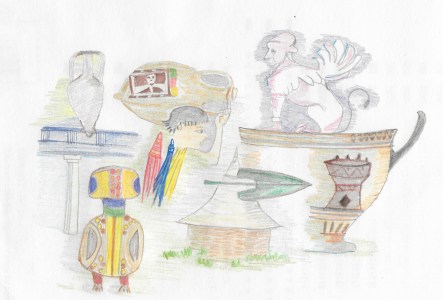
I produced a sketch drawing that blended (mis)matching artefacts from Greek and Cameroonian cultures:
Figure 13: Graeco-Cameroonian Art. Sketch drawing by Katerina Volioti
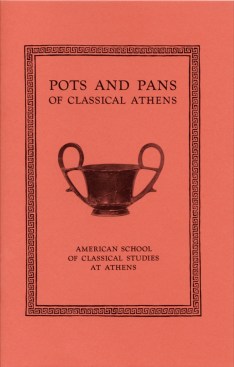
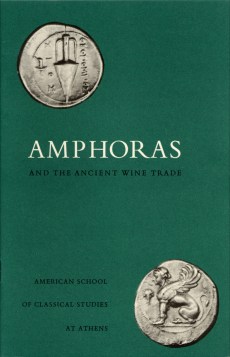
I copied images from Professor Che Neba’s slides and from illustrations of Greek archaeological finds in two guide books for adult learners by the American School of Classical Studies at Athens: Pots and Pans of Classical Athens by Brian A. Sparkes and Lucy Talcott (1959, Fig. 14);[8] and Amphoras and the Ancient Wine Trade by Virginia R. Grace (1979, Fig. 15):[9]
Figure 14: Pots and Pans of Classical Athens, American School of Classical Studies, AthensFigure 15: Amphoras and the Ancient Wine Trade, American School of Classical Studies, Athens
My drawing presents a collage of disparate entities in terms of style, size, materials, and, of course, provenances. To some extent, Cameroonian and Greek material culture seem to be blending into one another, potentially calling for a combination of their respective mythologies. Such a combination is possible as an intellectual exercise because of mythical actors’ transformative powers and capacity to travel long distances. If children find ancient (and modern) myths fascinating, it is precisely because mythical characters can find a way to use Chian transport amphorae in a Cameroonian mud hut.
Epilogue
I close this reflective blog posting with a call for illustrated children’s books to embrace also the creative blending of material cultures and of mythical stories from different parts of the world. The art history and archaeology of museum exhibits could be a starting point for producing new (artistic) designs that, like mythical actors, step out of time and space and challenge the very essence of stylistic unity. If we teach the Classical world in a way that encourages a sense of innovation, then we may shape the founders of tomorrow’s start-ups with products that will change the world. More crucially, children will learn from a young age to think outside the box and embrace the bold and the beautiful in a way that breaks down the boundaries between the present and the past, the real and the imaginary and, surely, Greek and Cameroonian material culture.
Prepared by
Katerina Volioti
Katerina is currently teaching modules on Classical art and archaeology at the University of Roehampton.
Elaborated by Dorota Bazylczyk
Acknowledgements
I am grateful to Susan Deacy,[10] Michael Loy,[11] Katarzyna Marciniak,[12] and Amy C. Smith[13] for reading and commenting on earlier versions of this blog posting. For images, I would like to thank Divine Che Neba, Eirini Dermitzaki, Marian Maguire, Anja Slawisch, Carol Stein, and Peter Stewart. All URLs are correct as at 21 August 2018.
Bibliography:
[1] – https://www.epbooks.gr/product/100537/dionysos,-the-cheerful-god and http://www.omc.obta.al.uw.edu.pl/myth-survey/item/154
The second part of this blog posting consists of two sections. Firstly, I comment on how style works for art historians. Secondly, I consider in what ways a pre-occupation with style is evident in children’s books and how this aligns with art historical approaches.
Art historians and style
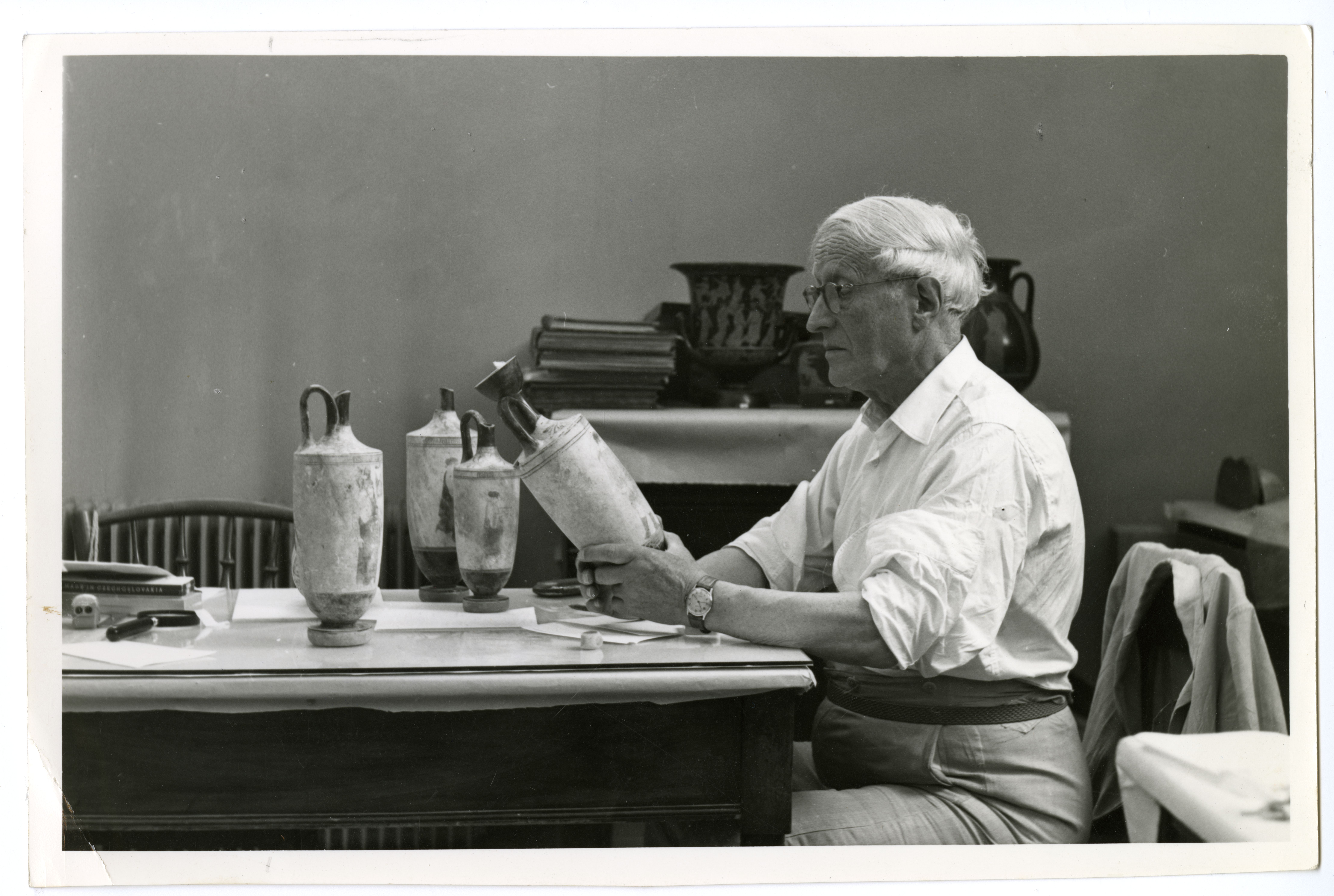
Stylistic analysis is important for art historians and archaeologists. The close and often meticulous observation of an objet d’art enables scholars to discuss distinctive technical and artistic traits, date the work, and contextualise it within the artist’s oeuvre and contemporary society. In effect, stylistic analysis constructs classificatory schemas, ranging from phases in an artist’s career to typological sequences. For Greek vases, John Beazley, the greatest vase connoisseur of the twentieth century, devoted his life to the systematic examination of how different painters rendered idiosyncratically the anatomical and ornamental details of their drawings (1).
Beazley thus attributed vases to different painters and created a sequence of the relationships of painters, both stylistically and chronologically. Beazley built a robust system for ordering thousands of painters and their vases, to which subsequent generations of vase scholars have adhered. Evidently, learning about style and acquiring skills in stylistic analysis is invaluable in specialist scholarship.
When I teach undergraduate modules in Classical Art at Roehampton, my students and I are also faced with learning about style. Even before coming to university, students have an idea about the Classical style as something that describes ancient and modern works, such as Neoclassical buildings that look either Greek or Roman, or both.
Students are right to find the timeframe of the Classical era, from 480 to 323 BCE – that is, from the naval battle of Salamis (480 BCE) to the death of Alexander the Great (323 BCE) – a little too tight in appreciating the Classical style (2). Indeed, much of Classical art, especially sculpture, is studied through its legacy and emulation in later periods. Even Praxiteles’ mid fourth-century BCE Aphrodite of Knidos, the most-discussed sculpture in ancient texts, survives only in Roman copies (3). In the first-year module Introduction to Classical Art (4), therefore, we problematise style and its implications for a quasi-historical approach to ancient art. As we discuss in our seminars, there exist no comprehensive answers in scholarship for why a particular style emerges, persists, and changes. While stylistic analysis appears to be a systematic approach, through the study of style the ancient world does not become more objective and scientific. If anything, an imaginative approach is needed in envisaging how style becomes influential and malleable over time.
Style in children’s books
In the books that I have studied for the OMC project, myths, sites, and museum exhibits are presented chronologically, from earlier to more recent times. In educational activities, children are asked to order mythological and historical figures (e.g., Theseus; Pericles) and material entities (e.g., the Erechtheion; the New Acropolis Museum) chronologically. From early on children are meant to think in terms of grouping like with like. This practice goes back to the eighteenth-century historicizing work of Johann Joachim Winckelmann (the Father of Art History), and in fact even earlier. The strong emphasis on periodization reflects the importance of (ancient) history in formal school curricula, both in Greece and other countries. That is, children are required to learn the names and (approximate) dates of different periods of human activity in the lands and islands of Greece. The list of periods is long and diverse – some periods are named for materials while others for style – and includes the Neolithic, the Bronze and the Dark Ages, the Archaic, Classical, Hellenistic and Roman eras, Late Antiquity, the Byzantine period, the Ottoman and recent past and, of course, modern times. Human activity is understood (to a certain degree) through the rise and fall in artistic output, which is taken to reflect socio-economic prosperity and decline. With an emphasis on artistic achievement, children tend to valorise certain periods over others. Children note, for example, the high artistry of Cycladic and Mycenaean artefacts in the museum guides for these two stylistic groups. These guides include Ariadne Tells Stories from the Cycladic Period in the National Archaeological Museum from 2009 (5) and Argos Tells Stories from the Mycenaean Period in the National Archaeological Museum from 2008 (6) (my translation of titles in Greek). Both books are by Evi Pini and Popi Kirdi (authors) and by Stamatis Bonatsos, G. Ntelagiorgou and Giannis Sarsakis (illustrators). By contrast, the Dark Ages are given short shrift in all the books that I have examined, since this period can boast little in terms of artefactual elaboration.
Although mythology is placed in the deep past before (pre)history began, its relation to this periodization remains opaque. For all books that I have written database entries, there appear to be subtle efforts to associate mythology with historical events and archaeological finds so as to define mythology more concretely in time and space.
The Trojan War. The Beginning of History, from the series I Read Mythology [source]
In The Trojan War. The Beginning of History (7) (my translation, the cover above) by Evi Pini (author) and Eliza Vavouri (illustrator), which was published in 2011, episodes from the epic cycle are recounted in a vivid and page-turning fashion, as if they were events that really happened. Yet there is no explanation of the title, specifically why these episodes marked the beginning of history. Some illustrations imitate Mycenaean frescoes and objects, such as boar’s tusks helmets. For readers who recognise the affinities with Mycenaean artefacts, the illustrations – just like the written text – point to actual people who made and used material culture in the past, and not to fictive mythological characters. Artistic style seems to add a material dimension – possibly credence – to myth. Mycenaean frescoes and helmets, moreover, are treasured museum exhibits, centrepieces of the National Archaeological Museum in Athens (8). With all these pointers to history, archaeology, and museum visitation, the story of the Trojan War blends the past with the present; and the real with the imaginary.
The real: Fortifications of Troy I, ca. 2920 BCE. Photograph by Anja Slawisch taken in 2007
This blending does not allow, however, for the mixing and matching of different styles. Appropriately for the Trojan War the style of the illustrations refers to Mycenaean times, the time when historians and archaeologists believe that this war took place. Consistency in style is needed, not least because the book is an educational resource that follows to some degree school textbooks. When freed from their (art) historical contextualisation, how might mythological stories help with innovative thinking and artistic creations, both of which are favoured by young children?
In the final part of this blog posting, I suggest that a departure from strict stylistic norms can unleash creativity in children and adults alike.
In this blog posting, which consists of three parts, I share some reflections on how my involvement in Our Mythical Childhood (OMC) has made me think in new ways about the art-historical approaches to the study of ancient material culture.
Part 1: Framing Classical Art and Myth
In the first part, I discuss the possibility of blending style with culture, and how this approach can lead to new ways of understanding artistic forms through combining ideas from the past and the present, the real and the imaginary.
My area of expertise is Classical art – that is, Greek and Roman architecture, sculpture, and painting. The style of Classical buildings, statues, ceramics, mosaics, frescoes, and other artefacts is of paramount importance in my research and teaching. An understanding of style allows me to date and contextualise ancient specimens, usually with reference to similar-looking works of art. For Athenian figured pottery, for example, the stylistic parallels of a vase painting help me to identify the painter, to evaluate the quality of draughtsmanship, and to assess how innovative or imitative a painting is. (For my latest work on Athenian pottery see – link.)
But what does style really explain? In this blog, I suggest that the term ‘style’ could be combined with ‘culture’, as part of a conscious effort to blur the boundaries between ancient and modern artistic traditions. The OMC project offers an excellent opportunity to explore this possibility, since it examines the mirror of the Classical heritage in contemporary media for children and young adults, such as books, films, and video games.
Appropriately, the title of this year’s OMC workshops in Warsaw (May 14-20, 2018) was The Present Meets the Past.My blog posting is prompted by my participation in these workshops. I had a fantastic time liaising with international colleagues and students, and I was especially inspired by the Cameroonian delegates’ presentations. The paper I gave in Warsaw was about the materiality and immateriality of Classical myth in Greek museum guides. After the workshops I started thinking about places outside the western world and how my study of Greek children’s books could be enriched.
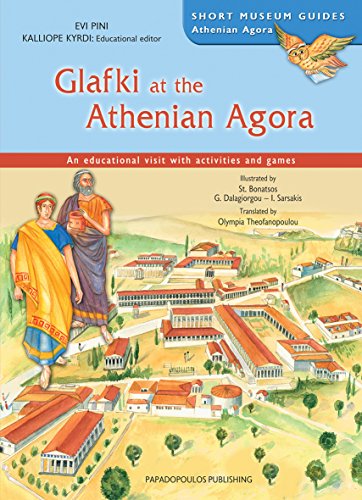
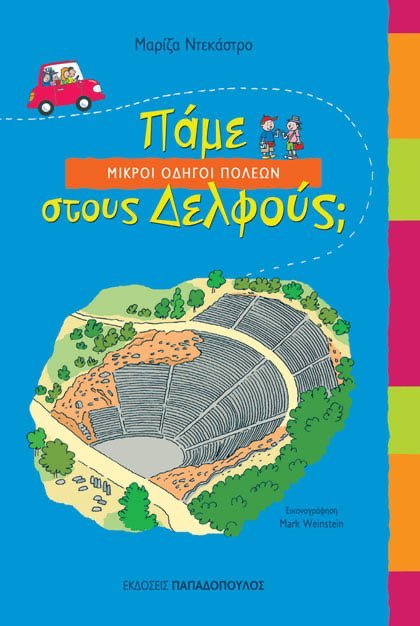
One output of the OMC project is the creation of an open-access database with summaries and analyses of children’s books that (re)present the Classical past. As a contributor to this database, I examine the text and image of illustrated educational books for young children in Greece, aged 4+. I have written twenty entries for two groups of books: 1) introductions to mythology and history; and 2) museum and city guides. My entries include: Aphrodite, Goddess of Beauty(my translation) by Filippos Mandilaras (author) and Natalia Kapatsoulia (illustrator) from 2017; Glafki at the Athenian Agoraby Evi Pini and Popi Kirdi (authors) and Stamatis Bonatsos, G. Ntelagiorgou and Giannis Sarsakis (illustrators) from 2010;and Shall We Go to Delphi? (my translation) by Marisa De Castro (author) and Mark Weinstein (illustrator) from 2009:
All books in my database entries are by Papadopoulos Publishing, a family business in Athens that employs thirty people and targets mostly a Greek-speaking customer base. Although the scale of operations is small, some books have the potential to reach out to an international audience.
Cyclades. Jewels of the Aegean (2017) by Filippos Mandilaras (author) and Natalia Kapatsoulia (illustrator) is one book that stands out in particular. It concerns the peoples and cultures of the Cycladic islands, from prehistoric to modern times. I made extensive reference to this book in my talk at the Early Childhood Research Centre at Roehampton in June 2018. The cover illustration is of children playing with a kitten and with Cycladic figurines, all set in a sun-drenched scenery consisting of white-washed houses and marble Classical ruins.
Here and throughout the book the present meets the past, as timeframes and material cultures mismatch. The figurines date from the fourth and third millennia BCE and are today highly-esteemed objets d’art.
Figure 5: Cycladic figurine attributed to the Bastis Master, 2600-2400 BCE, New York, Metropolitan Museum of Art, 68.148. Public Domain Artworks [source]
Their simplistic design, which recalls abstract modern art, is important in art historians’ evolutionary accounts about representations of the human form over the ages. Yet children do not just marvel at the artistry of the design; the figurines are there for them to play with.
Such books are of interest to me as they evoke my dream of a utopia made up of an interconnected world where cultures unite rather than divide people. As I see it, Classical myth with its worldwide reception has tremendous potential to inspire diverse groups of people to live together, and not just side-by-side. On the one hand, mythology stands for a substantial body of knowledge. Mythology offers a series of complex stories and a long list of actors – gods, demigods, monsters, heroes, and mortals – who lived their extraordinary lives in multiple places, not least because they were almost always on the move. Learning the stories and their characters is challenging for both adults and children, but engaging. On the other hand, knowledge of Greek myths is open source, accessible to all [of relevance here might be Edith Hall’s agenda for Advocating Classics Education (ACE)]
Mythology might become increasingly fascinating in today’s multicultural and highly mobile world. Given its pervasiveness in western literature and popular culture, mythology is inextricably linked with recreating a refracted and fragmentary version of the ancient Classical style. Learning (about) the Classical myths, nonetheless, can result in a shared global culture that blends together incongruent elements from the present and the past, from the real and the imaginary, as well as from different geographical locations. Classical Antiquity might then re-emerge as a deliberately ambiguous source of inspiration (and innovation), potentially affecting the design of new (artistic) products.
I shall elaborate further on some of the putative gains of blending perceptions of style in Part 3 of this blog, but before doing so I shall discuss (in Part 2) aspects of the unity of style evident in Classical art and in children’s books.
Prepared by Katerina Volioti
Elaborated by Dorota Bazylczyk
Katerina is currently teaching modules on Classical art and archaeology at the University of Roehampton. You can read her previous post on Hesiod here.
This post may contain content inappropriate for children. “Gray Matter” may contain content inappropriate for children as well. It targets youth over 12 years of age.
“Gray Matter” is a video game developed by Wizarbox. Its designer is Jane Jensen – the creator of “Gabriel Knight” series, popular in the 1990s. You can watch “Gray Matter” trailer here:
Genre: Point-and-click adventure
Target Group: +12
Platform:Windows, Xbox 360
Release Details:The game was released in Germany and Spain in November 2010, in North America and the rest of Europe in February 2011, and in Australia in March 2011.
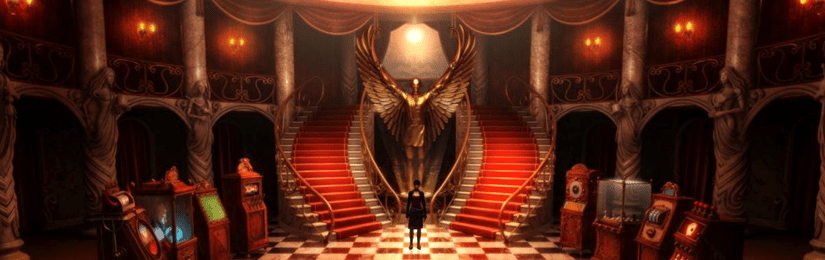
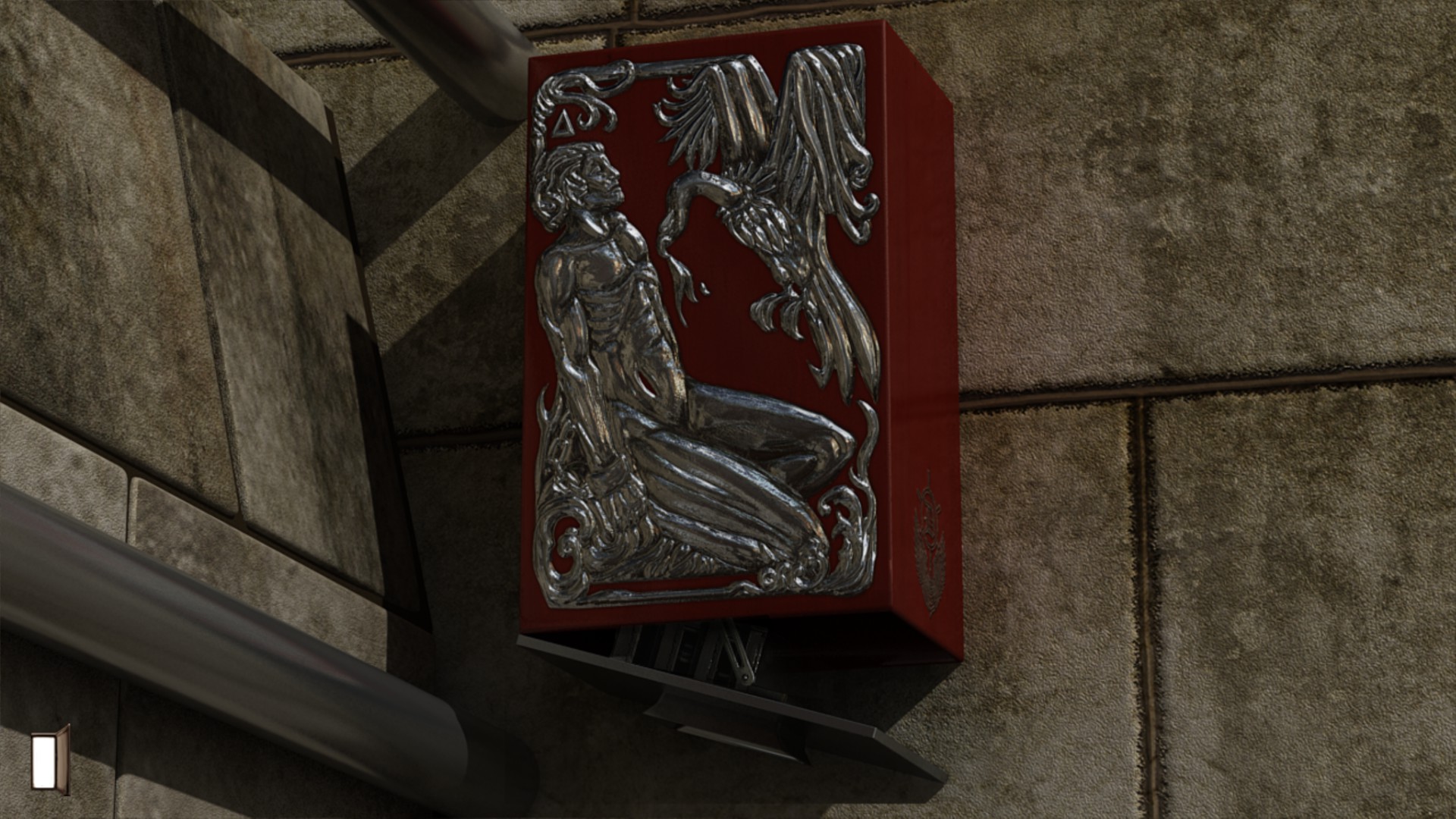
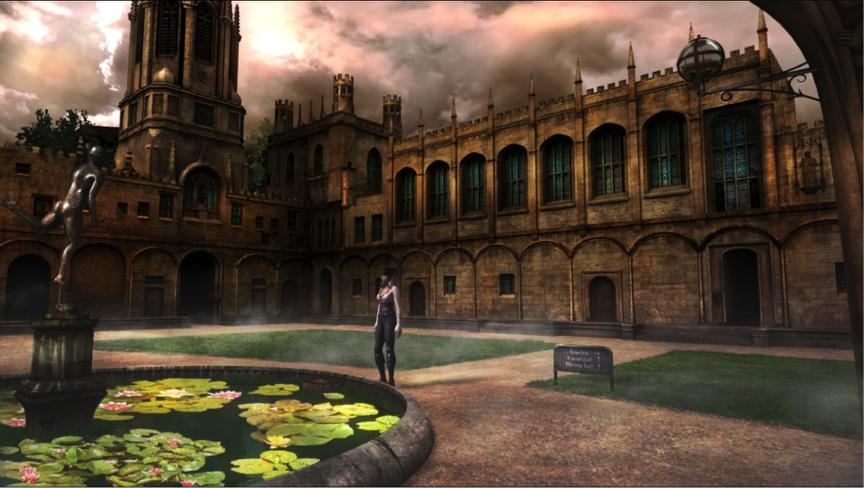
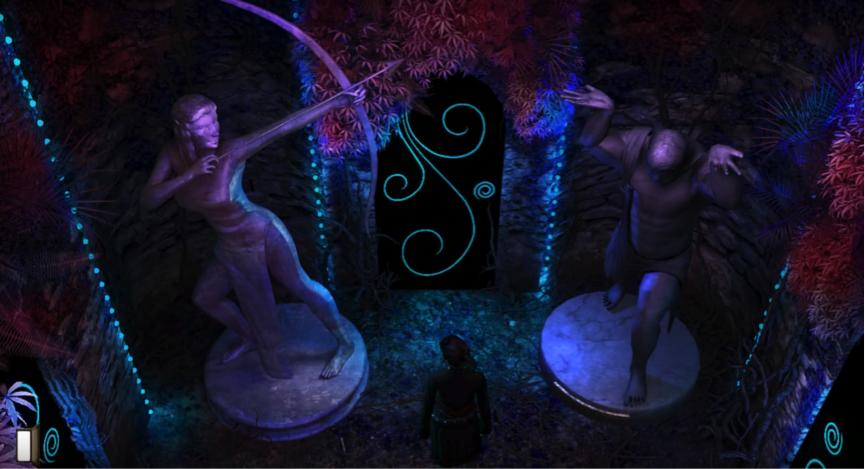
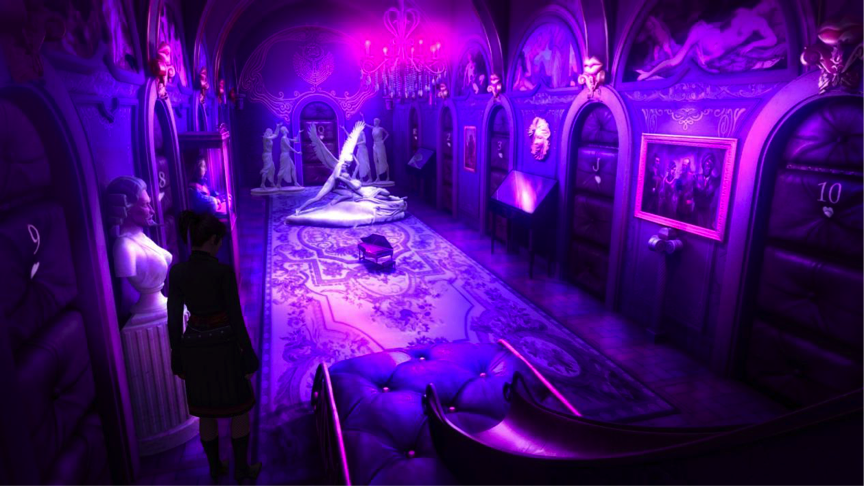
The game’s protagonist is a young American girl Samantha “Sam” Everett who wants to become a magician. We come to know her in the moment she arrives to the mysterious Dread Hill House on her way to London. At first we watch an introduction with foreboding atmosphere, then the game begins: Sam decides to become an assistant to a mysterious neurobiologist – Dr. David Styles. During one of his experiments, she starts to discover his dark secrets, the apparently haunted house, and the links between various unexplained events going on in Oxford. Sam also tries to become a member of the Daedalus Club, by solving their enigmas with references to Greek mythology (see the illustrations below) and Lewis Carroll’s famous novel “Alice’s Adventures in Wonderland”.
Prometheus bound to a rock with an eagle that eats his liver [source]Mercury Fountain in theChrist Church College scenery. The game’s action takes place inOxford so most of the city locations were reproduced [source]Daedalus is the name and the symbol of the magic club [source]Artemis and Atlas [source]Cupid and Psyche statue byAntonio Canova [source]Found by Aleksandra Bondarczuk (student in MA course)

























 Our Mythical Childhood Blog
.png&psig=AOvVaw0WN6oKriZp_jXr0kYS9Ntj&ust=1543050886328839)
