Blog for the international research project "Our Mythical Childhood… The Reception of Classical Antiquity in Children’s and Young Adults’ Culture in Response to Regional and Global Challenges", financed by the ERC Consolidator Grant led by Prof. Katarzyna Marciniak, Faculty of "Artes Liberales" of the University of Warsaw. Team members: Prof. Susan Deacy and Steve K. Simons, University of Roehampton; Prof. Elizabeth Hale and Dr Miriam Riverlea, University of New England; Prof. Lisa Maurice and Dr Ayelet Peer, Bar-Ilan University; Prof. Daniel A. Nkemleke, Dr Divine Che Neba and Dr Eleanor A. Dasi, University of Yaoundé I; Dr Elżbieta Olechowska, Dr Hanna Paulouskaya, Dr Sonya Nevin, Dott. Edoardo Pecchini, Marta Pszczolińska, Angelina Gerus and the Project Officers: Magdalena Andersen, Maria Makarewicz, and Olga Strycharczyk from the Faculty of "Artes Liberales" UW.
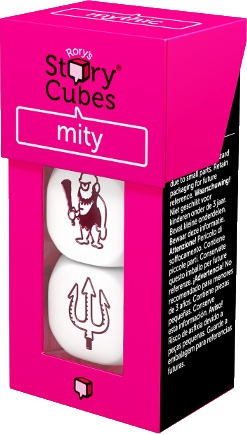
In the new part of “Pirates of the Caribbean”, Jack Sparrow searches for the Poseidon’s Trident, which can help him take control over the sea and defeat Captain Saltazar:
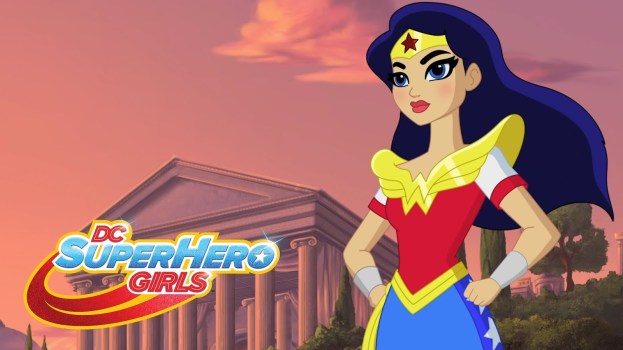
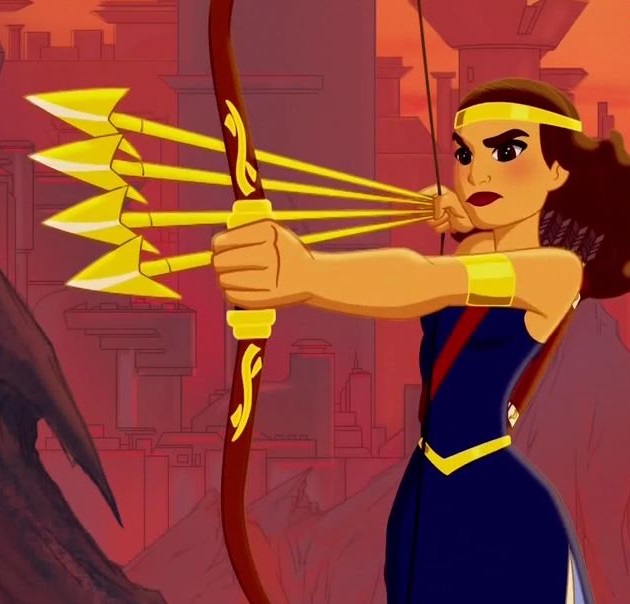
Thepremiereof “Wonder Woman – Rise of the Warrior” (Warner Bros Production) took placerecently. The main character of the movie – Wonder Woman – is Diana, the princess of the Amazons and a daughter of Zeus.
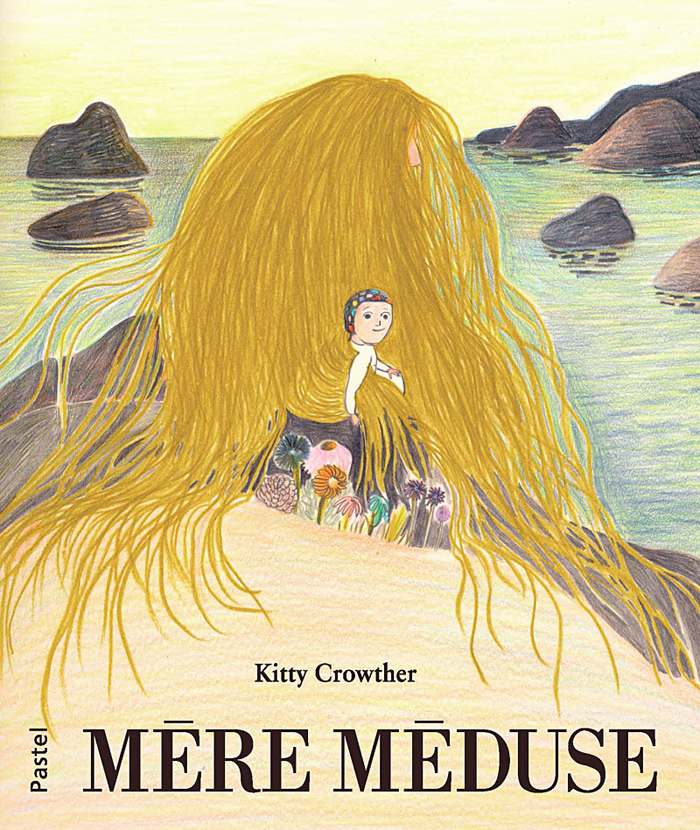
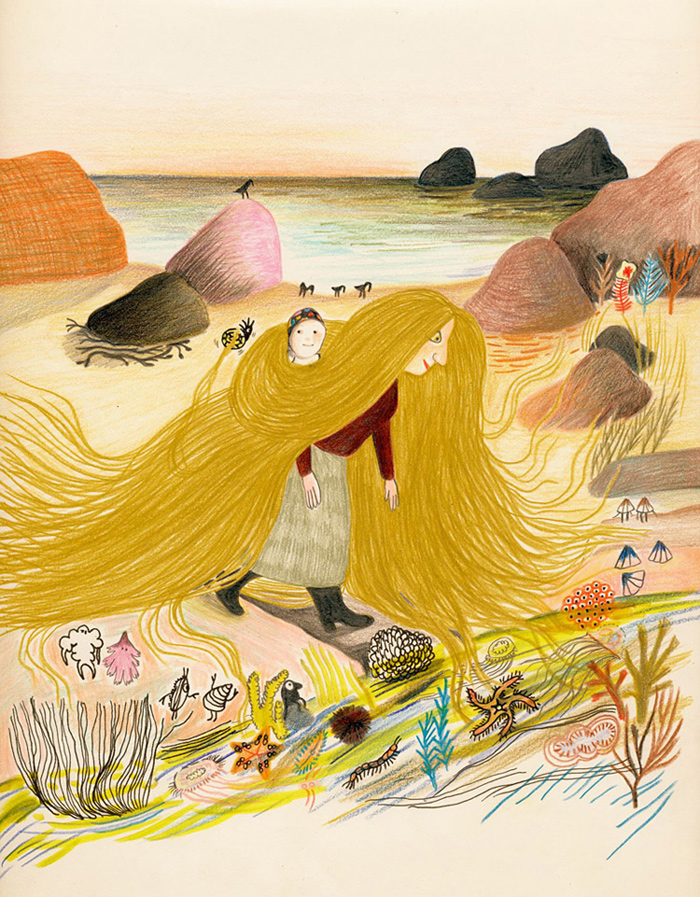
The picture book “Mère Méduse” (“Mother Medusa”) was published for the first time in November 2014. The author of the book – Kitty Crowther (writer and illustrator of children’s books) explains in her blog post (see below) that for her, “Mother Medusa is a descendant of Medusa from Greek mythology.” She emphasizes that the tragic story of the mythological Medusa was a huge inpiration for her and she recalles on the blog the Ovidian version of the myth in which Medusa was raped by Poseidon and punished by Athena.
The main character of the book – Mother Medusa, like the mythological Medusa, is withdrawn from society because of her appearance: “It’s as if she’s locked up in her own hair. Only her daughter can approach her. So much hair she cannot untangle it.”
[Quotes from Kitty Crowther’s blog post about “Mère Méduse”]
“National Geographic 4D Ancient Greece”puzzles belong to the “4D Cityscape” series. Thanks to the game you can come to know better the Ancient Greek culture.
At the first stage of the game you have to do the puzzles that create a historical map of the region. At the second stage, you have to adjust the added figures to the map (the figures represent ancient buildings and the Troian Horse).
Once everything is ready, you can download an interactive puzzle application for your device (for free) which will allow you to interact with the puzzles and learn more about the world of Ancient Greece.
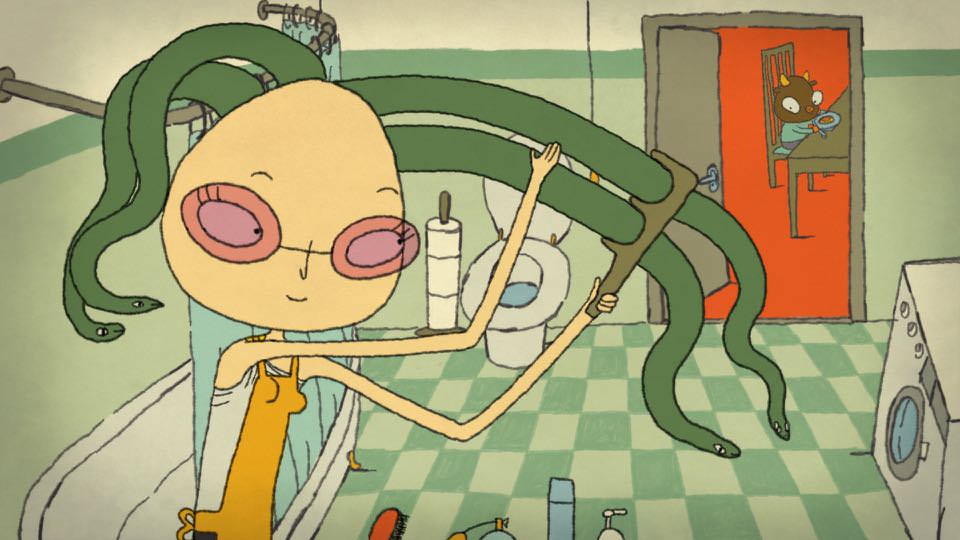
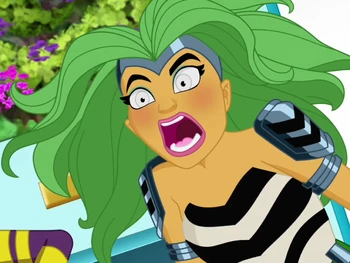
Alexandra Hetmerová – a young Czech director, animator, graphic designer and ilustrator – has created two gorgeous animations inspired by the world of mythology. In her “Mythopolis” (2013, FAMU Production) and the earlier “Swimming Pool” (2010, FAMU Production), you can see how she imagines the life of mythological characters in the modern world, incl. Medusa as the caring mother of her son Mino(taur).
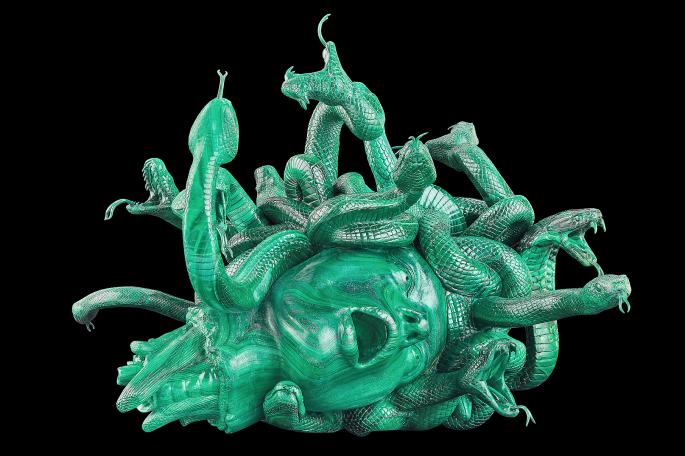
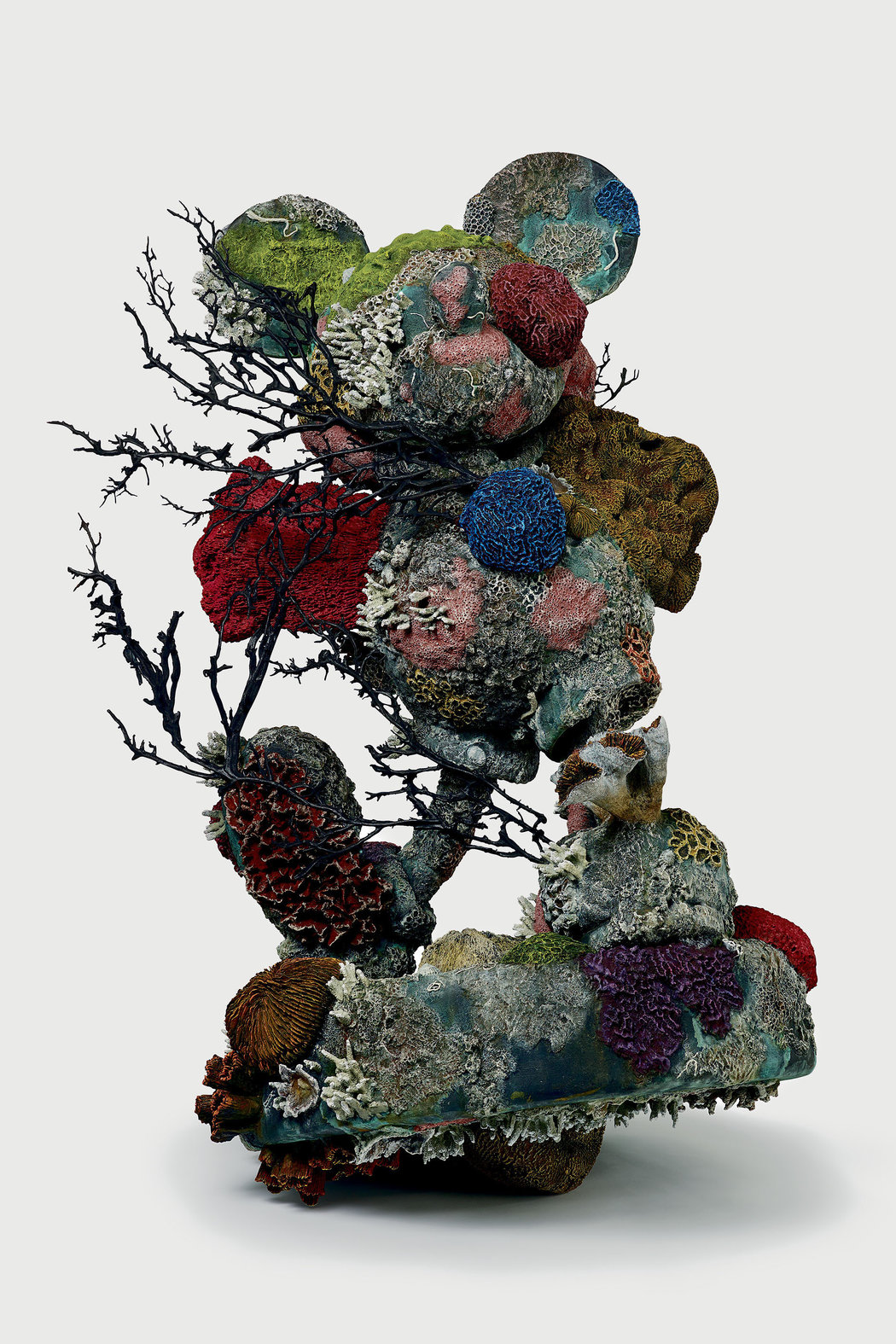
On April 9th, the new exhibition of Damien Hirst was opened in Venice.
His new major project is called “Treasures from the Wreck of the Unbelievable” and it is displayed across 5,000 square metres of museum space (it is located in two famous venues – Palazzo Grassi and Punta della Dogana). The artist has worked on the exhibition in hiding for almost 10 years.
The exhibition tells the story of the ancient wreck of a vast ship, the “Unbelievable” (Apistos in the original Koine Greek), and presents what was discovered of its precious cargo: the impressive collection of Aulus Calidius Amotan – a freed slave better known as Cif Amotan II – which was destined for a temple dedicated to the sun.
A bronze sculpture of Mickey, Damien Hirst and Science Ltd. All rights reserved, Artists Rights Society (ARS), New York, 2017; Photograph by Prudence Cuming Associates.
“Rock the Beat” game (PL: “Palce w pralce”) consists of clapping hands to the rhythm of the famous Queen song “We Will Rock You” and showing different gestures. The gestures are presented on the cards which are distributed to the players at the different stages of the game session.
We can find a variety of gesture cards in many different editions of the game. In the Polish version we encounter a card which presents Diogenes in a barrel – in the English one we find an Egyptian gesture card. Do you know any other examples of Antiquity-related gestures in this game? If so please share it with us!
This is our very first post. We started this blog to gather the traces of Classical Antiquity in the world around us. Greeks and Romans gods, heroes, and creatures from ancient myths, as well as characters from ancient history live in literature, painting, architecture, but also in movies, music, comic books, advertising, and in other spheres of popular culture. Everyday we come across some interesting examples of the reception of the Classics. Let’s observe them together, discovering a new life of the stories from our mythical childhood!