
For Polish click here
Natalia Konieczna – Polish language teacher in the Bolesław I the Brave School Complex No. 10 in Koszalin (“Samochodówka” – for motor vehicles). The following text was first published in Polish on the website of the Education Centre in Koszalin in the Database of Best Practices.
In March 2024, together with class 1TB of the Bolesław I the Brave School Complex No. 10 in Koszalin (“Samochodówka” – for motor vehicles), I took part in the programme The Modern Argonauts: A Multicultural Educational Programme Preparing Young People for Contemporary Challenges through an Innovative Use of Classical Mythology. Organised by the Faculty of “Artes Liberales” at the University of Warsaw, the project is addressed to high schools from around the world, therefore our school is taking part along with schools from Italy, Germany, USA, New Zealand, Ukraine, Austria, Great Britain, and Cameroon. The aim of the project is to show to the young adults that Greek and Roman mythology, as part of our cultural heritage, can help coping with challenges of the modern world as varied as, for instance, the use of electronic media or marine pollution. The students had the opportunity to discover the presence of timeless mythological motifs in our everyday life.
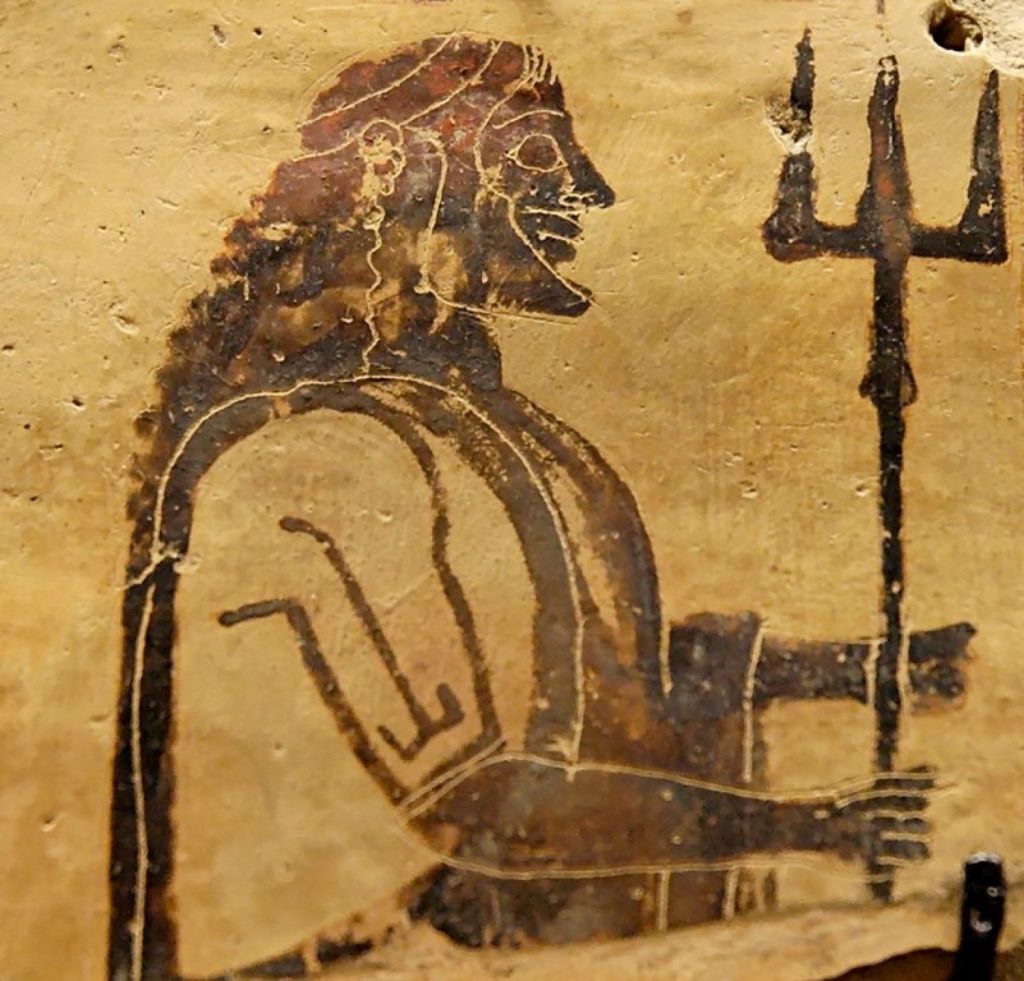
The project was realized as a lesson based on materials received form the Faculty of “Artes Liberales”. The class 1TB under my guidance tested the lesson about Poseidon (Meet Poseidon), according to the texts, illustrations, and other teaching aids provided by Ms Irene Di Gioia (Universities of Bologna and Göttingen). The purpose of the lesson was to get to learn about the figure of Poseidon and his Roman counterpart Neptune, follow his presence in culture, and at the end of the exercise, prepare a creative task reflecting our concern about restoring nature and counteract marine pollution in the modern world. We concluded the lesson with a test I prepared in the Kahoot app, which allowed the students who completed it to win small gifts bearing mythological names.
In preparing for the 90-minute-long lesson, I decided to share some of the tasks with the students using Ms Di Gioia’s materials as the basis for our discussion about Poseidon. The learning methods I used for this lesson were:
– a lecture and a discussion with a multimedia presentation,
– tasks divided among groups focusing on a specific topic,
– role playing,
– production of a movie,
– a brainstorming.
The lesson started with a presentation by the teacher – based on available materials: I prepared a Power Point introduction to the lesson including content related to what mythology is, what we need it for, and what influence it has on us. I have also shown what influence – although we often do not see it – ancient culture had on later culture, the surrounding world, and contemporary pop culture (Shakespeare’s plays, The Avengers, the X-Men, certain models of cars).

After my presentation, the students shared the materials they had prepared. One of them played the role of Poseidon and presented this character. Others in the form of presentations introduced: symbology of horses and earthquakes, the image of Poseidon in art and pop culture, the history of Odysseus’ conflict with Polyphemus and the link between this story and the power of Poseidon, the history of the Maserati car brand (its creators – brothers from Bologna who referred to Poseidon). The last activity was the brainstorming, when we were writing down on the board contemporary threats to the seas and reflecting on how we can “help Poseidon” today and protect the cleanliness and good condition of the oceans.
During their work on the tasks, students had to cooperate in order to achieve successful results, especially when making the film based on the myth about Odysseus’ meeting with Polyphemus. Those preparing their presentations had to make a selection among the provided materials, and decide on the optimal graphic form and attractive manner of communication. As it commonly happens in such situations, some students succeeded very well, others limited themselves to an absolute minimum. I supervised the course of the lesson without intervening in the presentations. I noticed that even though the lesson was not open to outside observers and attended only by members of the class, it was still a stressful situation for the students.

My assessment of the implementation of “The Modern Argonauts” programme is very positive. The students gained from it educationally, but not only – their were motivated by the opportunity to take part in an international project and by the perspective of sharing their impressions as feedback for the handbook including the lesson they implemented, which will be published in Open Access. They also acquired the experience of coping with a public appearance even though on a small scale of performing in front of a small group with which they were already familiar.
As a teacher, I also benefited in many ways from taking part in the project. I realized that combining various methods and mobilizing students impacted their approach to learning; putting an emphasis on their agency and encouraging them to act improves their self-esteem and expectations of success in the area of humanities (beyond mechanics which is the focus of the school). I also saw which aspects I need to work on – mainly those related to improving motivation to act (the entire class could not be successfully mobilized, there were students who did not get involved at all).

The “Modern Argonauts” project encouraged me to be open to further commitments, and if such opportunities came up, to engage with my students in similar projects. In my opinion, a contemporary school should challenge students in various ways – especially if it is a school like “Samochodówka” [a secondary technical school for motor vehicles]. It is important for education not to be limited to teaching strictly the core curriculum but to engage also in activities going beyond the school’s main obligations (for both students and teaches) and including a broader perspective. At a vocational school, it is easy to neglect or ignore non-core issues; the students many times approach learning with a narrow mind-set focused on “just to get the diploma, just to pass the exams”. Participation in projects like this one introduces a broader perspective and creates motivation to venture into diverse activities, at the same time, building a better relationship between teachers and students.
For more information about “The Modern Argonauts” project, see the following websites:
https://modernargonauts.al.uw.edu.pl
https://en.uw.edu.pl/first-erc-proof-of-concept-grant-in-polish-humanities
Natalia Konieczna
Polish language teacher
at the Bolesław I the Brave School Complex No. 10 in Koszalin
Post by Natalia Konieczna, translated and placed by Olga Strycharczyk, proofread by Elżbieta Olechowska
 Our Mythical Childhood Blog