Blog for the international research project "Our Mythical Childhood… The Reception of Classical Antiquity in Children’s and Young Adults’ Culture in Response to Regional and Global Challenges", financed by the ERC Consolidator Grant led by Prof. Katarzyna Marciniak, Faculty of "Artes Liberales" of the University of Warsaw. Team members: Prof. Susan Deacy and Steve K. Simons, University of Roehampton; Prof. Elizabeth Hale and Dr Miriam Riverlea, University of New England; Prof. Lisa Maurice and Dr Ayelet Peer, Bar-Ilan University; Prof. Daniel A. Nkemleke, Dr Divine Che Neba and Dr Eleanor A. Dasi, University of Yaoundé I; Dr Elżbieta Olechowska, Dr Hanna Paulouskaya, Dr Sonya Nevin, Dott. Edoardo Pecchini, Marta Pszczolińska, Angelina Gerus and the Project Officers: Magdalena Andersen, Maria Makarewicz, and Olga Strycharczyk from the Faculty of "Artes Liberales" UW.
Francesco Faccioli (b. 2001) attends the third year of Humanities at Alma Mater Studiorum – Università di Bologna. His interests range from music to theatre, with a special regard to the Classics. Francesco Lerro (b. 1999) graduated in Classical Studies in February 2023 at the University of Milan with a thesis on Latin prosody and 4th-century Christian poetry. He attends the third year of Choir Conduction and Coral Composition at the Conservatory of Milan. He has been playing the violin since 2007. At the moment, he works as a cantor at Milan Cathedral (Duomo). On 24th March 2023 they both took part in the public reading of Vergil’s Aeneid (books 2 and 12) that took place in Bologna, organized by Prof. Valentina Garulli. Mr. Faccioli curated the musical project accompanying the reading, while for the nonce Mr. Lerro composed an original piece named Il discorso di Laocoonte[Laocoön’s Speech].
Artistic collage created by Ludovica Lusvardi: logo of the public reading of Vergil’s Aeneid at the Università di Bologna.
For the second consecutive year I had the pleasure of taking part in the public reading organised by Professor Valentina Garulli of Bologna University as part of the Festival Européen Latin Grec. My role in this project regarded the creation of some musical interludes to be played in accompaniment to the reading itself. I selected pieces coming from the classical repertoire and previously recorded by high school students.
The challenge of this musical project was to establish a dialogue between Vergil’s Aeneid and the instruments, such that the music was not merely an interlude, but a sounding bar for Vergil’s text. My aim was to create a common space in which two classicisms as far apart from each other as the musical one and the literary one could contaminate and mutually enrich. Furthermore, together with musical interludes were also projected original video clips, creating a web of contemporary, multimedia translations.
Five tracks were included in the musical project. The first one, the Danse macabre by Camille Saint-Saëns, tried to convey the mystery that lingers on Sinon and his deceitful wooden horse. A well-known aria from Purcell’s Dido and Aeneas (When I am laid in Earth) stressed the emotion capturing Creusa and Aeneas in their last meeting. Beethoven’s The Tempest resembled the confused clang of weapons in book 12 and, finally, the well-known Chopin’s Funeral March perfectly fitting for Turnus’ dreadful end.
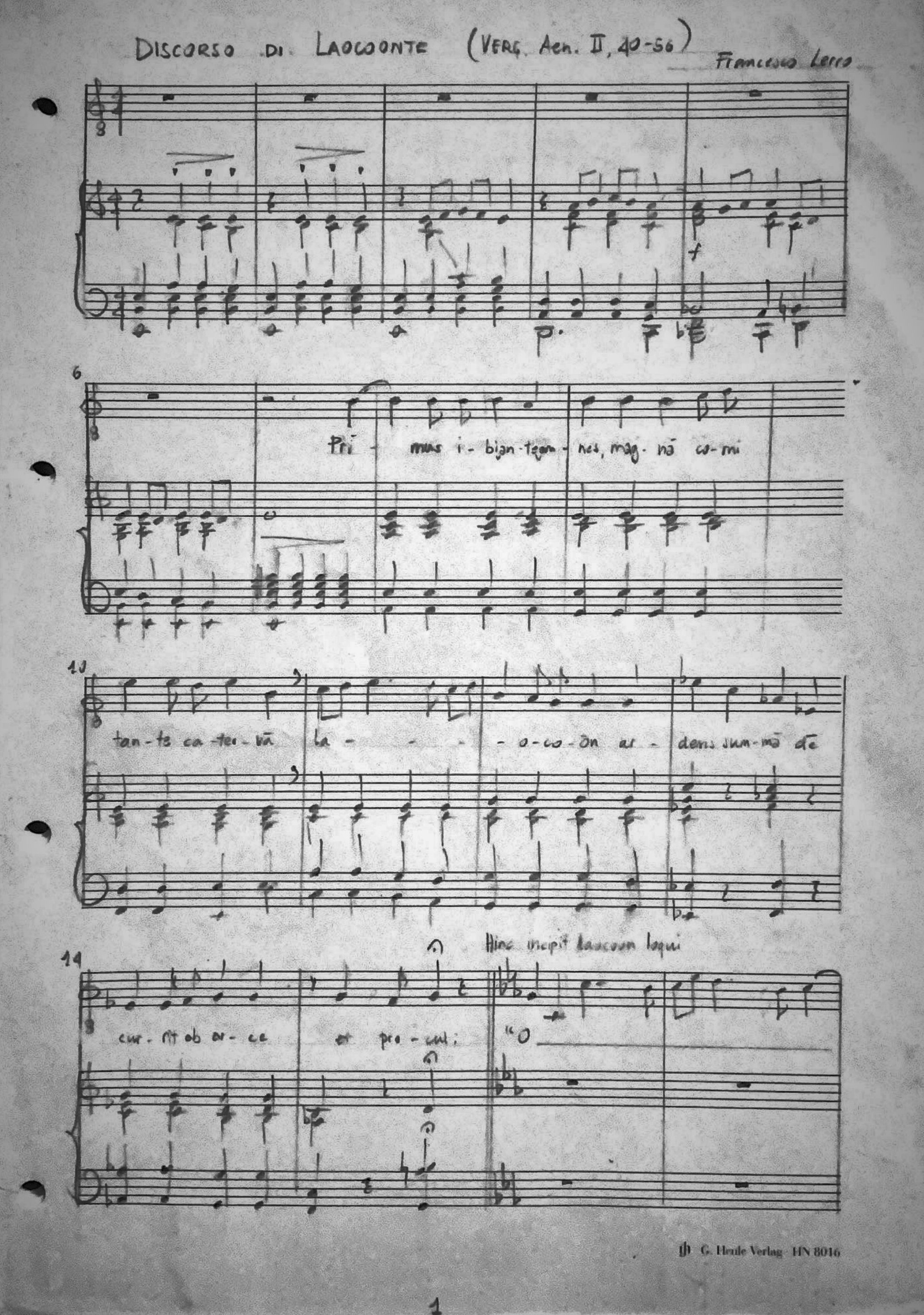
Alongside the classical pieces, an original composition was included, written and performed by Francesco Lerro, a student at the University of Milan and the conservatory Giuseppe Verdi. Lerro created a magnificent composition for piano and voice from the lines in which Laocoön desperately beseeches Trojans not to welcome the wooden horse into the city (Aen. 2, 40–49).
Composition Discorso di Laocoonte composed by Francesco Lerro.
Francesco Faccioli: What musical genres influenced you in composing this piece? Were they functioning for the emotions you wanted to convey?
Francesco Lerro: I always thought that starting point of my work is Virgil’s text. As the great Claudio Monteverdi said, words come first and music just follows. This means that every idea suggested by the music is closely related to the text: I wanted music to be just the ‘amplification’ of the meaning of the verses.
Of course, it is impossible to know exactly how Virgil himself would have sung his own poetry, for we have nothing but weak evidences of Greek and Roman music. That’s why I chose to use a modal and not a tonic scale, which – for what we know – refers to the ancient music theory. Then, I just put Vergil’s text in a sort of recitar cantando in which notes have regular values (except for little variations) divided in crotchets and quavers. The succession of long and short notes, that is longae and breves, mirrors the same prosodic distinction of Latin syllables.
Beside that, the shorts preludio, intermezzos and coda played by piano solo are written on the same musical theme that I composed thinking of the situation: the staccato and the descending notes are the image of the falling of Troy, that is about to happen, and the little circulationes made of four quavers are the image of the suspicious atmosphere created by Laocoön’s words.
Fragment of Francesco Lerro’s composition for piano and voice to the words of Aeneid (Aen. 2, 40–49).
Francesco Faccioli: How did you succeed in blending classical music and classical text?
Francesco Lerro: I prefer talking of “ancient music” rather than “classical music”. As I said, despite the fact that most of the harmonic successions do not follow traditional harmonic rules, my main historical reference is the 16th century, when Italian musicians tried to find out how Greek music would have sound to their ancient listeners. I am talking about Vincenzo Galilei’s treatises and, of course, Claudio Monteverdi and his ideas about the so called secondaprattica.
The recitativo form was conceived in the same period as the most faithful way to reproduce how ancient poets and singer would have sung their songs. This is why I thought that it should have been the most appropriate musical form for my piece. Besides, since I didn’t follow the traditional harmonic rules, when listening to my piece you will listen to a modern composition that has lots of references to the ancient music, and you will actually find out how contemporary music can be, in its substance, ancient.
Francesco Faccioli: Did you encounter any difficulties during composition?
Francesco Lerro: Yes, of course. First of all, I found some difficulties linked to the harmonic language I used, since my piece is not written in the traditional functional harmony but using some “weird” chords (such as the seventh or the ninth chords not necessarily used with the proper function they would have in tonal harmony) and using a scale that, in some points, clearly refers to a modal scale. It was very challenging to find the right harmonic (and melodic) successions that could be as much as possible incisive and fitting for the atmosphere.
Secondly, since I am not an expert composer, it was quite hard writing music “on commission”, which means that, since the very first idea of the work did not come from my mind, I had to force myself to find solutions and ideas that, at least at the beginning, did not spontaneously come to my mind.
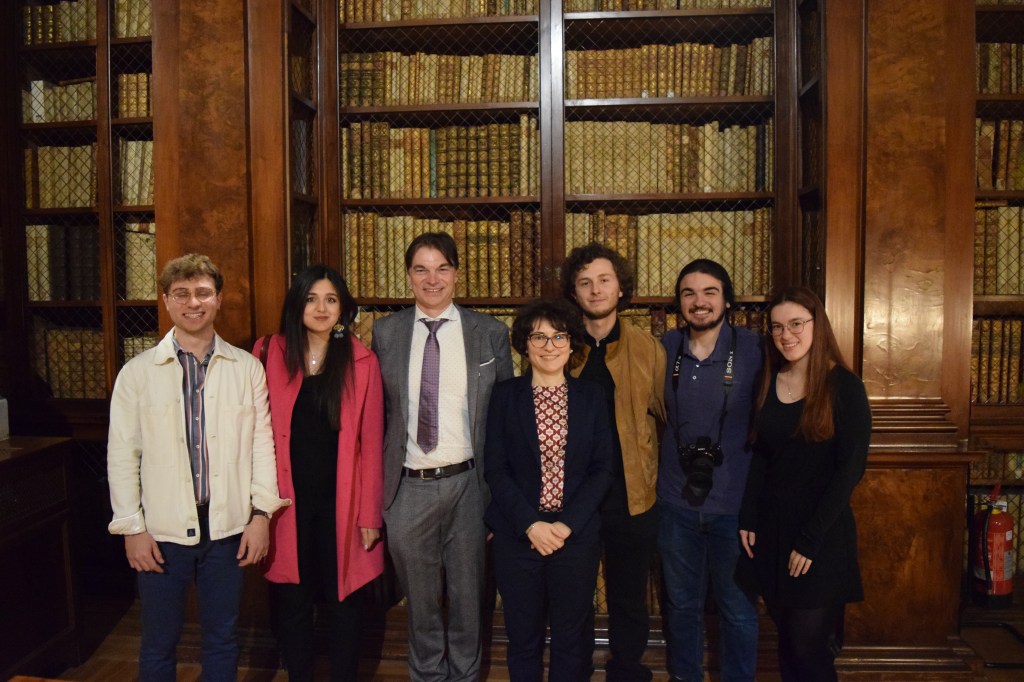
Photo taken by Ulrich Rausch at the end of the public reading in Aula Magna (24 March 2023). From left to right: Francesco Lerro (Università di Milano), Dott.ssa Alessia Borriello (Università di Bologna), Prof. Dr. Markus Janka (Ludwig-Maximilians-Universität München), Prof.ssa Valentina Garulli (Università di Bologna), Francesco Faccioli (Università di Bologna), Mattia Belletti (Università di Bologna), Camilla Graziani (Liceo Ginnasio Galvani di Bologna).
Laocoön’s Speech (Verg. Aen. 2, 40–49) Primus ibi ante omnes, magna comitante caterva, Laocoon ardens summa decurrit ab arce et procul: “o miseri, quae tanta insania, cives? Creditis auectos hostes? Aut ulla putatis dona carere dolis Danaum? Sic notus Vlixes? Aut hoc inclusi ligno occultantur Achiui, aut haec in nostros fabricata est machina muros, inspectura domos, uenturaque desuper urbi, aut aliquis latet error: equo ne credite, Teucri. quidquid id est, timeo Danaos et dona ferentes”.
Enter Laocoön first — and a large crowd of followers with him — Running, ahead of the rest, from the citadel, blazing with passion, Shouting while still far off: “Poor citizens, what utter madness Seizes you? Do you believe the foe’s gone, or that gifts from Danaän Donors don’t involve ruses? Is that what we know of Ulysses? Either this structure of wood is concealing Achaeans inside it, Or it’s an engine of war they’ve designed to destroy our defences, Spy on our homes, make aerial assault on our city, or some less Evident trap. Sons of Teucer, whatever this horse is, be careful. I am afraid of Danaäns, not least when they offer donations.” (Virgil, Aeneid, transl. with not. by Frederick Ahl, with an intr. by Elaine Fantham, Oxford 2007: 29)
Poster of the public reading of Vergil’s Aeneid at the Università di Bologna.
Post by Francesco Faccioli, peer-reviewed by Prof. Valentina Garulli, placed by Olga Strycharczyk
A few months ago I travelled to Białystok, a city located in the northeast of Poland, nearing the border of Belarus and Lithuania, for the first time in my life. I was invited to see two performances: Wokół Szekspira [Around Shakespeare] starring one of Poland’s most famous actors, Andrzej Seweryn, at the Nie Teatr [No Theatre] and West Side Story, a musical by Leonard Bernstein at the Podlasie Opera and Philharmonic. Although both performances were very interesting, they are not the focus of this text. When I am in a city for the first time, I like to wander around a bit to discover it in my own way, without a precise route. However, my mother, Barbara Penderecka-Piotrowska, reminded me that her oldest brother lived in Białystok for several years, studying at the Medical Academy (now the Medical University). So I decided to find this place, i.e. Branicki Palace.
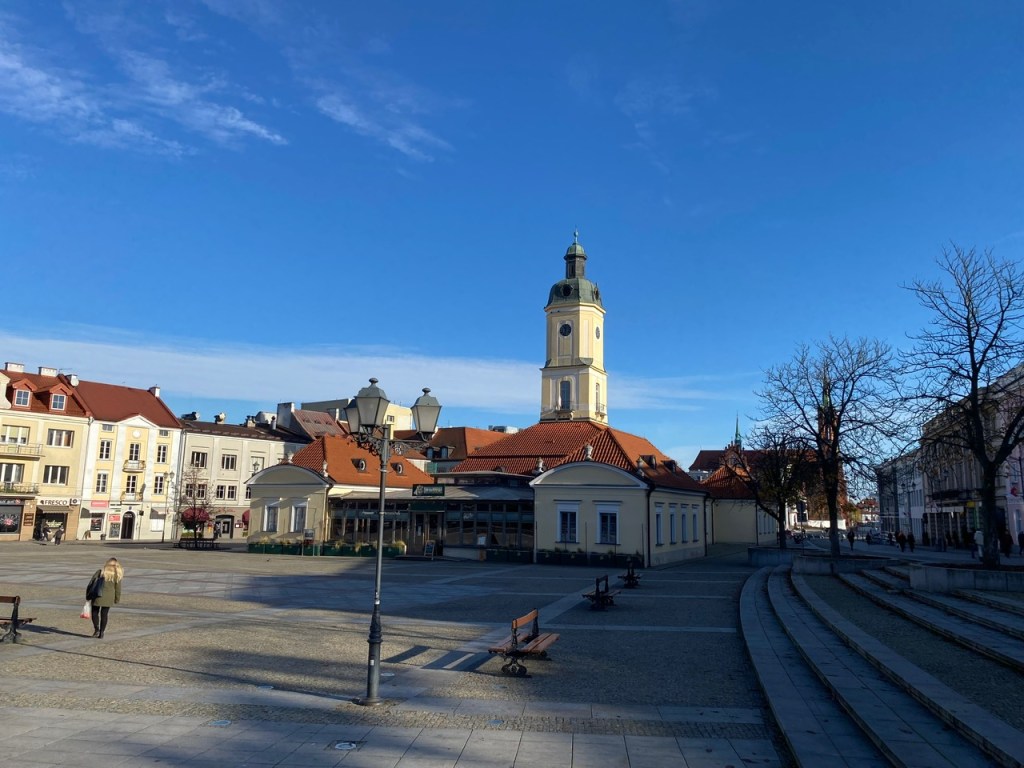
Kościuszko Square in Białystok – photo by Krzysztof Korwin-Piotrowski.
Walking from Kościuszko Square towards the Palace, I unexpectedly saw a statue of a boy holding a book or briefcase in his left hand. The sculpture was made of brass. It turned out to be a statue of the young Ludwik Zamenhof, who was born in Białystok in 1859. I imagined I was travelling back in time. Where did the name of this city come from and what was it like in the past? There is a 14th-century legend, that answers this question as it depicts Lithuanian Grand Duke Gediminas hunting aurochs in the wilderness: While the gunners were busy quartering the killed game, the prince rested by the stream. It was quite swift and, unlike other rivers and streams in this part of the forest, clear. This was probably because it had a sandy bottom and did not flow like other rivers among the peats[1]. He called it the White Slope [Biały Stok]. Formerly the word slope meant a stream or water that rolled downhill. However, it was not until the 16th century that a Gothic castle with a moat was built here, and later rebuilt in the Renaissance style. When it became the property of Marshal Jan Klemens Branicki in the 18th century, it was rebuilt in the Baroque style….
Monument of young Ludwik Zamenhof – photo by Krzysztof Korwin-Piotrowski.
I look at the figure of a thoughtful boy – Zamenhof. His birth certificate, written in Russian and Hebrew, is in the State Archives in Białystok. In it one can read: Born according to the Christian calendar on December 3 and circumcised on December 10 [1859], according to the Jewish calendar, born on the 19th and circumcised on the 26th day of the month of kislev [5620] in Białystok. Data on parents: Mordka Felvelovich Zamenov, Liba Sholemovna Sofer. Name of the born child Leyzer[2]. We remember from the myth of Midas that the king touched his beloved daughter, who turned into a golden statue. Zamenhof standing on the sidewalk in Białystok is like a boy transformed into a statue. Where was he going at that moment when he suddenly became a statue? He was 13–14 years old at the time. His parents were already packing up their belongings and the family moved to Warsaw in 1873. Thus, only a personified memory remained in Białystok.
Recent research shows that Lejzer (who later changed his name to Ludwik) did not leave with his parents, but remained alone without their care to complete his education at the Białystok gymnasium. As Zbigniew Romaniuk writes: A teenager without the care of his immediate family, he lived in Białystok with his own affairs, not necessarily school affairs. Unfortunately, he flunked the first year, mainly due to reprehensible behavior. Repetition didn’t go his way from the start, and he eventually dropped out of the repeated first grade after less than two months. The director of the Białystok School Directorate expressed an opinion about Ludwig: “[…] not only did he eventually stop studying, but to the scorn of the students he ran away from class and wandered around the city during lessons […]”. Was he already thinking about creating a new language – Esperanto – during his truancy? Probably yes, since he wrote the drama “The Tower of Babel, or Białystok Tragedy in Five Acts” as early as 10 years old[3]. One language for people from all over the world was supposed to demolish the “Tower of Babel” once and for all. I studied Esperanto during my studies at the Jagiellonian University in Kraków and met individuals speaking this language in France.
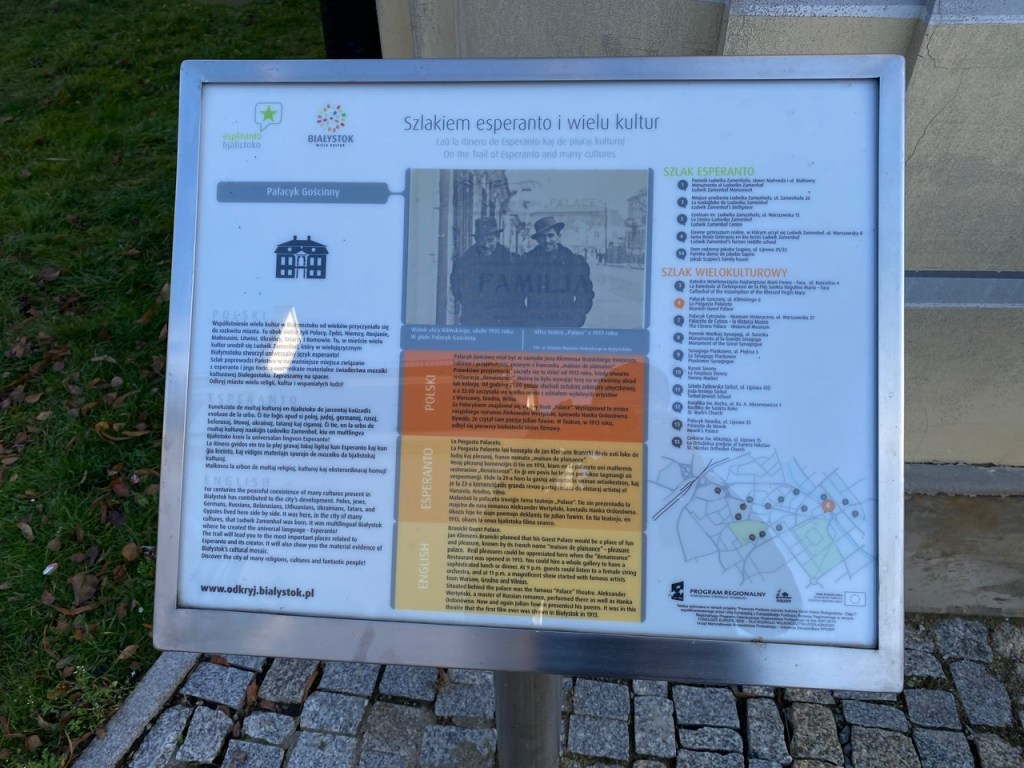
Tourist information boards on the Trail of Esperanto and Many Cultures in Białystok – photo by Krzysztof Korwin-Piotrowski.
Zamenhof also thought of creating a universal monotheistic religion, referring to the ancient scholar and religious leader Hillel. He called it Hillelism, and later homaranism (homaro means humanity in Esperanto). He dreamed that everyone around the world spoke the same language and followed the same religion, thus creating an ideal world where everyone would be brothers. From 1907 to 1917, he was nominated 8 times for the Nobel Peace Prize.
I abandoned the thoughtful Zamenhof and wandered towards the Branicki Palace. I passed the Guest Palace still, at which I found a plaque with information: The coexistence of many cultures in Białystok for centuries contributed to the flourishing of the city. Here Poles, Jews, Germans, Russians, Belarusians, Lithuanians, Ukrainians, Tatars and Roma lived side by side. Here in the city of many cultures was born Ludwik Zamenhof, who created the universal language Esperanto in multilingual Białystok! The Guest Palace, which now houses the Registry Office, was called a maison de plaisance (house of pleasure). Among other things, it hosted concerts by a female string orchestra and revues.
The Guest Palace of the Branicki Palace in Białystok – photo by Krzysztof Korwin-Piotrowski.
Finally, I entered through the beautiful Great Gate, with a clock and a sculpture of Griffin placed on it, into the courtyard of the Branicki Palace and garden establishment. I saw Atlas in the side wing, busy supporting the globe. As I climbed the stairs to the Palace, I saw several sculptures on the roof, among which Atlas was again towering, this time supporting a gilded globe, as if to illuminate the tympanum on which the coat of arms of the Branicki family – Gryf [Griffin] – was placed.
The Great Gate of the Branicki Palace in Białystok – photo by Krzysztof Korwin-Piotrowski.
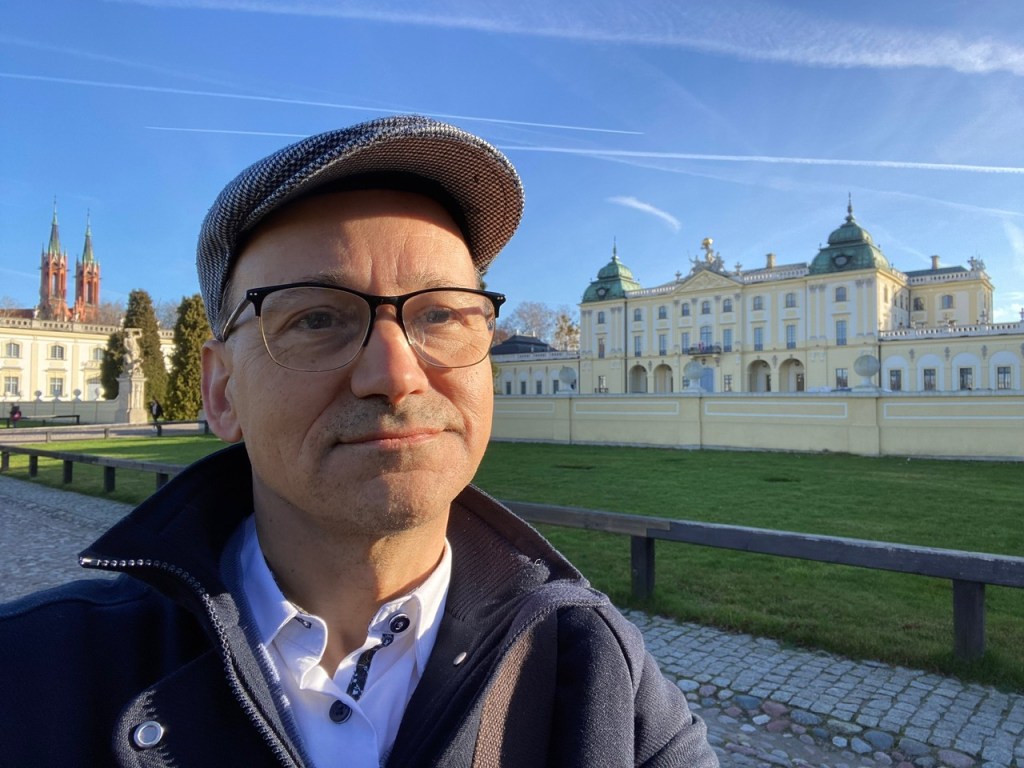
The Author in front of the main building of the Branicki Palace in Białystok – photo by Krzysztof Korwin-Piotrowski.
Right wing of the Branicki Palace in Białystok – photo by Krzysztof Korwin-Piotrowski.
Atlas in the side wing of the Branicki Palace in Białystok – photo by Krzysztof Korwin-Piotrowski.
Main entrance of the Branicki Palace in Białystok – photo by Krzysztof Korwin-Piotrowski.
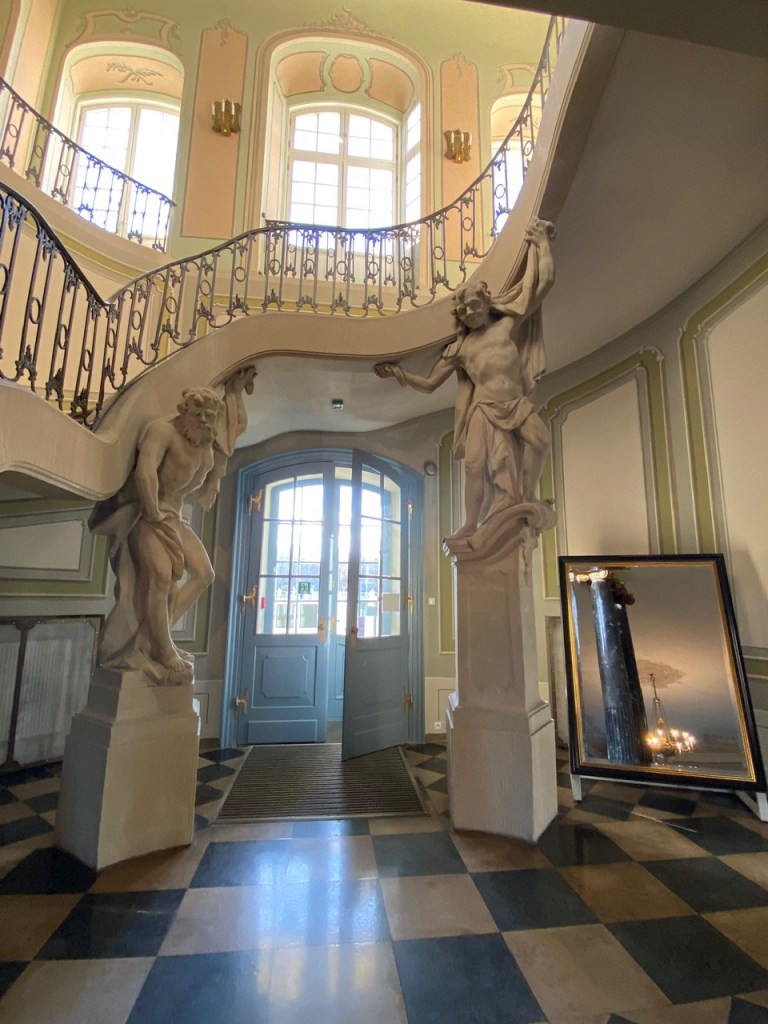
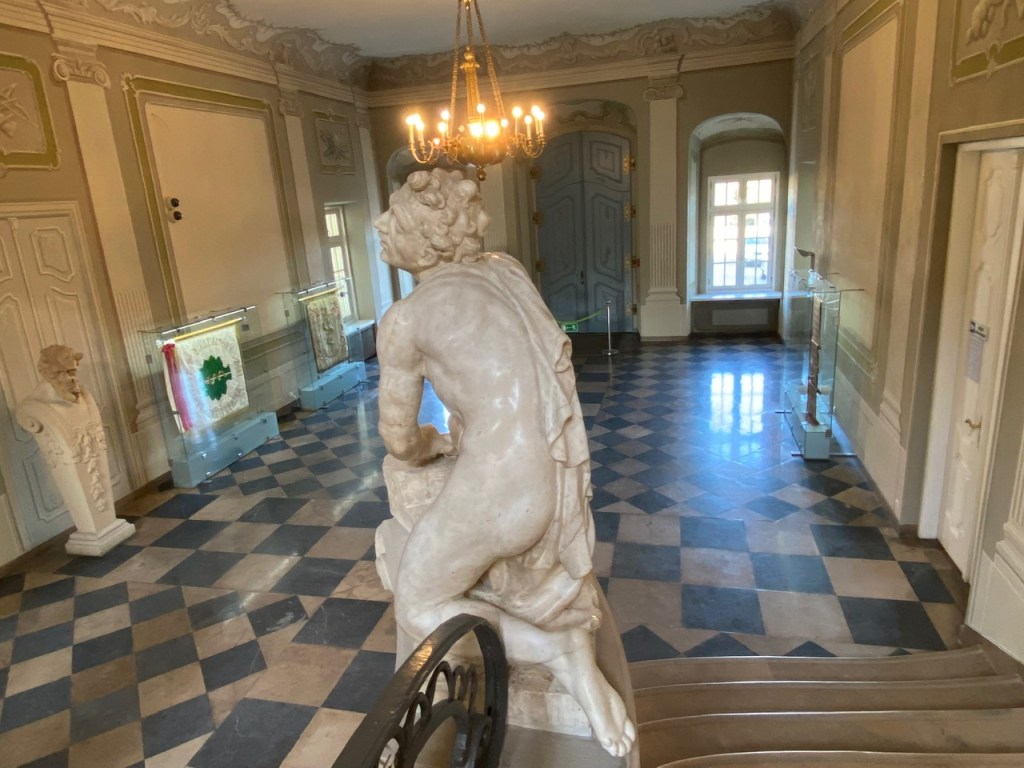
I headed to the interior of the Palace, where I was enchanted by the Great Vestibule, designed by architect Jakub Fontana. There are two entrances, one from the courtyard and the other from the gardens. The magnificent staircase structure is supported by two Atlantes, sculptures designed by Jan Chrysostom Redler. The same author also created the marble figure of a naked rotator – a grinder, placed at the beginning of the staircase. Many years ago, the rotator lost his head. In 1949, it was found in the attic of the High School of Fine Arts in Supraśl, near Białystok, by the school’s director Jan Chryzostom Redler. The Palace houses, among other things, the apartments of Izabela Branicka, the Great Hall, the Golden Rooms, and the study and dining room, where there is now a student reading room. The second floor windows offer a beautiful view of the gardens.
Atlants by Jan Chrysostom Redler in Great Vestibule of the Branicki Palace in Białystok – photo by Krzysztof Korwin-Piotrowski.
Rotator (grinder) by Jan Chryzostom Redler in Great Vestibule of the Branicki Palace in Białystok – photo by Krzysztof Korwin-Piotrowski.
View of the Great Vestibule of the Branicki Palace in Białystok – photo by Krzysztof Korwin-Piotrowski.
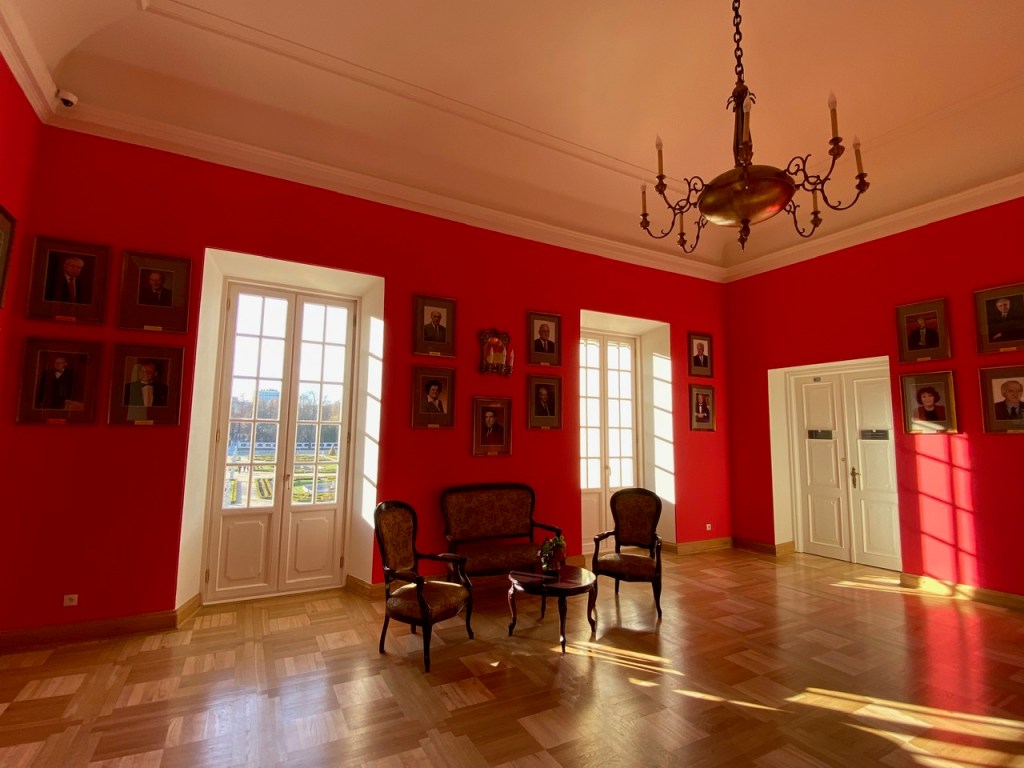
One of the rooms in the Branicki Palace in Białystok – photo by Krzysztof Korwin-Piotrowski.
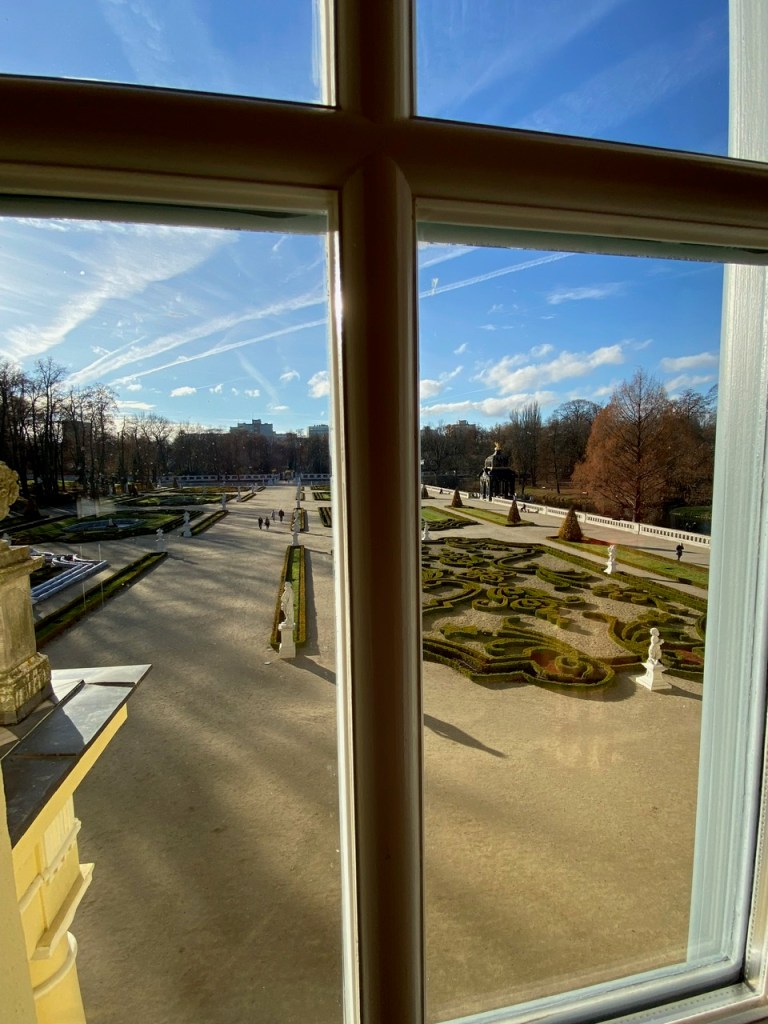
View of the parterre garden on the back of the Branicki Palace in Białystok – photo by Krzysztof Korwin-Piotrowski.
View of the garden from the terrace of the Branicki Palace in Białystok – photo by Krzysztof Korwin-Piotrowski.
I went outside. The sunny weather made it a pleasure to walk around for an hour, admiring the sculptures of Greek gods and goddesses. According to Białystok University of Technology Professor Zygmunt Orłowski: the Palace was modelled on French spatial and decorative solutions. The result of these works was one of the most magnificent palaces and gardens in Europe, called by contemporaries “Versailles of Podlasie”. The gardens and animals stretched over an area of about 14 hectares, and in the 18th century the palace was mentioned as a rarity because there were more than 200 sculptures […]. During World War II, the garden was devastated and the palace burned down along with the interior and furnishings. It was reconstructed after the war[4].
View of the Branicki Palace from the garden. In the foreground, statues of Diana and Actaeon – photo by Krzysztof Korwin-Piotrowski.
For many years, art historian, priest Jan Nieciecki, has been engaged in the scientific study of the history of the Branicki Palace and garden establishment. He published his articles in the pages of the Conservator’s Bulletin of the Podlaskie Voivodeship, and also published a book Polish Versailles[5]. The seat of Jan Klemens Branicki was described in this way, and foreigners did so in the 18th century, including the famous German geographer Anton Friedrich Büsching, Ernst Ahasverus von Lehndorff, and William Coxe[6].
Art conservator Michał Jackowski, working on the reconstruction of the sculptures in the Branicki Gardens, compared them with those of France: At Versailles, the sculptures are made of white marble. Ours were made of sandstone and painted white. And now I understand what the purpose of this was. At Versailles, you can see the full effect – white sculptures against a background of greenery. There is full scenery, contrast, it looks simply beautiful. […] We had our own sandstone, so it was both cheaper and easier. Some sculptures (such as the vases that decorate the balustrade and elements of the gazebo) were made of wood and painted or whitewashed with lime. The sculptures in Branicki’s gardens were made by Jan Chryzostom Redler. […] Figures from Greek or Roman mythology were in fashion[7].
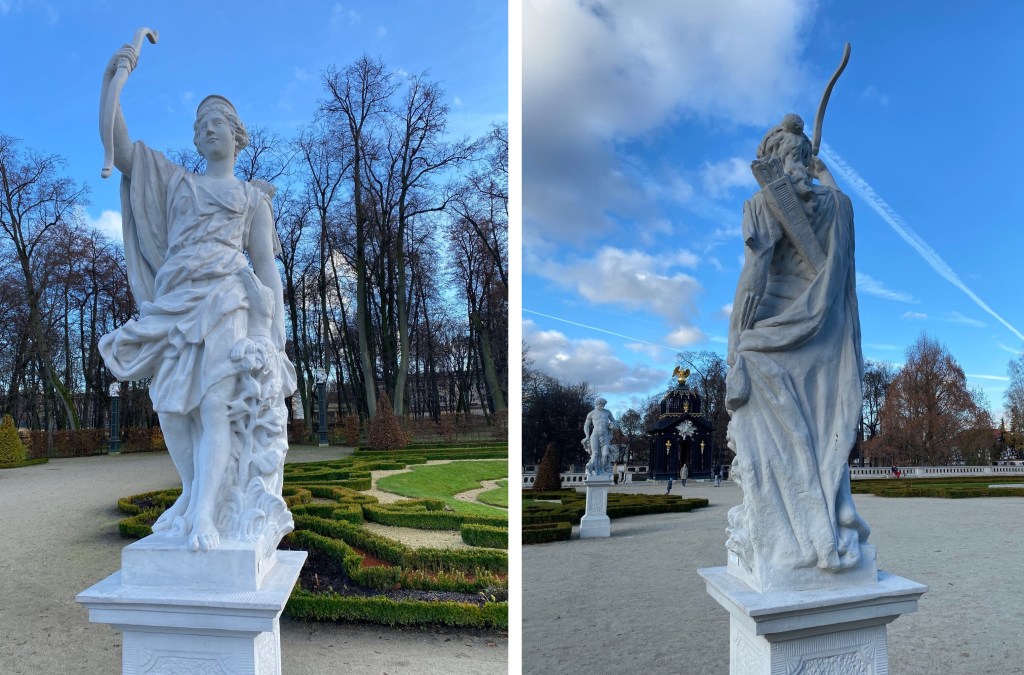
Diana (Artemis), before 1750, sandstone – photo by Krzysztof Korwin-Piotrowski.Kallisto (nymph from Diana’s retinue), before 1750, sandstone – photo by Krzysztof Korwin-Piotrowski.
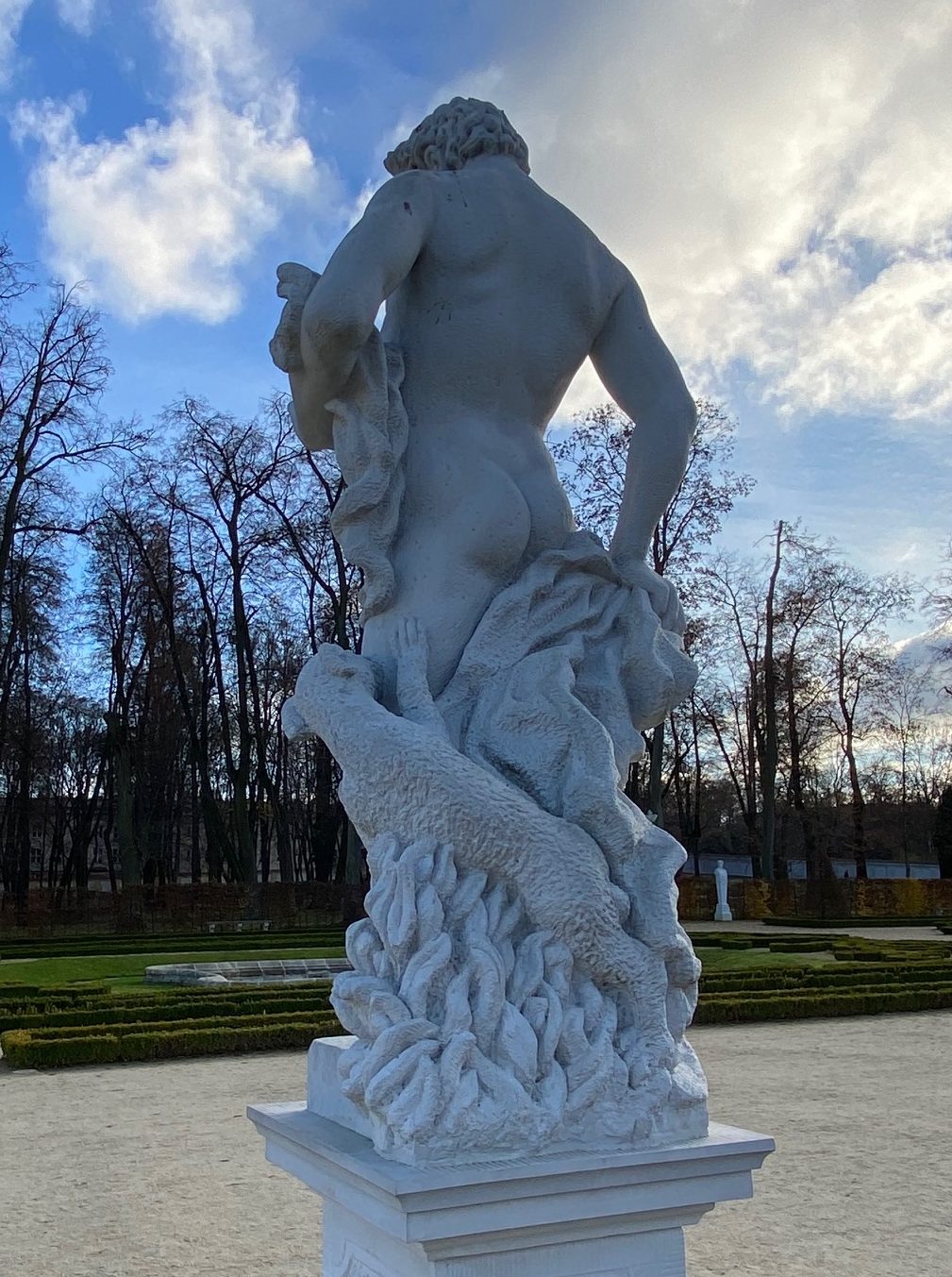
Stanisław Kiliszek, Actaeon, 1956, sandstone – photo by Krzysztof Korwin-Piotrowski.
Stanisław Kiliszek, Actaeon, 1956, sandstone – photo by Krzysztof Korwin-Piotrowski.
Apollo, before 1750, sandstone – photo by Krzysztof Korwin-Piotrowski.Stanisław Kiliszek, Venus and Adonis, 1956, sandstone – photo by Krzysztof Korwin-Piotrowski.
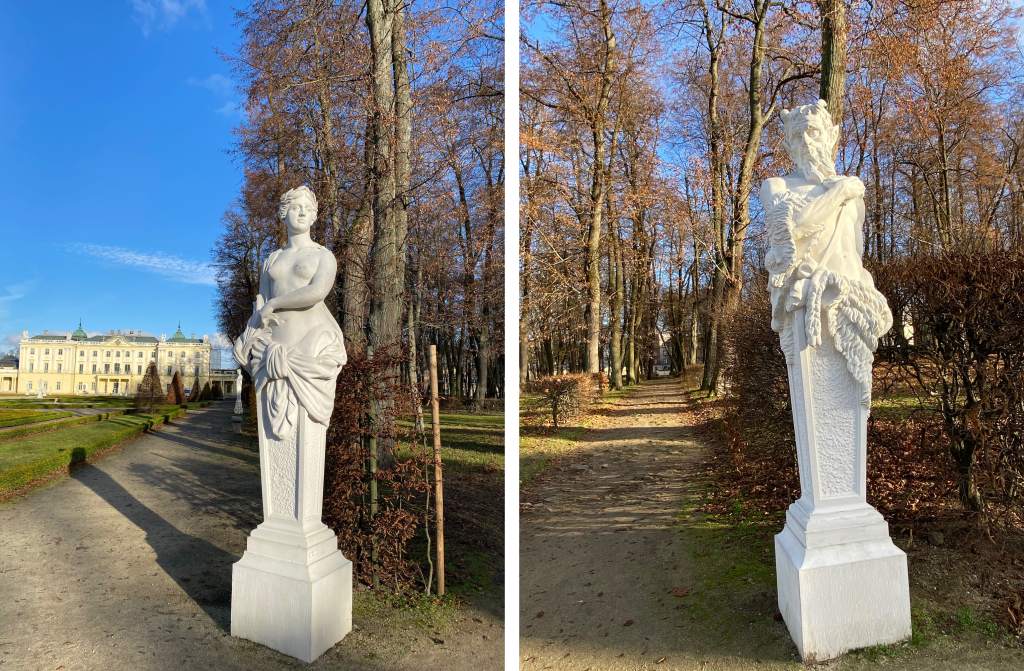
Walking through the garden, I looked at Diana (Artemis) and the nymph Kallisto, who were busy preparing for a hunt. In a moment, Actaeon may be turned into a deer and torn apart by his own dogs as punishment for peeping at Artemis and the nymphs in the bath. Apollo intends to devote himself to art and play the lyre. Venus (Aphrodite) may have just bathed in the river, and her lover Adonis shows how beautiful he is. Among the trees appear: Satyr (Pan) with horns, Bacchantes with a vine on her head, and proud Syrinx, who is about to turn into a reed as she runs away from Pan. I left the garden, passing by Sphinxes with Putti, who were looking at the beautiful sky with a smile, not paying me any attention. Gladiators with shields used to stand in this place, as if protecting the entrance and reminding me that there used to be a defensive castle here.
Michał Jackowski, Syrinx and Pan, 2013, sandstone – photo by Krzysztof Korwin-Piotrowski.Michał Jackowski, Bacchantes and Satyr, 2013, sandstone – photo by Krzysztof Korwin-Piotrowski.
My uncle, Janusz Cezary Penderecki, talked about the beautiful Branicki Palace with enthusiasm. I thought of him while walking around the city. When he graduated from medical school in Białystok, he fulfilled one of his greatest dreams as an idealist – to help people. Later, he began practising medicine on ships, as he also dreamed of travelling. He sent us cards from North and South America. It was thanks to him that I started reading books by Verne, May, London, Malinowski…. He was killed in the Atlantic Ocean during the Falklands War. To this day, we have not learned what exactly happened there.
Jan Chryzostom Redler, Sphinx with Putto, 1752, sandstone – photo by Krzysztof Korwin-Piotrowski.
Such a time travel gives us the illusion of contact with the dead. When I was returning along the same road I came, I stopped again at the monument to Ludwig Zamenhof. I wanted to say to him: kiam mi estis studento, mi lernis Esperanton. I learned Esperanto when I was a student, but now English is like the Esperanto of our time. And what will happen in 20 years? Who knows? Soon we will probably be able to have instant simultaneous translation of all the world’s languages thanks to small devices at our ear. However, it is easier to travel to the past than to the future, because we have more tools to understand the essence of things. This is given to us by: history, philosophy, science, memories, experience, and myths. And also, traces left by those close to us.
Post by Krzysztof Korwin-Piotrowki, placed by Olga Strycharczyk
[1] Legendy województw: białostockiego, łomżyńskiego, suwalskiego, collected by Walentyna Niewińska, Wojewódzka Biblioteka Publiczna w Białymstoku, Białystok 1995, 10.
[2] Zbigniew Romaniuk, Ludwik Zamenhof – nieznane szczegóły białostockiego życiorysu, “Studia Podlaskie”, Białystok 2002, t. XII, 292.
[4] Zygmunt Orłowski, Rekonstrukcja Bramy Wielkiej Pałacu Branickich w Białymstoku. Problemy wykonawcze, “Czasopismo Techniczne. Budownictwo” 2011, r. 108, z. 19, 3-B, 242.
[5] See: Jan Nieciecki, Polski Wersal, Białystok 1998.
[6] See: Jan Nieciecki, Opowieści o Polskim Wersalu, “Biuletyn Konserwatorski Województwa Białostockiego”, 1996, no. 2, 53.
Kilka miesięcy temu po raz pierwszy w życiu pojechałem do Białegostoku, położonego na północnym wschodzie Polski, blisko granicy z Białorusią i niedaleko Litwy. Zostałem zaproszony na spektakle: Wokół Szekspira z jednym z najsłynniejszych polskich aktorów Andrzejem Sewerynem, w Nie Teatrze, oraz West Side Story, musical Leonarda Bernsteina w Operze i Filharmonii Podlaskiej. Oba przedstawienia były bardzo ciekawe, ale nie o nich chciałbym teraz opowiedzieć. Kiedy jestem w jakimś mieście pierwszy raz, lubię się trochę powłóczyć, aby odkryć je po swojemu, bez dokładnie wytyczonej trasy. Jednak moja mama Barbara Penderecka-Piotrowska przypomniała mi, że jej najstarszy brat mieszkał w Białymstoku przez kilka lat, studiując w Akademii Medycznej (obecnie Uniwersytecie Medycznym). Postanowiłem więc odnaleźć to miejsce, czyli Pałac Branickich.
Rynek Kościuszki w Białymstoku – fot. Krzysztof Korwin-Piotrowski
Idąc od Rynku Kościuszki w kierunku pałacu, zobaczyłem niespodziewanie pomnik chłopca, trzymającego w lewej ręce książkę albo teczkę. Rzeźba została wykonana z mosiądzu. Okazało się, że to pomnik młodego Ludwika Zamenhofa, który urodził się w Białymstoku w 1859 roku. Wyobraziłem sobie, że podróżuję w czasie. Skąd pochodzi nazwa tego miasta i jakie było dawniej? Jest legenda o tym, że w XIV wieku Wielki Książę Litewski Giedymin polował w puszczy na tura: Podczas gdy strzelcy zajęci byli ćwiartowaniem ubitej zwierzyny, książę odpoczywał nad strumieniem. Był dosyć wartki i w przeciwieństwie do innych rzek i strumieni w tej części puszczy – czysty. Pewnie dlatego, że dno miał piaszczyste i nie płynął jak inne rzeki wśród torfów[1]. Nazwał go Białym Stokiem. Dawniej słowo stok oznaczało strumień czyli wodę, która staczała się w dół. Jednak dopiero w XVI wieku został tu wzniesiony gotycki zamek z fosą, przebudowany później w stylu renesansowym. Gdy stał się w VIII wieku własnością marszałka Jana Klemensa Branickiego, został przebudowany w stylu barokowym…
Rzeźba młodego Ludwika Zamenhofa w Białymstoku – fot. Krzysztof Korwin-Piotrowski.
Spoglądam na postać zamyślonego chłopca – Zamenhofa. Jego akt urodzenia, napisany w języku rosyjskim i hebrajskim, znajduje się w Archiwum Państwowym w Białymstoku. Można w nim przeczytać: Urodzenie według kalendarza chrześcijańskiego 3, a obrzezanie 10 grudnia [1859 r.], według kalendarza żydowskiego urodzenie 19, a obrzezanie 26 dnia miesiąca kislew [5620 r.] w Białymstoku. Dane o rodzicach: Mordka Felwelowicz Zamenow, Liba Szolemowna Sofer. Imię narodzonego dziecka Lejzer[2]. Pamiętamy z mitu o Midasie, że król dotknął swoją ukochaną córkę, która zamieniła się w złoty posąg. Zamenhof stojący na chodniku w Białymstoku jest jak chłopiec przemieniony w statuę. Dokąd szedł w tym momencie, gdy nagle stał się pomnikiem? Miał wtedy 13–14 lat. Jego rodzice pakowali już swój dobytek i rodzina w 1873 roku przeniosła się do Warszawy. W Białymstoku pozostało więc tylko spersonifikowane wspomnienie.
Z ostatnich badań naukowych wynika, że Lejzer (który później zmienił imię na Ludwik) nie wyjechał z rodzicami, lecz pozostał sam bez ich opieki, aby dokończyć edukację w białostockim gimnazjum. Jak pisze Zbigniew Romaniuk: Nastolatek bez opieki najbliższej rodziny żył w Białymstoku własnymi, niekoniecznie szkolnymi sprawami. Niestety oblał pierwszy rok, głównie ze względu na naganne zachowanie. Repeta od początku mu nie szła i w końcu po niespełna dwóch miesiącach porzucił powtarzaną pierwszą klasę. Dyrektor Białostockiej Dyrekcji Szkół wyraził o Ludwiku opinię: „[…] nie tylko ostatecznie przestał się uczyć, ale ku zgorszeniu uczniów uciekał z klasy i w czasie lekcji włóczył się po mieście […]”. Czy podczas wagarów myślał już o tym, aby stworzyć nowy język – esperanto? Prawdopodobnie tak, skoro już jako 10-latek napisał dramat „Wieża Babel, czyli tragedia białostocka w pięciu aktach”[3]. Jeden język dla ludzi z całego świata miał zburzyć raz na zawsze „wieżę Babel”. Podczas studiów na Uniwersytecie Jagiellońskim w Krakowie chodziłem na lekcje esperanta i poznałem ludzi mówiących w tym języku podczas pobytu we Francji.
Tablice informacyjne o “Szlaku Esperanto i wielu kultur” – fot. Krzysztof Korwin-Piotrowski
Zamenhof myślał też o tym, aby utworzyć uniwersalną religię monoteistyczną, odwołując się do starożytnego uczonego i przywódcy religijnego Hillela. Nazwał ją hilelizmem, a później homaranizmem (homaro to po esperancku ludzkość). Marzył więc o tym, aby wszyscy ludzie na całym świecie mówili tym samym językiem i byli wyznawcami jednej religii, co pozwoliłoby stworzyć idealny świat, w którym wszyscy będą braćmi. Od 1907 do 1917 roku był nominowany 8 razy do Pokojowej Nagrody Nobla.
Porzuciłem zamyślonego Zamenhofa i powędrowałem w kierunku pałacu Branickich. Minąłem jeszcze Pałacyk Gościnny, przy którym znalazłem tablicę z informacją: Współistnienie wielu kultur w Białymstoku od wieków przyczyniało się do rozkwitu miasta. Tu obok siebie żyli Polacy, Żydzi, Niemcy, Rosjanie, Białorusini, Litwini, Ukraińcy, Tatarzy i Romowie. Tu, w mieście wielu kultur urodził się Ludwik Zamenhof, który w wielojęzycznym Białymstoku stworzył uniwersalny język esperanto! Pałacyk Gościnny, w którym obecnie mieści się Urząd Stanu Cywilnego, był nazywany maison de plaisance (dom przyjemności). Odbywały się w nim między innymi koncerty żeńskiej orkiestry smyczkowej i rewie.
Pałacyk Gościnny rezydencji Branickich – fot. Krzysztof Korwin-Piotrowski.
Wreszcie wszedłem piękną Bramą Wielką, z umieszczonym na niej zegarem i rzeźbą Gryfa, na dziedziniec założenia pałacowo-ogrodowego Branickich. Zobaczyłem w bocznym skrzydle Atlasa, zajętego podtrzymywaniem kuli ziemskiej. Gdy wchodziłem schodami do pałacu, ujrzałem na dachu kilka rzeźb, wśród których znowu górował Atlas, podtrzymujący tym razem pozłacaną kulę ziemską, jakby w ten sposób oświetlał tympanon, na którym umieszczony został herb Branickich – Gryf.
Brama Wielka w Białymstoku – fot. Krzysztof Korwin-Piotrowski.
Autor przed pałacem w Białymstoku – fot. Krzysztof Korwin-Piotrowski.
Widok prawego skrzydła pałacu w Białymstoku – fot. Krzysztof Korwin-Piotrowski.
Atlas w skrzydle pałacu Branickich w Białymstoku – fot. Krzysztof Korwin-Piotrowski.
Wejście główne pałacu Branickich w Białymstoku – fot. Krzysztof Korwin-Piotrowski.
Skierowałem się do wnętrza pałacu, gdzie duże wrażenie wywarła na mnie Sień Wielka, zaprojektowana przez architekta Jakuba Fontanę. Wejście do niej jest z obu stron, od dziedzińca i ogrodów. Wspaniałą konstrukcję schodów podtrzymują dwaj Atlanci, rzeźby zaprojektowane przez Jana Chryzostoma Redlera. Ten sam autor stworzył również marmurową postać nagiego rotatora – szlifierza, umieszczoną na początku schodów. Wiele lat temu rotator stracił głowę. W 1949 roku odnalazł ją na strychu Liceum Sztuk Plastycznych w Supraślu, niedaleko Białegostoku, dyrektor szkoły Jan Chryzostom Redler. W pałacu znajdują się między innymi: apartamenty Izabeli Branickiej, Aula Wielka, Pokoje Złote oraz gabinet i jadalnia, gdzie obecnie jest czytelnia studencka. Z okien pierwszego piętra roztacza się piękny widok na ogrody.
Atlanci, projektu Jana Chryzostoma Redlera, w Wielkiej Sieni pałacu Branickich w Białymstoku – fot. Krzysztof Korwin-Piotrowski.
Jan Chryzostom Redler, figura rotatora (szlifierza) w Wielkiej Sieni pałacu Branickich w Białymstoku – fot. Krzysztof Korwin-Piotrowski.
Widok Wielkie Sieni pałacu Branickich w Białymstoku – fot. Krzysztof Korwin-Piotrowski.
Jeden z pokoi pałacu Branickich w Białymstoku – fot. Krzysztof Korwin-Piotrowski.
Widok ogrodu parterowego na tyłach pałacu Branickich w Białymstoku – fot. Krzysztof Korwin-Piotrowski.
Widok ogrodu parterowego na tyłach pałacu Branickich w Białymstoku – fot. Krzysztof Korwin-Piotrowski.
Wyszedłem na zewnątrz. Słoneczna pogoda sprawiła, że z przyjemnością spacerowałem przez godzinę, podziwiając rzeźby greckich bogów i bogiń. Jak pisze prof. Politechniki Białostockiej Zygmunt Orłowski: Pałac wzorowano na francuskich rozwiązaniach przestrzennych i dekoracyjnych. W efekcie tych prac powstał jeden z najwspanialszych pałaców i ogrodów w Europie, nazwany przez współczesnych „Wersalem Podlaskim”. Ogrody i zwierzyńce rozciągały się na obszarze około 14 hektarów, a w XVIII w. pałac wymieniano jako ewenement, ponieważ było tu ponad 200 rzeźb […]. W czasie II wojny światowej ogród zdewastowano, a pałac spłonął wraz z wnętrzem i wyposażeniem. Po wojnie został zrekonstruowany[4].
Pałac Branickich, widok od strony ogrodu. Na pierwszym planie posągi Diany i Akteona – fot. Krzysztof Korwin-Piotrowski.
Od wielu lat badaniem naukowym dziejów założenia pałacowo-ogrodowego Branickich zajmuje się historyk sztuki ks. Jan Nieciecki. Publikuje swoje artykuły na łamach Biuletynu Konserwatorskiego Województwa Podlaskiego, a także wydał książkę Polski Wersal[5]. W ten sposób określano siedzibę Jana Klemensa Branickiego, a czynili to w XVIII wieku obcokrajowcy, m.in. słynny niemiecki geograf Anton Friedrich Büsching, Ernst Ahasverus von Lehndorff czy William Coxe[6].
Konserwator dzieł sztuki Michał Jackowski, pracujący nad rekonstrukcją rzeźb w Ogrodach Branickich, porównywał je z francuskimi: W Wersalu rzeźby są zrobione z białego marmuru. U nas były wykonane z piaskowca i malowane na biało. I teraz już rozumiem, jaki był tego cel. W Wersalu widać pełen efekt – na tle zieleni białe rzeźby. Jest pełna scenografia, kontrast, wygląda to po prostu pięknie. […] Piaskowiec mieliśmy swój, więc było i taniej, i łatwiej. Niektóre rzeźby (np. wazy zdobiące balustradę i elementy altany) były robione z drewna i malowane lub bielone wapnem. Rzeźby w ogrodach Branickiego wykonał Jan Chryzostom Redler. […] W modzie były postacie z mitologii greckiej lub rzymskiej[7].
Jan Chryzostom Redler, Diana (Artemida), przed 1750, piaskowiec – fot. Krzysztof Korwin-Piotrowski.Jan Chryzostom Redler, Kalisto (nimfa z orszaku Diany), przed 1750, piaskowiec – fot. Krzysztof Korwin-Piotrowski.
Stanisław Kiliszek, Akteon, 1956, piaskowiec – fot. Krzysztof Korwin-Piotrowski.
Stanisław Kiliszek, Akteon, 1956, piaskowiec – fot. Krzysztof Korwin-Piotrowski.
Jan Chryzostom Redler, Apollo, przed 1750, piaskowiec – fot. Krzysztof Korwin-Piotrowski.Stanisław Kiliszek, Wenus i Adonis, 1956, piaskowiec – fot. Krzysztof Korwin-Piotrowski.
Spacerując po ogrodzie spoglądałem na Dianę (Artemidę) i nimfę Kallisto, które były zajęte przygotowaniami do polowania. Za chwilę Akteon może być zamieniony w jelenia i rozszarpany przez własne psy za karę, że podglądał Artemidę i nimfy w kąpieli. Apollo zamierza oddać się sztuce i grać na lirze. Wenus (Afrodyta) może przed chwilą kąpała się w rzece, a jej kochanek Adonis pokazuje, jaki jest piękny. Wśród drzew pojawiają się: Satyr (Pan) z rogami, Bachantka z winoroślą na głowie i dumna Syrinx, która zaraz może zamienić się w trzcinę, gdy będzie uciekać przez Panem. Wyszedłem z ogrodu, przechodząc obok Sfinksów z Puttami, które patrzyły z uśmiechem na piękne niebo, nie zwracając zupełnie na mnie uwagi. Kiedyś w tym miejscu stali Gladiatorzy z tarczami, jakby chronili wstępu i przypominali, że dawniej był tu zamek obronny.
Michał Jackowski, Syrinks i Pan, 2013, piaskowiec – fot. Krzysztof Korwin-Piotrowski.Michał Jackowski, Bachantka i Satyr, 2013, piaskowiec – fot. Krzysztof Korwin-Piotrowski.
Mój wujek Janusz Cezary Penderecki opowiadał o pięknym pałacu Branickich z entuzjazmem. Myślałem o nim, spacerując po mieście. Kiedy skończył studia medyczne w Białymstoku, spełnił jedno ze swoich największych marzeń. Był idealistą i chciał pomagać ludziom. Później zaczął pływać na statkach jako lekarz, ponieważ marzył także o podróżach. Wysyłał nam kartki z Ameryki Północnej i Południowej. Dzięki niemu zacząłem czytać książki Verne’a, Maya, Londona, Malinowskiego… Został zabity na Oceanie Atlantyckim w czasie wojny o Falklandy. Do dziś nie dowiedzieliśmy się, co dokładnie się tam wydarzyło.
Jan Chryzostom Redler, Sfinks i putto, 1752, piaskowiec – fot. Krzysztof Korwin-Piotrowski.
Podróż w czasie daje nam złudzenie kontaktu ze zmarłymi. Kiedy wracałem tą samą drogą, którą przyszedłem, ponownie przystanąłem przy pomniku Ludwika Zamenhofa. Chciałem do niego powiedzieć: Kiam mi estis studento, mi lernis Esperanton. Uczyłem się esperanto, kiedy byłem studentem, ale teraz angielski jest jak esperanto naszych czasów. A co stanie się za dwadzieścia lat? Kto wie? Prawdopodobnie będziemy mogli już niedługo dzięki niewielkim urządzeniom przy uchu mieć błyskawiczne symultaniczne tłumaczenie wszystkich języków świata. Łatwiej jednak podróżować w przeszłość niż w przyszłość, ponieważ mamy więcej narzędzi do poznania istoty rzeczy. To dają nam: historia, filozofia, nauka, wspomnienia, doświadczenie i mity. A także ślady, pozostawione przez naszych bliskich.
Tekst przygotowany przez Krzysztofa Korwina-Piotrowskiego, zamieszczony przez Olgę Strycharczyk
[1] Legendy województw: białostockiego, łomżyńskiego, suwalskiego, zebrała Walentyna Niewińska, Wojewódzka Biblioteka Publiczna w Białymstoku, Białystok 1995, s. 10.
[2] Zbigniew Romaniuk, Ludwik Zamenhof – nieznane szczegóły białostockiego życiorysu, „Studia Podlaskie”, Białystok 2002, t. XII, s. 292.
[3] Tamże, s. 298.
[4] Zygmunt Orłowski, Rekonstrukcja Bramy Wielkiej Pałacu Branickich w Białymstoku. Problemy wykonawcze, „Czasopismo Techniczne. Budownictwo” 2011, r. 108, z 19, 3-B, s. 242.
[5] Por. Jan Nieciecki, Polski Wersal, Białystok 1998.
[6] Por. Jan Nieciecki, Opowieści o Polskim Wersalu, „Biuletyn Konserwatorski Województwa Białostockiego”, 1996, nr 2, s. 53.
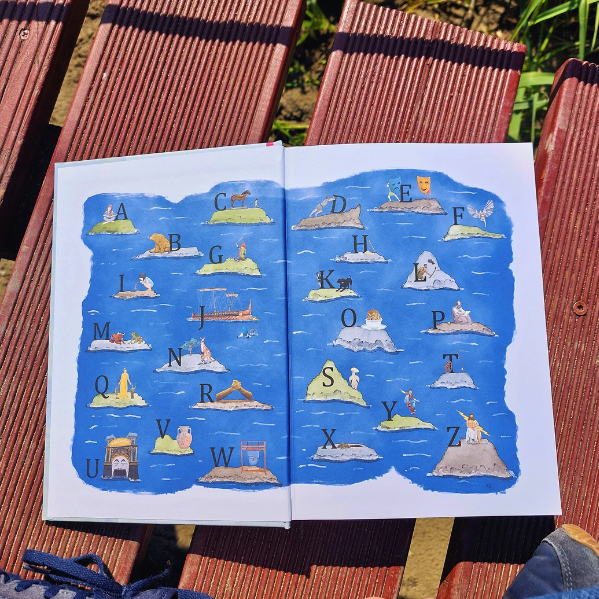
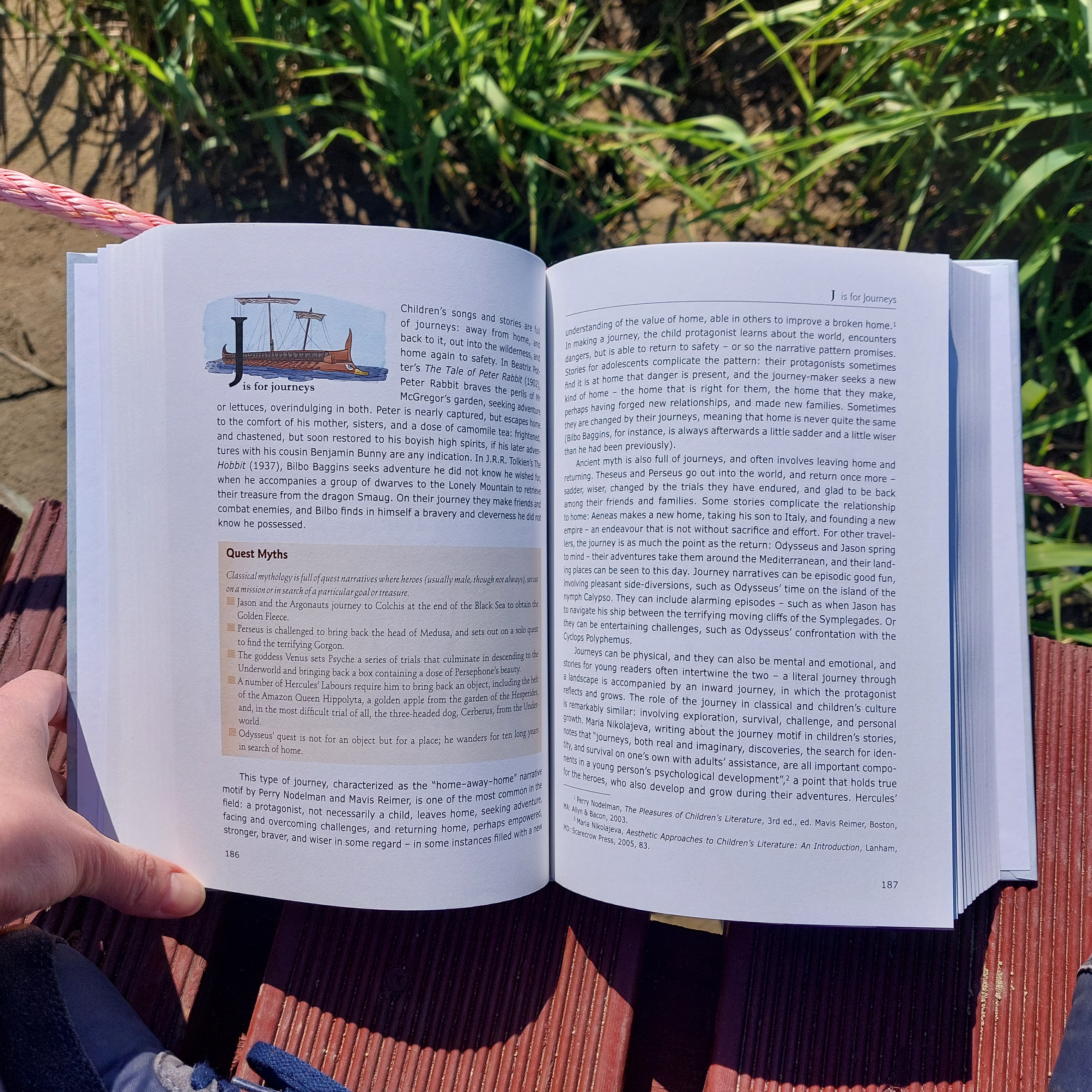
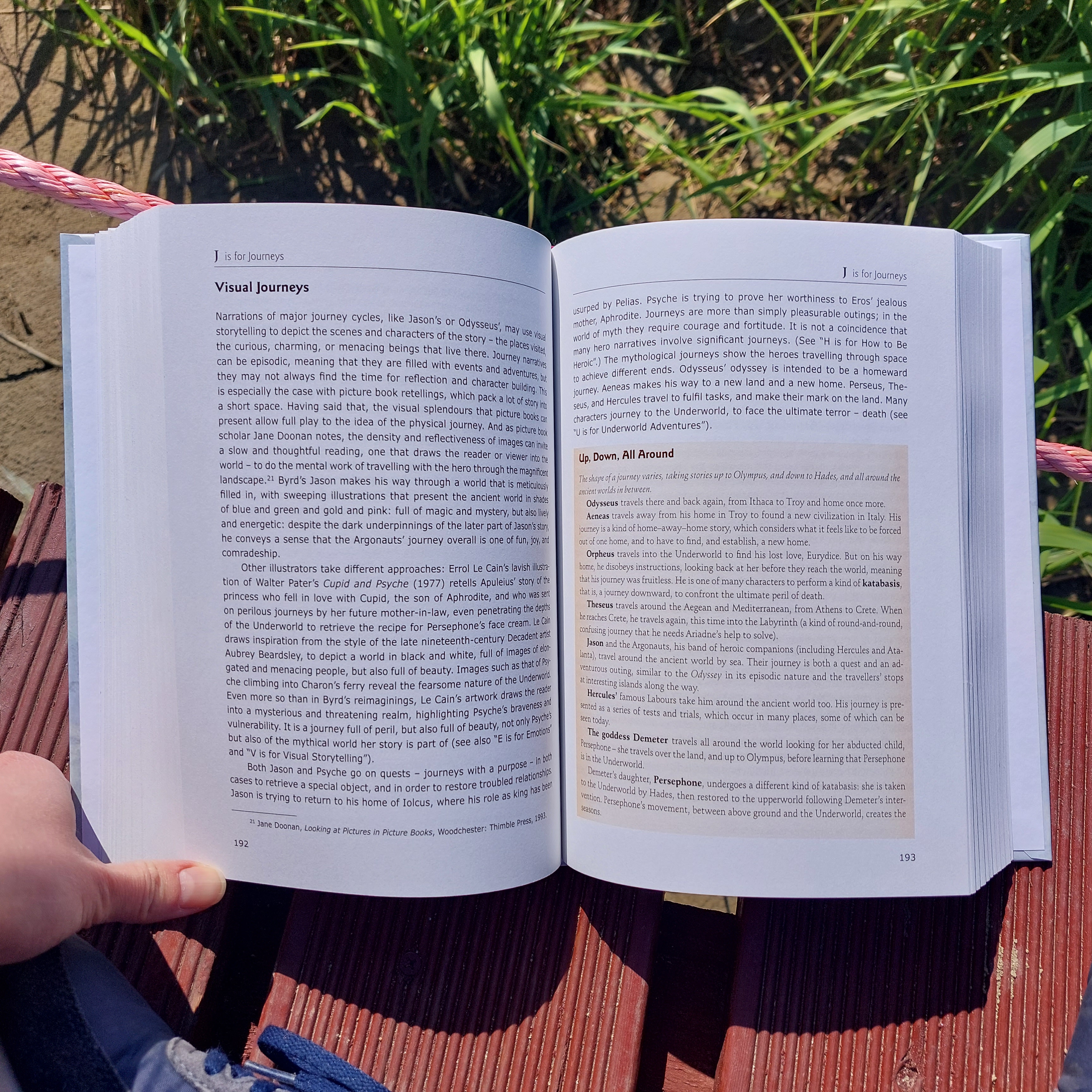
We are happy to present the results of Australian research within of Our Mythical Childhood project – an amazing journey through ancient Greek and Roman mythological motifs in children’s and young adult literature:
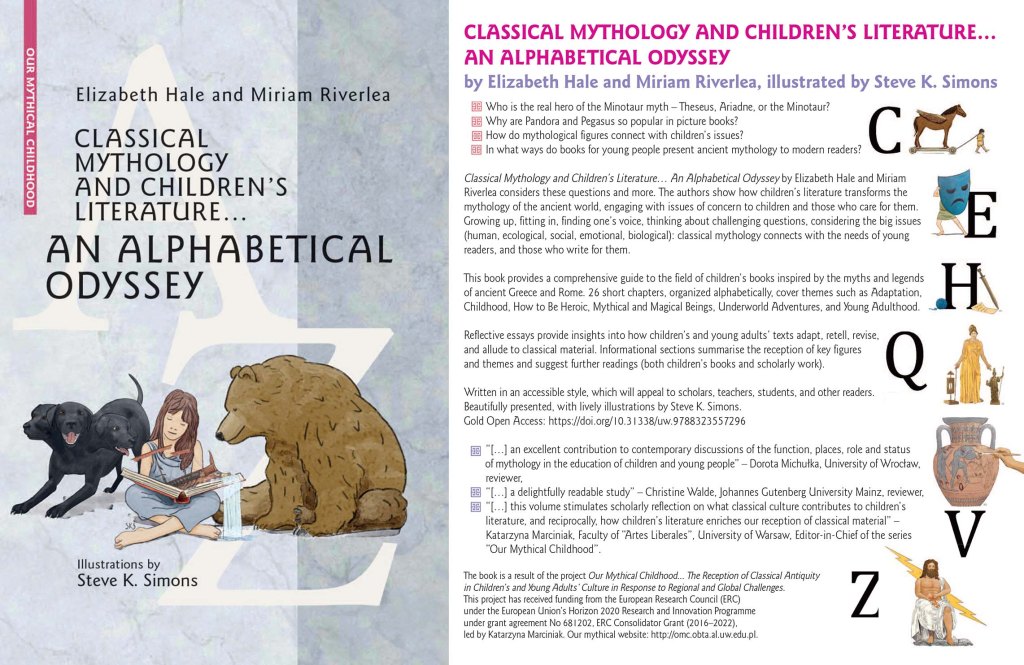
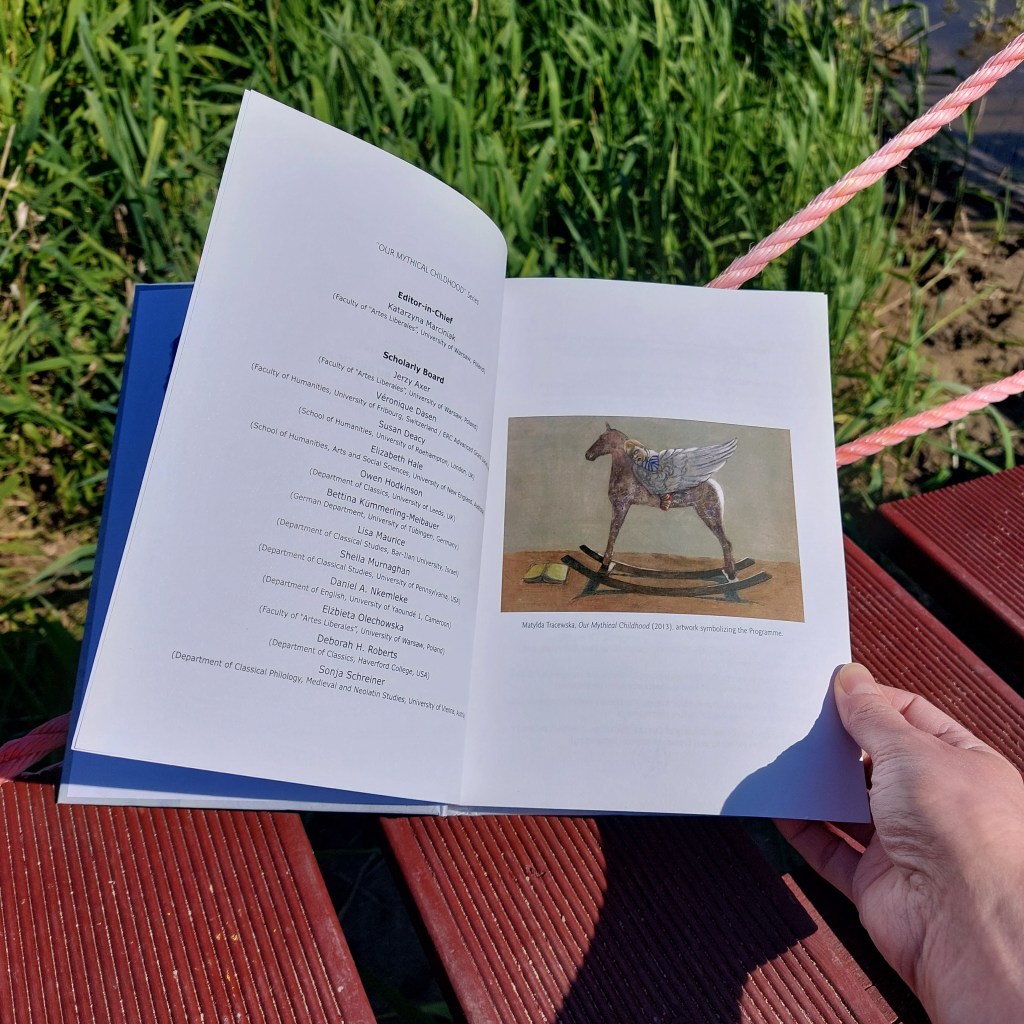
Classical Mythology and Children’s Literature… An Alphabetical Odyssey by Elizabeth Hale and Miriam Riverlea, illustrated by Steve K. Simons, Warsaw: Warsaw University Press, 2022, 467 pp., https://doi.org/10.31338/uw.9788323557296.
Have you ever wondered why Pegasus is so popular in children’s stories? Why does the Minotaur speak to so many teenagers? What is it about the Underworld that attracts so many lovers of romance?
This guide provides a set of keywords and concepts useful for students and teachers working with classical material and children’s literature.
This is the third book in the Our Mythical Childhood series edited by Katarzyna Marciniak. All volumes are available in open accessvia the publisher’s website. More are coming soon!
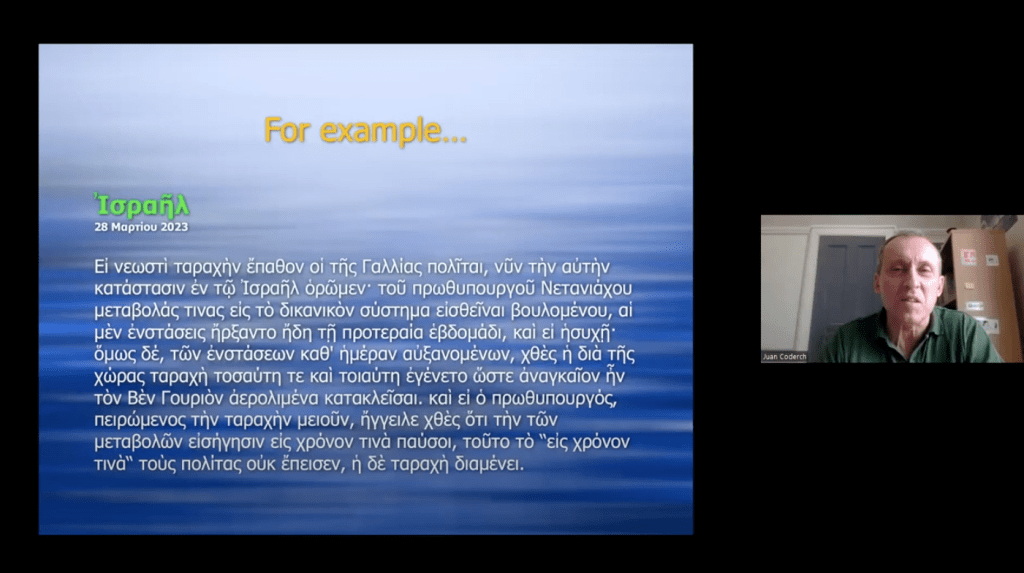
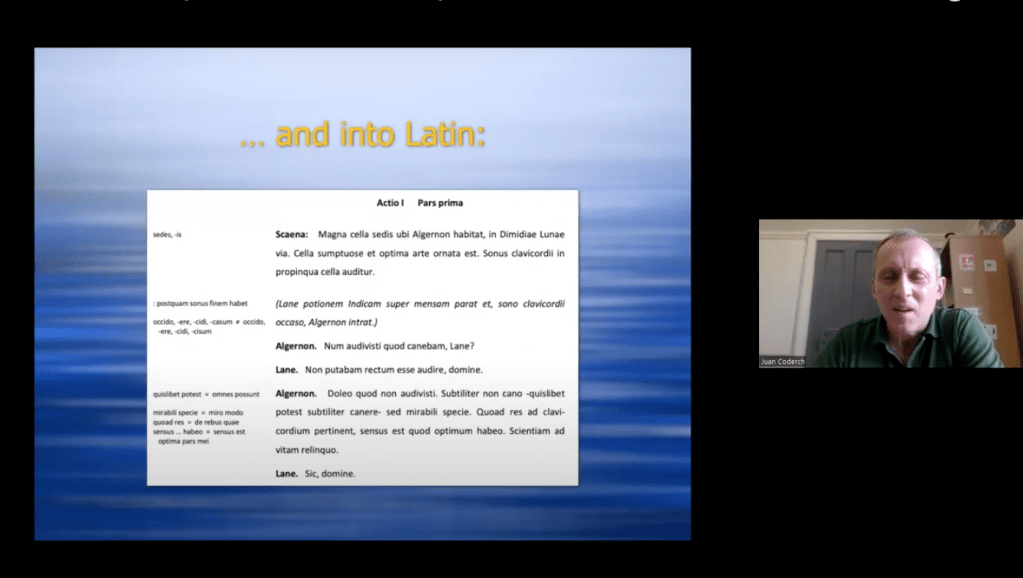
Dr Juan Coderch gave a lecture on Reaching the Classical Authors through Oscar Wilde and Sherlock Holmes within the cycle OBTAmistic Meetings at the Centre for Studies on the Classical Tradition (OBTA), Faculty of “Artes Liberales”, University of Warsaw, on March 30, 2023. Dr Coderch shared his experience in translating modern literature (and more) into Latin and Ancient Greek.
An example of latest news in Ancient Greek written for Acropolis World News established by Dr Juan Coderch.
Dr Juan Coderch discussing the difficulties in translating Antoine de Saint-Exupéry’s The Little Prince into Ancient Greek.
A piece from The Importance of Being Earnest by Oscar Wilde, translated by Dr Juan Coderch.
The lecture incl. a short discussion was attended by Students from “Strumienie” High School in Józefów, Mikołaj Rej High School in Warsaw, and Bartłomiej Nowodworski High School in Kraków.
Dr Coderch’s translation of Antoine de Saint-Exupéry’s Little Prince into Ancient Greek, as well as his translations of Oscar Wilde’s The Importance of Being Earnest into Ancient Greek and Latin are available in open access: http://coderch-greek-latin-grammar.weebly.com.
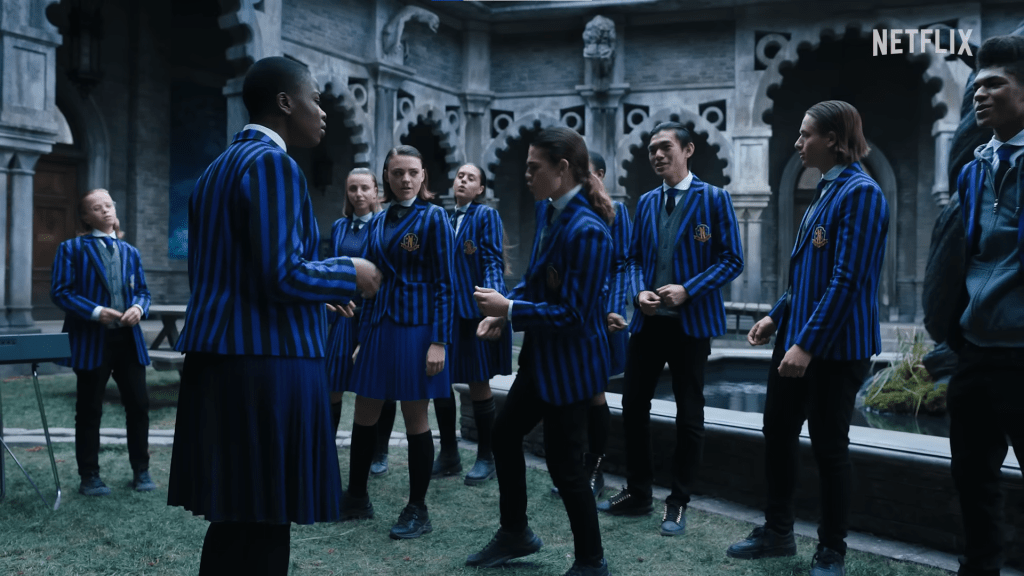
The Addams Family comes back in a series about Wednesday, created by Alfred Gough and Miles Millar, directed by Tim Burton, James Marshall, and Gandja Monteiro, produced by Netflix, released in 2022. It is a crime story crowded with monsters.
The Addams at principal’s office with a great gorgon fireplace [source].
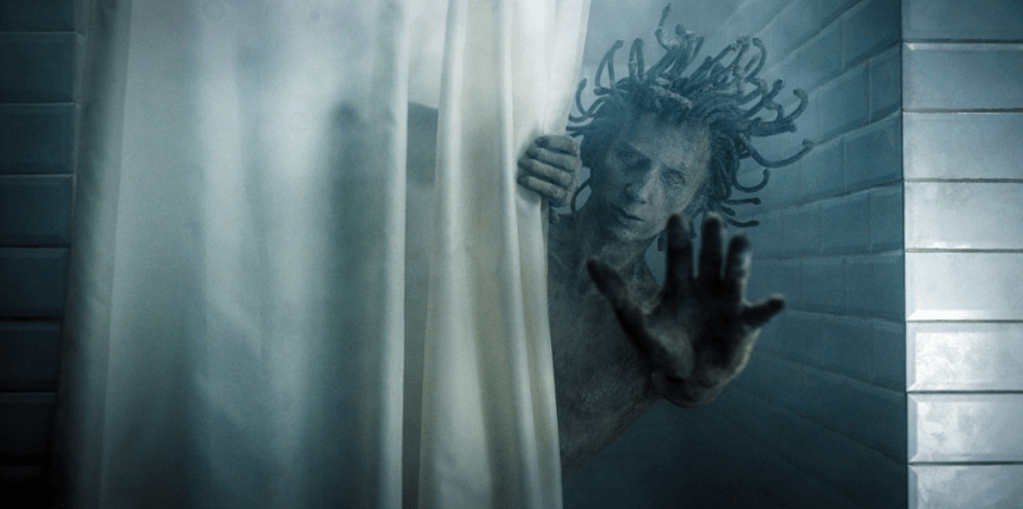
We follow Wednesday joining Jericho High School, a private school for outcasts like Fangs, Furs, Stoners, Scales, Shapeshifters, to name a few. Among them are the gorgon Ajax, hiding his snake hair under a beanie, and sirens who use their skills to turn the course of events several times.
The Jericho High School for people with extraordinary abilities [source].
The gorgon Ajax with one of his snake-strands sneaking out from beneath the beanie [source].
The gorgon Ajax accidentally stoning himself with a bathroom mirror [source].
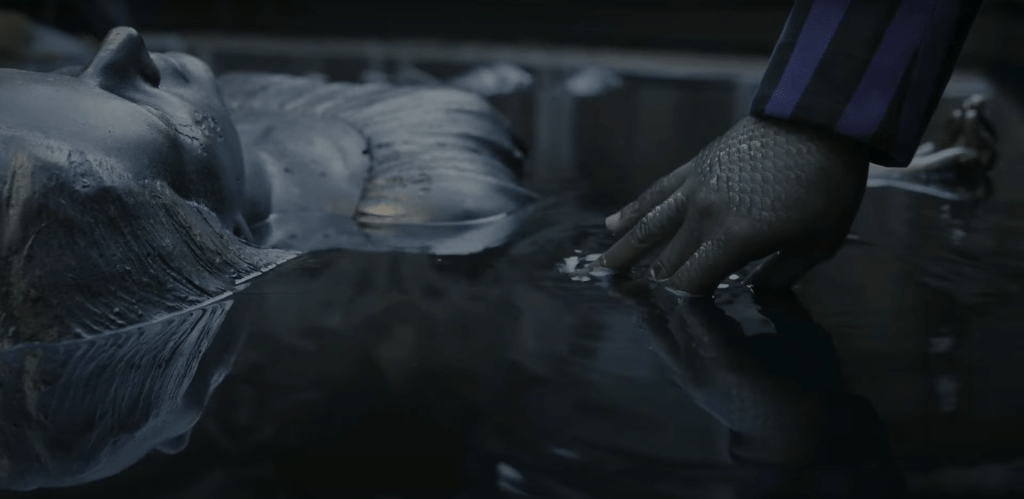
Fish scales appearing on a siren’s skin when her hand touches the water [source].
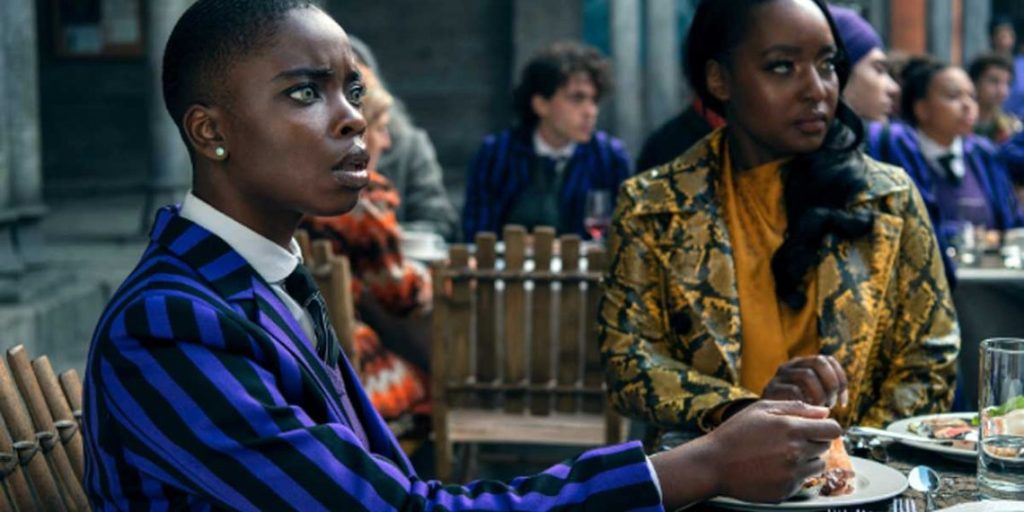
Sirens – Bianca and her mother Gabrielle [source].
Bianca and her mother, Gabrielle, are sirens making use of their persuasive skills. Gabrielle is a member of a cult called the Morning Song and attracts new members offering for money a self-help app to “refocus” one’s life. Bianca, however, has decided to leave the cult and do something for herself. She wants people to trust her, to like her for her, so she wears an amulet to harness the manipulating power of her song.
The siren Bianca wearing an amulet to harness the manipulating power of her voice [source].
The siren Bianca using the power of her voice [source].
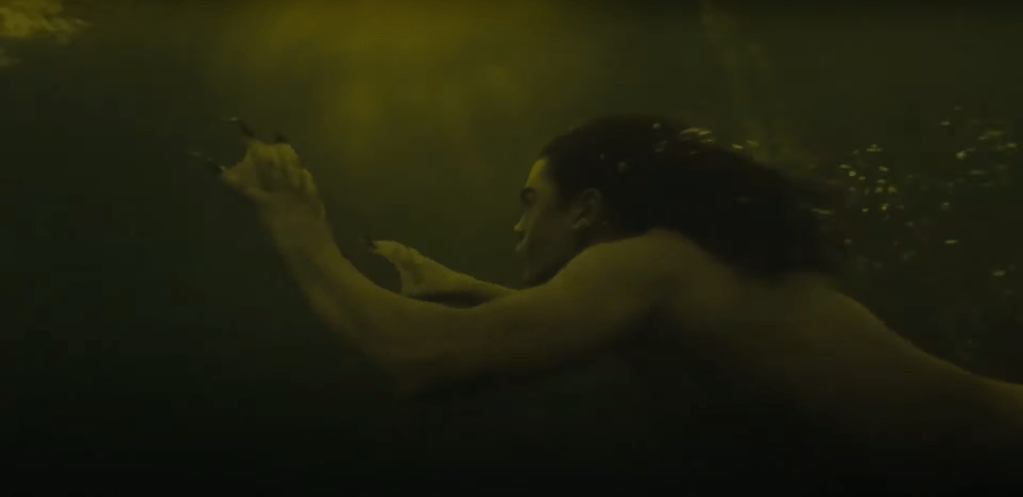
Meanwhile another character of the series, Kent, uses his siren abilities to weaken the sirens’ rivals in the Poe Cup canoe race.
Ambiguous characters and visions are looming around Wednesday, to her excitement. We follow her as she tracks down a murderer and solves mysteries. It is an inspiring portrait of an individualistic, questioning, creative, and reserved teenage girl; a story about facing challenges like adventures, getting to know oneself better and discovering friendship along the way, discovering one’s own abilities, following the family paths in one’s very own way.
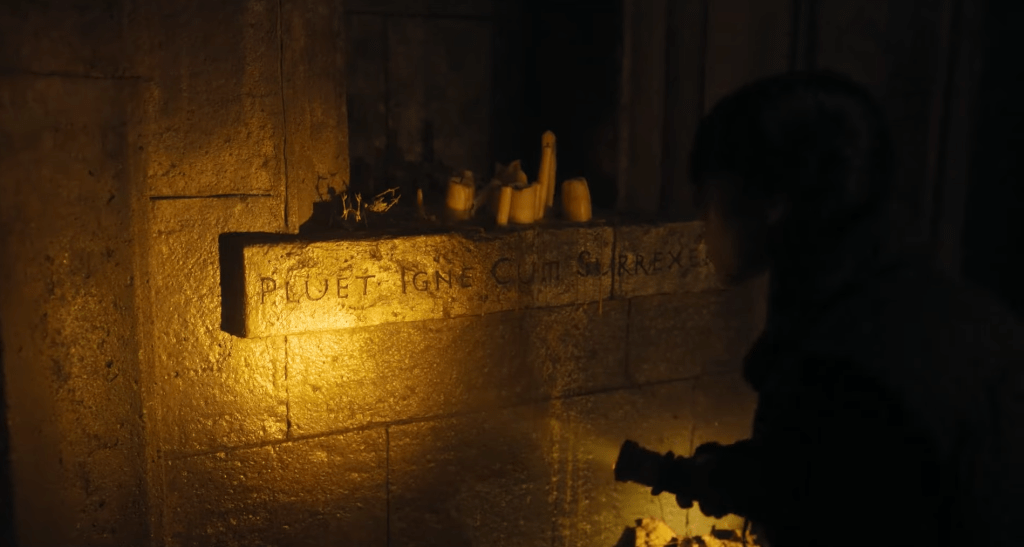
Another classical motif that appears several times in the first season is Latin. It is used as the language of science, history, riddles, and magic: during botanical class, in an inscription that seems to be a valuable clue in Wednesday’s investigation, and as the language of some dark spells.
We are happy to share the current issue of the journal Clotho, co-edited by David Movrin, Elżbieta Olechowska,and Henry Stead. It is dedicated to the relationship between Ancient Greek and Roman Culture and World Communism from 1917. In this volume you can find some comments on children’s and young adult’s culture, as well. Clotho is a classical journal, available also in Open Accesshere.
David Movrin, Elżbieta Olechowska, and Henry Stead, eds., Clotho. A Proletarian Classics: The Relationship between Ancient Greek and Roman Culture and World Communism from 1917, 4.2 (2022), https://doi.org/10.4312/clotho.4.2.
Ćmielów [ˈt͡ɕmʲɛluf], a small town in Świętokrzyskie Voivodeship, is home of the one of the oldest china manufactories in Poland. Fine porcelain is still produced there according to old recipes and manufacturing techniques. The company has been operating since 1804 and offers an abundance of the most delicate and wafer-thin handmade models in line with various styles of design and purposes.
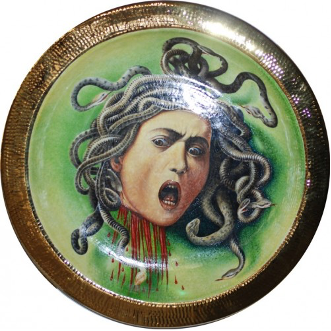
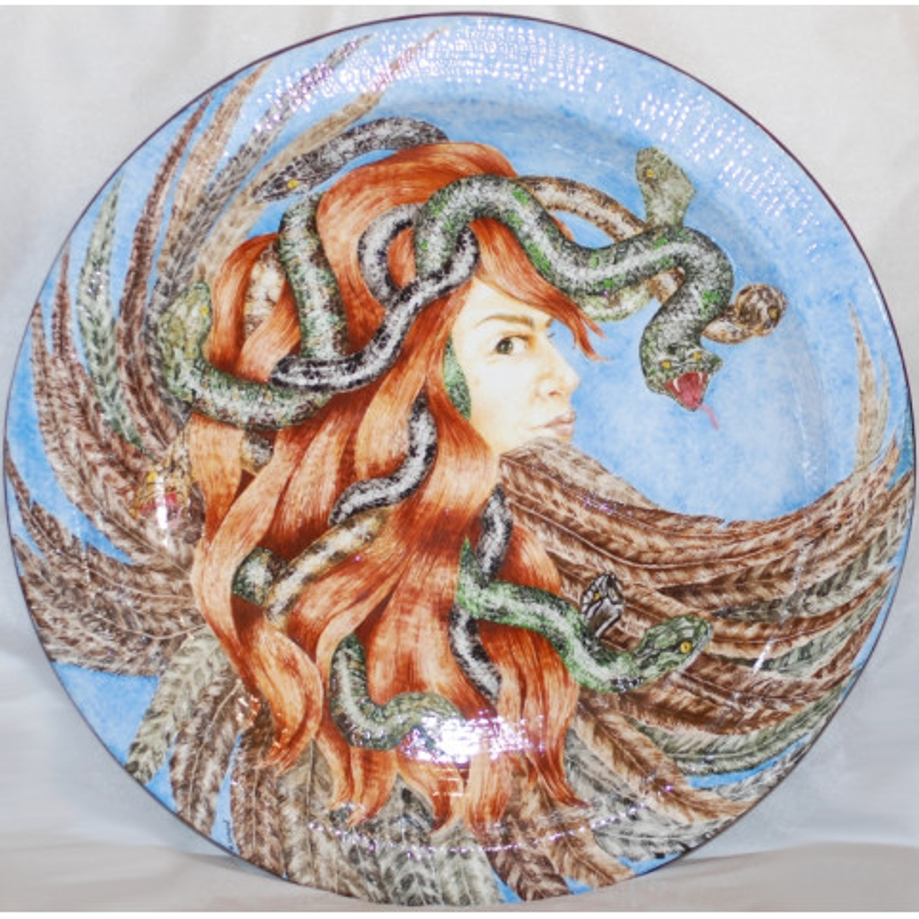
Hand-painted plate Medusa. Design (2019) by Adam Spała repeating Caravaggio’s Head of Medusa (1598–1599), AS Ćmielów Porcelain Manufactory [source].
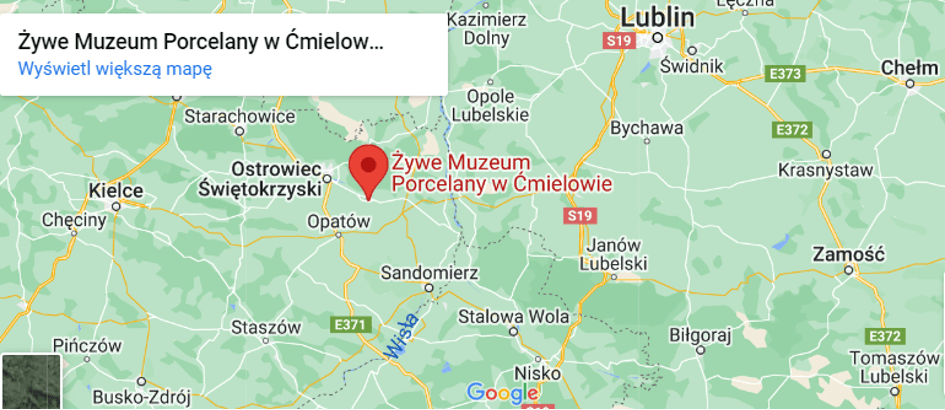
The 12th owner, Adam Spała, who has bought the company from the Polish state after the political transformation of the country, is truly passionate about fine china and anything associated with it. He has led the company into 21st century and developed it into a manufacturer of collections worthy of kings. His idea was also to open the Living Porcelain Museum where visitors can watch, touch, and ask, in one word, experience different stages of making porcelain without being limited to gaze in silence upon dusty exhibits.
Location of the Living Porcelain Museum in Ćmielów.
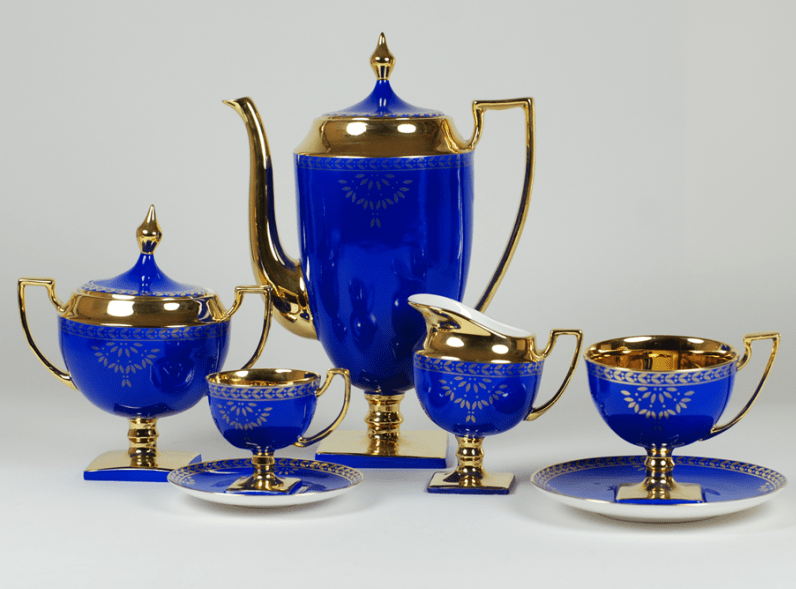
Among various items made in Ćmielów manufacture, there are classical, old fashioned objects. One of them is, for example, the Matylda collection, a replica of a service set composed of over 100 items that the Russian tsarevich Nikki, the future tsar Nikolai II Romanov, ordered for his mistress, the Polish ballerina Matylda Krzesińska (Kschessinska, later princess Romanovskaya-Krasinskaya). As Nikolai Romanov wished, all the forms for casting the service were destroyed to prevent another copy from being made. Fortunately, the service still exists and became the model for replicating the original (here in sapphire blue, originally in white).
Saphire-gold Matylda set, designed by Adam Spała in 2017, AS Ćmielów Porcelain Manufactory [source].
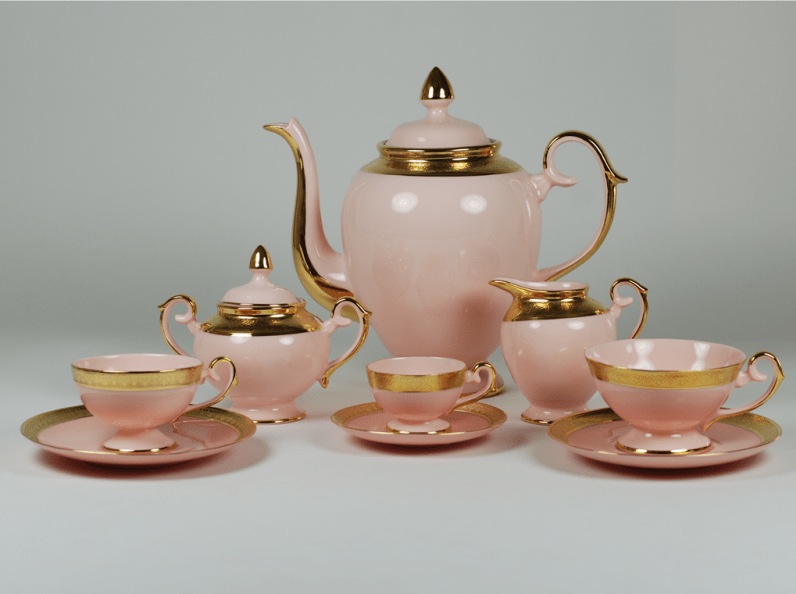
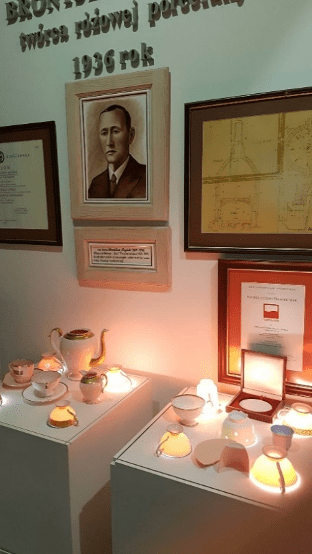
Other amazing achievement of the company, or rather of its current owner Adam Spała, is the re-discovery of the secret of pink porcelain and re-creation of the once-lost recipe. The secret of pink china was known to one person only – its inventor and former pre-war owner of the company, Bronisław Kryński. Unfortunately, the recipe was never written down and lost when Kryński died in Buchenwald, a Nazi concentration camp, in the end of WW2. Prima facie, the way of producing pink porcelain was gone forever. About 70 years after the secret was lost, Zofia Kryńska, the daughter of the inventor has donated to Adam Spała notes of her late father found in the attic of the old family house. Spała treated the notes as a mystery or a puzzle to be solved. Two years and hundreds attempts later, he succeeded in recreating the unique pink mass. The company has released a new pink line with a flagship design model called Prometheus.
Pink Prometheus set with relief, designed by Adam Spała in 2008, AS Ćmielów Porcelain Manufactory [source].
The pink china recipe is much more complex than classical white porcelain and that was why it was extremely difficult to bring together all its elements in the required configuration. It is composed of as many as 11 raw materials, including liquid gold, all mixed in specific proportions. In comparison, the white mass needs only three basic ingredients.
Living Porcelain Museum in Ćmielów – photo by Marta Pszczolińska.
The pink china is of course much more expensive than the “ordinary” white one, due to the demanding production process and handmade decorations. Most visitors can only afford to admire it in display cabinets, but… If you visit Ćmielów manufactory, you can feel there for a while as if you were of royal blood – in Leżąca Kotka [The Lying Kitty] café, you may order a cup of coffee in a luxurious wafer-thin pink Prometheus cup decorated with 24 K gold. I tried it for you and believe me, its aroma, taste, and feel are royally delicious.
Leżąca Kotka [The Lying Kitty] Café at the AS Ćmielów Porcelain Manufactory – photo by Marta Pszczolińska.
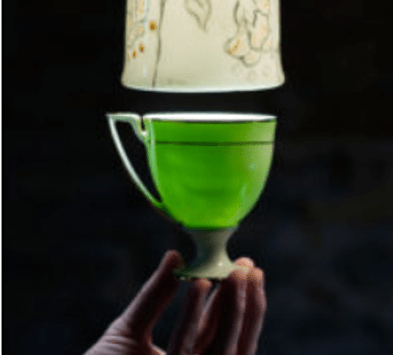
One could ask whether recreating the pink line is the final successes of the Ćmielów manufacture. It could be, as it is a really remarkably achievement, but it is not the end! Travelling in South Africa, Adam Spała visited an emerald mine and grindhouse. He noticed that everything there was covered with a light green dust. When the Covid-19 pandemic started, there was plenty of time for him to make new discoveries and patents. The image of emerald dust was an inspiration for creating the next line of porcelain – the green one in a light pistachio shade released in 2021. At first, the colour does not bring emeralds to mind, until a bright light comes through the walls of a cup and makes the green show up.
Emerald Pola cup, designed by Adam Spała in 2020, AS Ćmielów Porcelain Manufactory [source].
Light shining through the walls of the cup, showing the ground emerald dust added to white porcelain paste [source].
The company also produces special sets commemorating eminent Poles, e.g., Chopin (below), which are designed by leading artists or based on their art (series Tamara de Łempicka, Józef Wilkoń). For example, in order to celebrate the famous composer Krzysztof Penderecki’s 75th birthday, his wife Elżbieta designed a coffee service called “national hussars” with a characteristic wing motif (below).
Cobalt-gold Chopin set, designed by Adam Spała in 1962, AS Ćmielów Porcelain Manufactory [source].
Krzysztof Penderecki coffee set in the national colours and with hussar wings, designed by Elżbieta Penderecka for her husband’s 75th birthday in 2008, AS Ćmielów Porcelain Manufactory [source].
And what about Classical Antiquity?
Last but not least – Classical Antiquity is also present in this abundant china collection. The most impressive are big decorative plates with the motif of Medusa, full of vivid colours (note, that each colour is burnt separately, and so the more colours, the more difficult it is to achieve the final result). Along with a china copy of Caravaggio’s shield framed with gold, another Medusa’s image is in stock – Adam Spała’s own composition (2019) that focuses rather on Medusa’s beauty and mysteriousness than monstrosity symbolized by snakes. Her gaze definitely does not kill.
Hand-painted Medusa plate, designed by Adam Spała in 2019, AS Ćmielów Porcelain Manufactory [source].
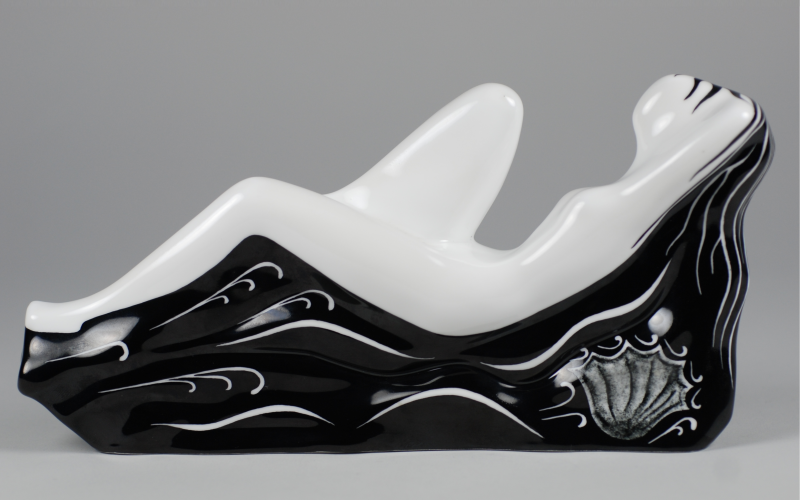
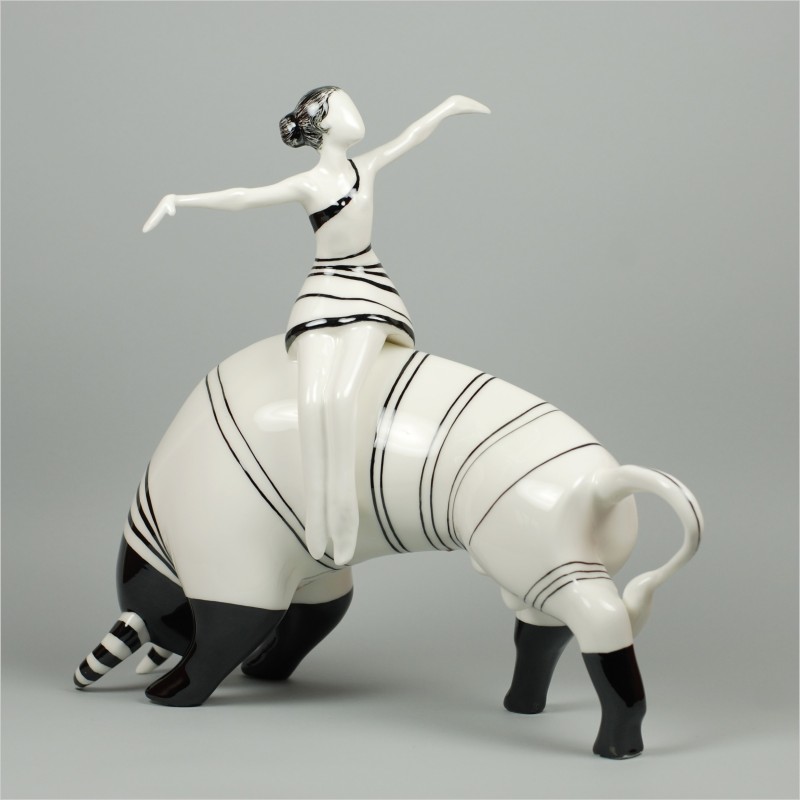
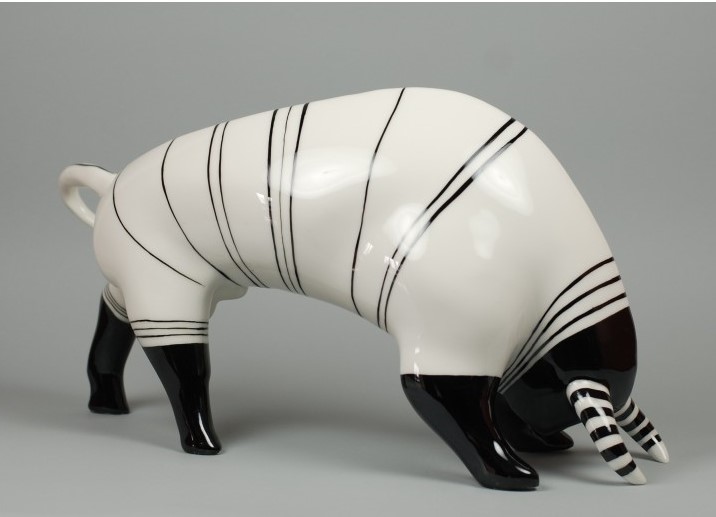
Collectable figurines designed by various artists include: Venus’ Birth (2005, by Lubomir Tomaszewski), Themis – Lady of Justice (2007, by Kazimierz Czuba), Asclepius (2012, by Jadwiga Stan), Abduction of Europe and Europa Bull (2014, both by Adam Spała). Although the figurines are all designed as modern adaptations of ancient characters, they still show the relevance of ancient motifs and myths in the contemporary world.
Come and see for yourself!
Lubomir Tomaszewski, Venus’ Birth, porcelain figurine, designed in 2005, AS Ćmielów Porcelain Manufactory, cat. no 185 [source].
Kazimierz Czuba, Themis, porcelain figurine, Ćmielów manufacture, designed in 2007, AS Ćmielów Porcelain Manufactory, cat. no 260 [source].
Jadwiga Stan, Esculap (Asclepius), porcelain figurine, Ćmielów factory, designed in 2012, AS Ćmielów Porcelain Manufactory, cat. no 333 [source].
Adam Spała, Abduction of Europe, porcelain figurine, designed in 2014, AS Ćmielów Porcelain Manufactory, cat. no 347 [source].
Adam Spała, Europa Bull, porcelain figurine, AS Ćmielów Porcelain Manufactory, designed in 2014, cat. no 348 [source].
The Author at the Leżąca Kotka [The Lying Kitty] Café, AS Ćmielów Porcelain Manufactory – photo by Maria Pszczolińska.
This report from Ćmielów manufactory has been prepared by Marta Pszczolińska, peer-reviewed by Elżbieta Olechowska, placed by Olga Strycharczyk
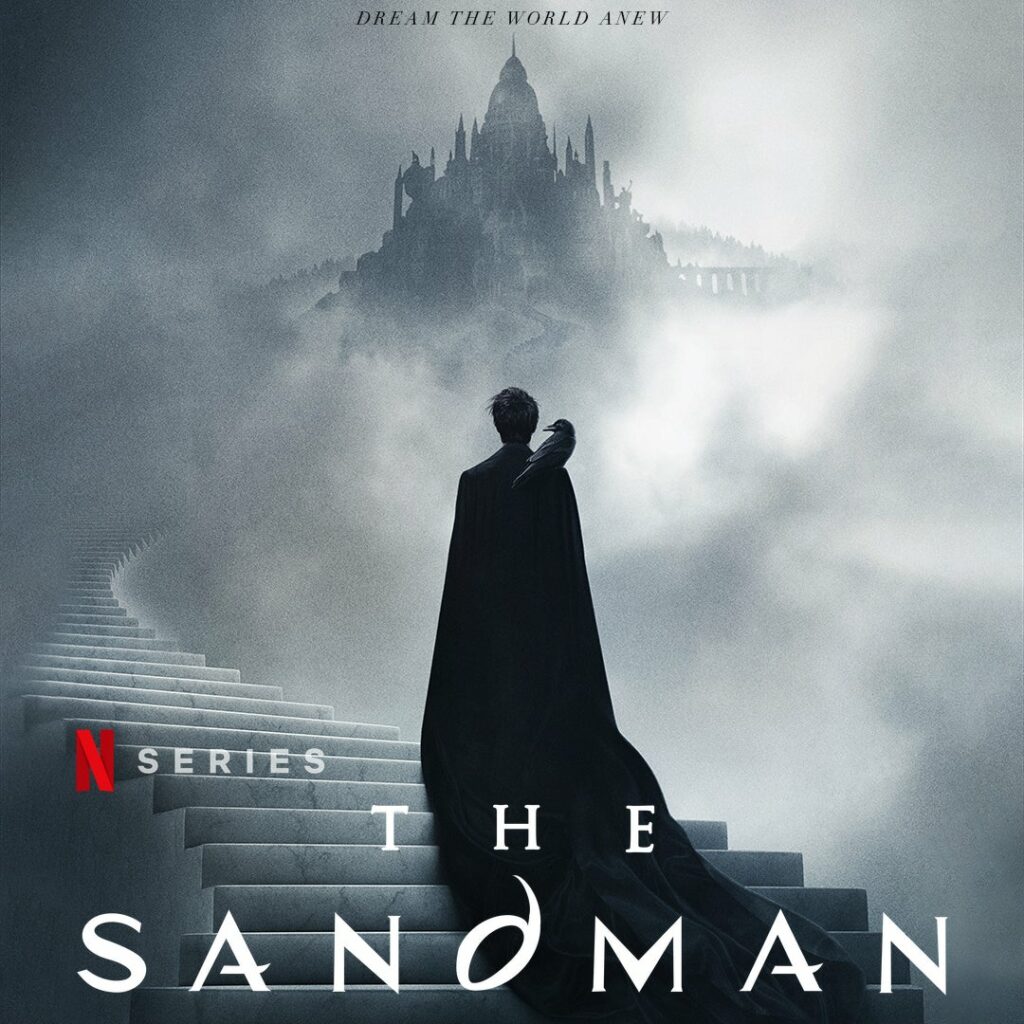
The SandmanNetflix series (released August 19, 2022) based on Neil Gaiman’s comic books ends its first season with a bonus episode containing two separate stories not connected directly with the series’ story plot.
The first of them is an animation, Dream of a Thousand Cats, directed by Hisko Hulsing, the second – Calliope– directed by Louise Hooper.
The TV series is an adaptation of Gaiman’s comic books from 1989 with Morpheus (aka Dream, Oneiros) as the leading character. As a god of dreaming, he is able to travel between many worlds, realms and realities that are not always connected with Greek and Roman Antiquity, and meet many mythical, legendary, or fantastic characters of various origins. Although his Greek roots and Greekness are not explicitly highlighted, many of his ancient features are preserved, and according to his Greek name derived from μορφή [morphē] (form, shape) he is identified as the one “whom the Romans called the shaper of form”.[1] Other important mythical characters present in the series are the Fates who are merged here with some elements of other beings, like for example oracles.
[Spoiler alert & domestic violence content] The episode Calliope, at the very end of season one, shows the Muse (Mellissanthi Mahut) imprisoned by mortals. Instead of worshipping her, they bound her by using an ancient rite, locked up, and forced to provide inspiration. Erasmus Fry (Derek Jacobi), a writer who captured her on Mount Helicon in 1927, kept her in a basement and violated her for years, until he passed her on as a chattel to Richard Madoc (Arthur Darvill), another author, unable to find ideas for a new novel. The new owner may consider unbinding the Muse at first. Instead, he refuses her pleas to free her and only then ask her for inspiration. When his writing deadline passes, he abuses her like Fry did before. Calliope summons the Fates with the hope that they can help her. The Fates (Nina Wadia, Souad Faress, Dinita Gohil) appear and tell her that only one of the Time’s & Night’s children (called the Endless) could help: Morpheus/Oneiros (Tom Sturridge), Calliope’s husband of long ago and father of their son, Orpheus. Unfortunately, Morpheus is also imprisoned by mortals. Her only hope is his release from captivity. One day, Calliope realizes that Oneiros is free. Despite their difficult past, he answers her call, comes and promises to get Richard to free her. Morpheus curses Richard with such an abundance of ideas that the writer goes mad and Calliope regains her freedom.
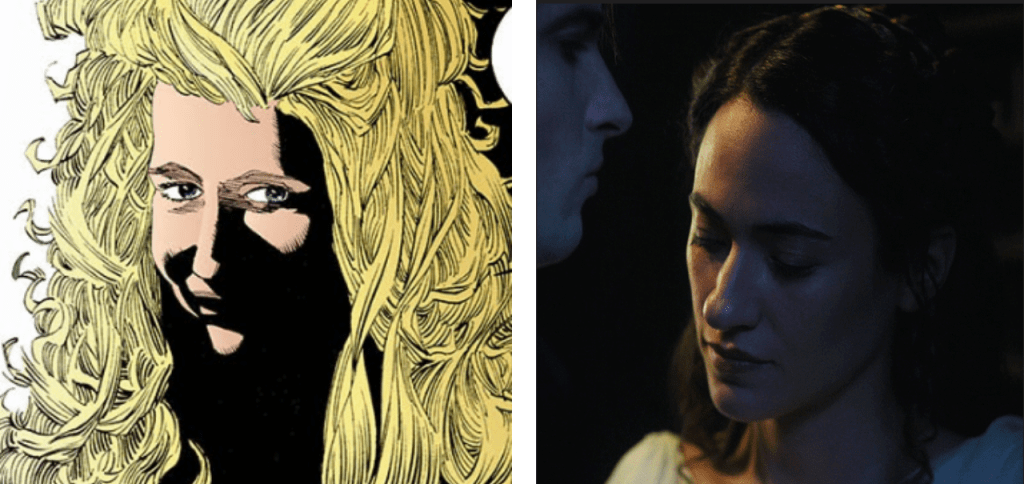
In the episode Calliope, the protagonist is undoubtedly the title character – the Muse of Homer – Calliope. Other Greek mythological characters are the Fates summoned by the Muse, and her former husband, Morpheus, called here by his Greek name Oneiros (Ὄνειρος) – Dream. While in the comic book Calliope is shown as a supernatural thin and extremely tall woman with messy blonde curls, in the TV series, her character is much more realistic, closer to the viewer and more relatable due to the brilliant performance of Melisanthi Mahut, known to wide audiences as the voice of Kassandra, the canonical hero misthios (mercenary) in the video game Assassin’s Creed Odyssey, and as the voice of Athena in the video game Immortals Fenyx Rising. The Greek Canadian actress is perfectly cast. Her Greek accent is emphasised to make a connection with other Greek characters previously played by her, and to reinforce the obvious idea that Homer’s mythical Muse is Greek. Another link to Homer is the use of moly(μῶλυ), a mythical plant mentioned in the Odyssey[2] as a potent magical drug (φάρμακον); it has milk-white flowers and black roots, hard to pull out for mortal men. Theophrastus[3] discussed it as a species of Allium [ornamental garlic]. Gaiman reuses the powerful moly flower motif as part of the magic ritual binding the goddess, Fry names it “sorcerer’s garlic”. Another part of the capturing rite is depriving Calliope of the scroll, her ancient attribute.
Calliope as seen in the comic book and in the TV series [source].
The episode about the captured Muse is an opportunity to discuss the difficult theme of abuse. It is striking how contemporary the subject is, and how little has changed since 1986 (when the comic books’ action is set). The story of a beautiful woman kept in home arrest and called by her captor and jailer his “muse” is powerful and poignant, even though the viewer knows it is a fictional story. Additionally shocking is the point that the victim here is an immortal goddess who can suffer violence and humiliation for an eternity instead of being worshipped.
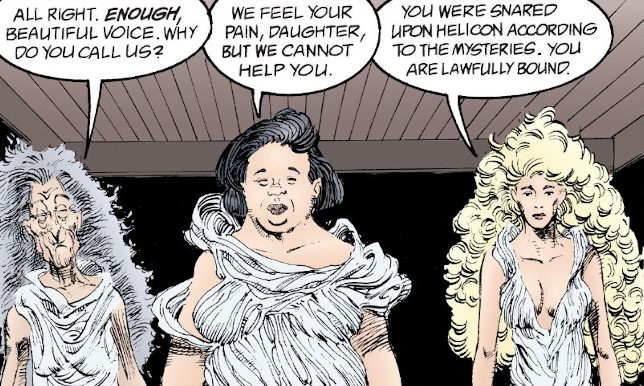
As mentioned above, exhausted by incessant suffering, Calliope, a divine being, a daughter of Zeus, calls for help the Fates and prays as an ordinary supplicant to powerful female deities she hopes can save her. They appear and the scene’s background looks as “Arcadian” as can be. In contrast with Calliope’s obscure room and her nightgown, the Fates wear proper ancient garments and behind them, opens a vista of an idyllic freshly green Greek landscape, with clear water running and a small round temple on a hill.
Unlike in the episode S01E02 where Morpheus summons the Fates in a dark scenery and the rule “one question, one answer” applies, the omniscient Fates talk with Calliope freely, almost as equals, without riddles or ambiguities and without asking for a payment. Unfortunately for the Muse, they cannot help her but they leave her with a shadow of hope. The scene also informs the viewer of Calliope’s family connections – Orpheus is mentioned as her son and his entire life story is told in a single well-turned sentence: “that boy-child who went to Hades for his lady-love and died in Thrace torn apart for his sacrilege; he had a beautiful voice too”. Already in his comic book and later in the television series, Gaiman made Oneiros the father of Orpheus contrary to ancient sources[4] that claim that it was Oiagros, Calliope’s Thracian lover. Most probably, the romantic relationship between Oneiros and Calliope will be developed in the forthcoming season two of Sandman.
The final scene of farewell [sources: comic, film].
To sum up, Calliope brings to mind cases of domestic violence when a helpless woman sequestrated at home against her will is secretly abused and the perpetrator is considered by society to be a “decent guy”. Calliope, the proud daughter of Zeus, treated as property is a symbol of victims who cannot speak for themselves. Her divine strength of character and the dignity she preserves against all odds, make it possible for her to show clemency and not to resort to vengeance on the brutal perpetrator, because, as she says: “Without forgiveness wounds will never heal”.
Post by Marta Pszczolińska, peer-reviewed by Elżbieta Olechowska, placed by Olga Strycharczyk
For Polish click here. For Maria’s text about the girls’ names click here.
In this next post about names, I would like to focus on the names given to men in Poland. As I mentioned before, many of contemporary names have their roots in ancient Greece or Rome. To show how popular each name is in Poland, I will refer to the PESEL register (Universal Electronic System for Registration of the Population) from the dane.gov.pl website (an official source of the Polish State). I chose 15 names from Antiquity for this post, but there are many more. Maybe your name has such provenance, or you know someone who bears a name referring to ancient heroes.
Here is a list of 15 ancient names held today by men in Poland:
Adrian – Latin name, carried by Hadrian – the successor of Trajan, Roman emperor in the 2nd century AD. There are 147 761 Adrians in Poland, and in 2021 this name was given 615 times.
Aleksander – a very old, double-barreled name. Frequently interpreted as “protecting/caring for men”. It was borne by the Macedonian king Alexander the Great and (as a second name) by Paris, the hero of Homer’s Illiad. There are 144 324Polish men with this name, and in 2021 the name Alexander was given to 6 919 children, which makes it the third most popular name now given to newborns in Poland.
Alexander at the battle of Issus, detail from the mosaic from House of the Faun in Pompeii, ca. 100 BC, Museo Nazionale di Napoli, inv. no. 10020 [source].
Andrzej – a name of Greek origin, translates as “man”. Andrzej is a very popular name in Poland, borne by 552 430 men, and third among most popular names carried by Poles. However, it lost popularity – in 2021, it was given only to 186 infants.
Antoni – a name from the ancient Roman family of Antonius. Greek biographers (vide Plutarch, The Life of Antonius, 4) suggested that family name could have origins in the name Anton, son of Hercules. Antoni, in 2021, was the name given most frequently and was given to 7 821 boys. Whereas in Poland, there live 161 690 people with this name.
Cezary – a name of Latin origin, created from the name Cezar (Caesar). 45 447 Polish men bear the name Cezary, and in 2021 it was given to 952 children.
Damian – a name associated with the ancient goddess Damia or Greek verb δαμάζω (tame). The name Damian was given to 183 726 Poles, and in 2021 305 children were born with this name.
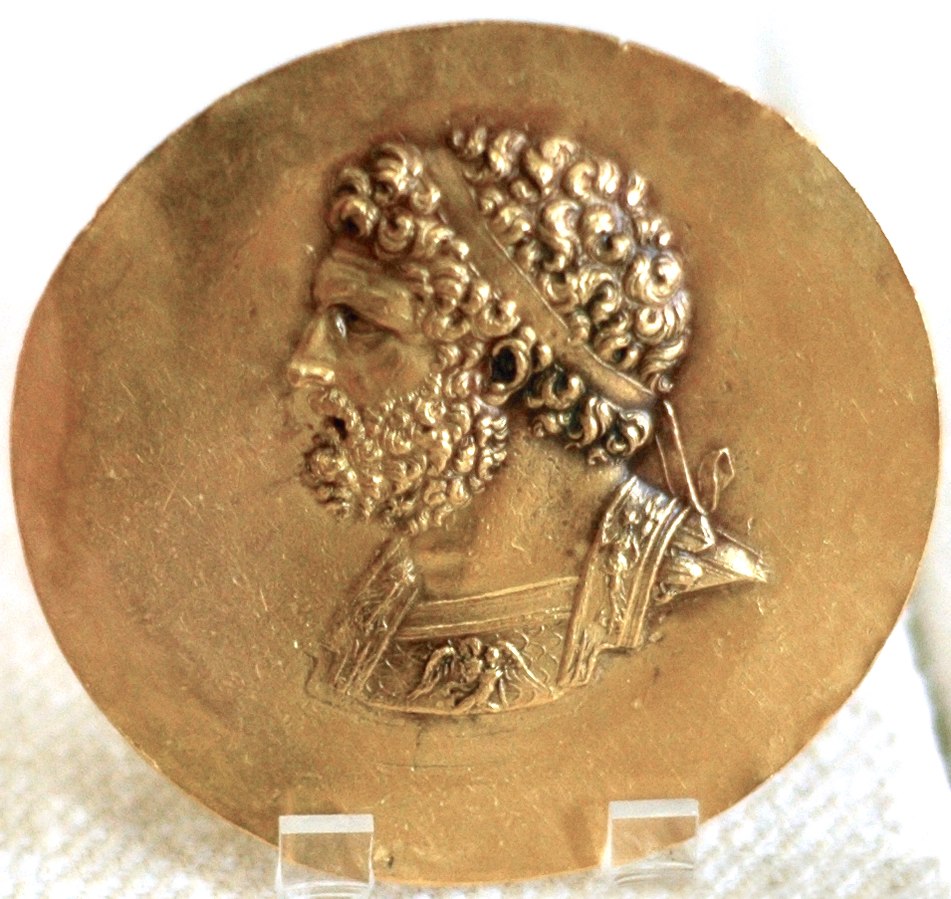
Filip – very old, Greek double-barreled name. It is translated as “loving horses”. This name was carried by the Macedonian king, the father of Alexander the Great. In Poland, the name Filip is borne by 162 071 people, and in 2021 was given 4 884 times.
Niketerion (victory medallion) with a portrait of king Philip II of Macedon, 3rd century BC, Cabinet des médailles de la Bibliothèque Nationale de France [source].
Hermes – a name from Greek mythology. It relates to the god of trade, merchants, and thieves. Currently 14 people of this name live in Poland. Whereas in 2021, it was not given to any child.
Hiacynt – a name of Greek origin, born by a figure from Greek mythology. Hiacynt was a favourite of Apollo and Zephyrus, who, out of jealousy, lead the young man to his death. From his blood grew flowers called hyacinths. In Poland, there are only 9 men with this name, and in 2021 it was not given to any newborn. However, this name is far more popular in its alternative form, Jacek. It is the name of 234 901 Polish men, and in 2021, 144 boys were born with this name.
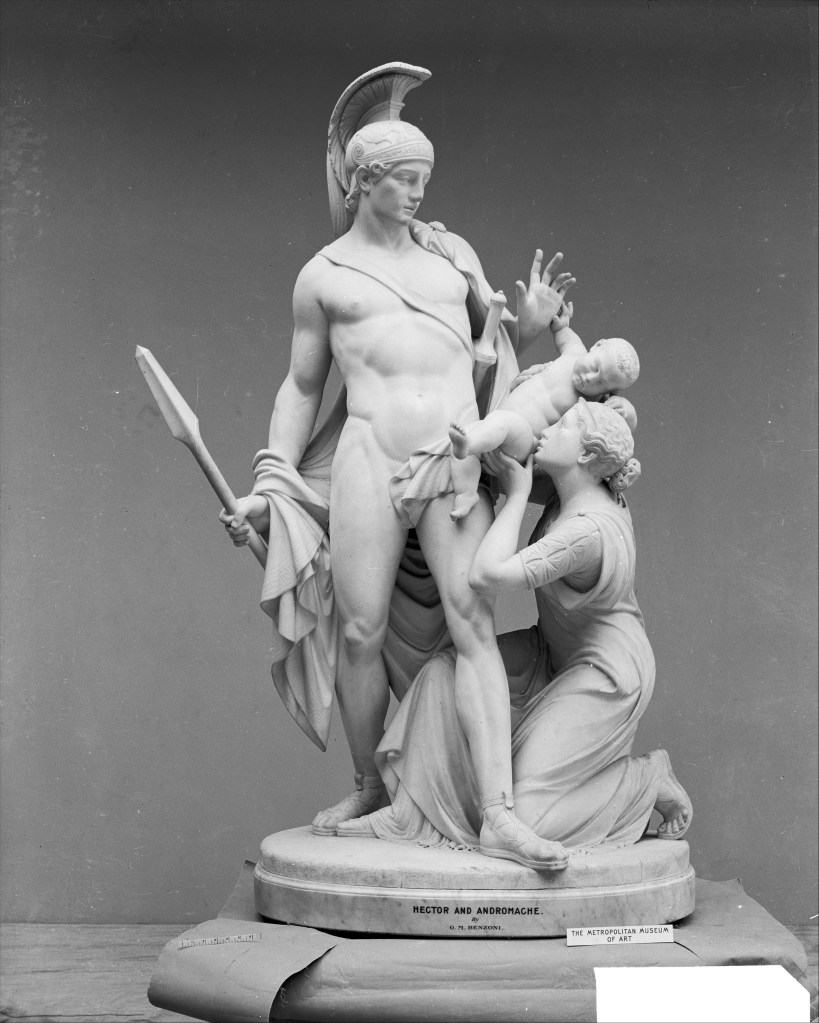
Hektor – the name of the hero of the Trojan war, the prince of Troy. In Poland this name, written as Hektor, is carried by 200 people, and 103as Hector. 22 Hektors were born in 2021.
Giovanni Maria Benzoni, Hector and Andromache (1871), Metropolitan Museum of Arts, New York, inv. no 99.9a, b [source].
January – a name of Latin origin, meaning born in January. It also relates to one of the oldest Roman deities, Janus. In Poland the name January is held by 487 men, unfortunately, there were no parents who gave this name to their child in 2021.
Marcin – a Latin name related to Mars, the god of war. It translates as “devoted to Mars” or “belonging to Mars”. There are currently 451 581 Poles named Marcin. Data shows that the name was given 366 times in 2021.
Mars Ultor, 2nd century CE, Palazzo Altemps, Rome [source].
Marek – a name of Latin origin, was one of the names popular in Rome already in archaic times. It also derives from the god of war, Mars. In Poland there are 386 516 people with this name, and 213were born in 2021.
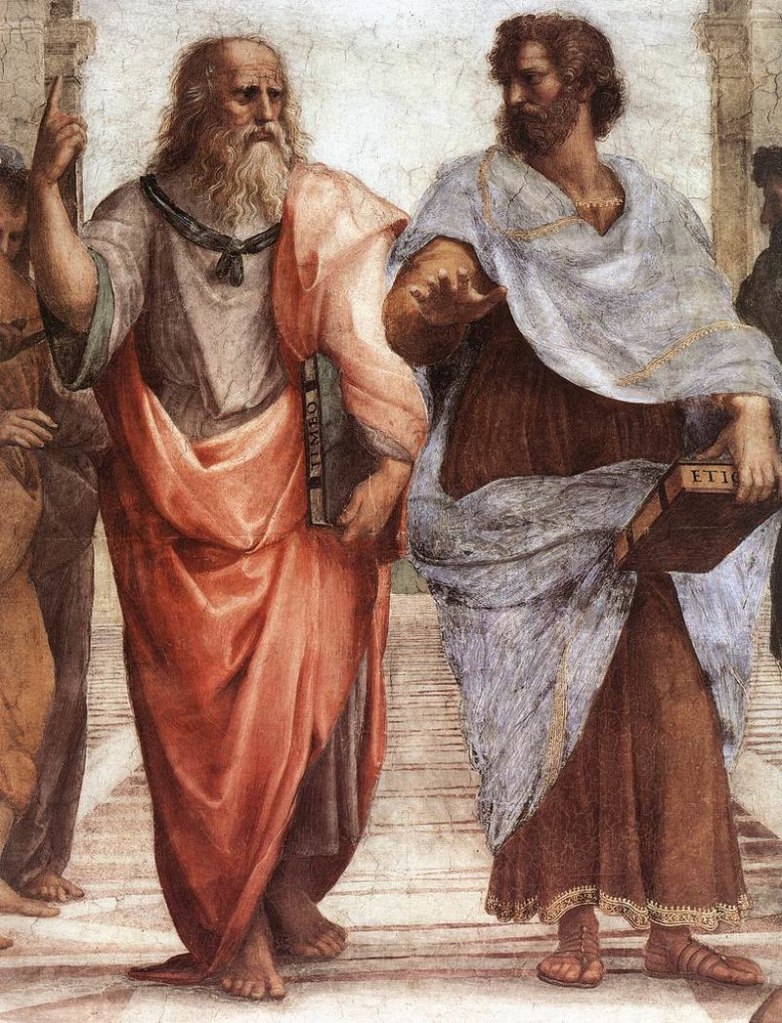
Platon – the Greek name of a great Greek philosopher. It was originally his nickname meaning broad-shouldered, robust man. According to the PESEL database, there are 173 Platons living in Poland. In 2021, this name was given to 12 newborns.
Plato and Aristotle, fragment of the fresco The School of Athens (1511) by Raphael, Stanze di Raffaello, Musei Vaticani [source]. You can see the entire image here.
Tytus – one of the oldest Latin names. Was borne, inter alia, by the son of Domitilla the Elder and Vespasian; Titus was a Roman caesar of the Flavian dynasty. In Poland, 1899 people currently carry the name Tytus; in 2021, it was given to 55 children.
Post by Maria Łysoń, placed by Olga Strycharczyk who also prepared its English version, proofread by Anna Olechowski
Bibliography:
Henryk Fros, Franciszek Sowa, Twoje imię: przewodnik onomastyczno-hagiograficzny, Kraków: Wydawnictwo WAM, 2000.
Antyczne imiona noszone przez współczesnych Polaków
Maria Łysoń jest studentką Kolegium Artes Liberales na Wydziale „Artes Liberales” UW. W roku akademickim 2021/2022 uczęszczała na seminarium „Nasze Mityczne Dzieciństwo” i w ramach tych zajęć napisała niniejszą pracę. Interesuje się fotografią. Jej prace można oglądać na Instagramie.
Na temat imion noszonych przez współczesne Polki vide tutaj.
W kolejnym moim poście o imionach chciałabym się skupić na tych nadawanych Polakom. Tak jak wspominałam wcześniej, wiele ze współczesnych imion ma swoje korzenie w starożytnej Grecji bądź Rzymie. Aby pokazać, jaką popularnością w Polsce cieszy się dane imię, skorzystałam z bazy PESEL ze strony dane.gov.pl. Na potrzebę tego posta wybrałam 15 imion, które wywodzą się z kultury antycznej, ale jest ich dużo więcej. Może Twoje imię jest właśnie takiego pochodzenia albo znasz osobę, której imię odnosi się właśnie do bohaterów antyku.
Oto lista 15 antycznych imion noszonych obecnie przez Polaków:
Adrian – imię łacińskie, noszone przez Hadriana – następcę Trajana, cesarza rzymskiego z II w. n.e. W Polsce jest obecnie 147 761 Adrianów, a w roku 2021 imię to nadano 615 razy.
Aleksander – bardzo stare, dwuczłonowe imię greckie. Bywa interpretowane jako „broniący/troszczący się o mężów”. Imię to nosił król macedoński, Aleksander Wielki, oraz (jako drugie imię) Parys, bohater Iliady Homera. Polaków o tym imieniu jest obecnie 144 324, natomiast w 2021 roku imię Aleksander nadano 6 919dzieciom, co czyni je trzecim najpopularniejszym imieniem obecnie nadanym noworodkom w Polsce.
Aleksander w bitwie pod Issos, fragment mozaiki z Domu Fauna w Pompejach, ok. 100 r. p.n.e., Museo Nazionale di Napoli, nr inw. 10020 [źródło].
Andrzej – imię pochodzenia greckiego, tłumaczone jako „mężczyzna”, „mąż”. Andrzej to bardzo popularne imię w Polsce, nosi je 552 430mężczyzn, znajduje się zatem na trzecim miejscu wśród najpopularniejszych imion noszonych przez Polaków. Imię to jednak traci na popularności – w roku 2021 dostało je zaledwie 186noworodków.
Antoni – imię wywodzące się ze starożytnego rzymskiego rodu Antoniuszów. Greccy biografowie (vide Plutarch, Żywot Antoniusza 4) sugerowali, że nazwa tego rodu mogła wywodzić się od Antona, syna Herkulesa. Antoni w 2021 roku był najczęściej nadawanym imieniem, tak zostało nazwanych 7 821 chłopców. Natomiast w Polsce obecnie żyje 161 690osób o tym imieniu.
Cezary – imię o łacińskim pochodzeniu, utworzone do imienia Cezar (Caesar). Imię Cezary nosi obecnie w Polsce 45 447osób, a w roku 2021 zostało nadane 952dzieciom.
Damian – imię przejęte z języka łacińskiego, łączone się z imieniem starożytnej bogini Damii lub z greckim czasownikiem δαμάζω (oswajam, ujarzmiam). Imię Damian noszone jest przez 183 726Polaków, a w roku 2021 urodziło się 305dzieci o tym imieniu.
Filip – bardzo stare, greckie imię dwuczłonowe. Jest tłumaczone jako „lubiący konie”. Imię to nosił król macedoński, ojciec Aleksandra Wielkiego. W Polsce imię Filip nosi 162 071 osób, a w roku 2021 zostało nadane 4 884 razy.
Niketerion (medalion upamiętniający zwycięstwo) z wizerunkiem króla Filipa II Macedońskiego, III w. p.n.e., Cabinet des médailles de la Bibliothèque Nationale de France [źródło].
Hermes – imię pochodzące z mitologii greckiej. Odnosi się do boga handlu, kupców oraz złodziei. Obecnie w Polsce żyje 14osób o tym imieniu. Natomiast w 2021 roku nie nadano go żadnemu dziecku.
Hiacynt – imię pochodzenia greckiego, noszone przez postać z greckiej mitologii. Hiacynt to ulubieniec Apollina i Zefira, który przez zazdrość doprowadził do śmierci młodzieńca. Z jego krwi wyrosły kwiaty nazwane hiacyntami. W Polsce żyje tylko 9mężczyzn o tym imieniu, a w 2021 roku nie zostało ono nadane żadnemu noworodkowi. Natomiast imię to funkcjonuje w Polsce dużo częściej w formie swojego odpowiednika Jacek. W Polsce imię Jacek nosi 234 901 osób, a w 2021 roku urodziło się ich 144.
Hektor – imię bohatera wojny trojańskiej, księcia Troi. Imię to w Polsce nosi 200osób, używając pisowni Hektor, oraz 103 w zapisie Hector. W 2021 roku nadano imię Hektor, stosując we wszystkich przypadkach polską pisownię (przez k); imię to otrzymały 22noworodki.
Giovanni Maria Benzoni, Hektor i Andromacha (1871), Metropolitan Museum of Arts, Nowy Jork, inv. no 99.9a, b [źródło].
January – imię pochodzenia łacińskiego, oznaczające urodzonego w styczniu. Odnosi się również do jednego z najstarszych rzymskich bóstw, czyli Janusa. W Polsce imię January nosi 487osób, niestety, w roku 2021 żaden z rodziców nie nazwał tak swojego dziecka.
Marcin – imię łacińskie, odnoszące się do Marsa, boga wojny. Jest tłumaczone jako „poświecony Marsowi” lub „należący do Marsa”. Polaków o imieniu Marcin jest obecnie 451 581. Z danych z 2021 roku wynika, że w owym roku imię to zostało nadane 366razy.
Mars Ultor, II w. n.e., Palazzo Altemps, Rzym [źródło].
Marek – imię pochodzenia łacińskiego, było jednym z imion używanych w Rzymie już w czasach archaicznych. Również to imię wywodzi się od boga wojny, Marsa. W Polsce jest 386 516osób noszących to imię, a w roku 2021 urodziło się 213Marków.
Platon – imię greckie, pod którym znany jest wielki filozof grecki. Pierwotnie było to jego przezwisko, oznaczające człowieka barczystego, krzepkiego. W Polsce według bazy PESEL żyje 173Platonów. W roku 2021 imię to nadano 12 noworodkom.
Platon i Arystoteles, fragment fresku Rafaela Szkoła Ateńska (1511), Muzea Watykańskie [źródło]. Cały fresk można zobaczyć tu.
Tytus – jedno z najstarszych imion łacińskich. Nosił je między innymi syn Wespazjana i Domitilli Starszej, wódz i cesarz rzymski z dynastii Flawiuszy. Obecnie w Polsce imię Tytus nosi 1 899 osób, a w 2021 roku zostało ono nadane 55noworodkom.
Post napisany przez Marię Łysoń, zamieszczony przez Olgę Strycharczyk
Bibliografia:
Henryk Fros, Franciszek Sowa, Twoje imię: przewodnik onomastyczno-hagiograficzny, Kraków: Wydawnictwo WAM, 2000.
On March 22, 2023, we were most pleased to host a special guest at Our Mythical Childhood Seminar at the Faculty of “Artes Liberales”, University of Warsaw: Dr habil. Karoline Thaidigsmann from theSlavic Institute at the University of Heidelberg. Karoline’s research interests comprise inter alia Gulag literature, children’s and YA literature, and Slavic contemporary authors. Her “Habilitationsschrift” was dedicated to the poetics of shifting borders, Poetik der Grenzverschiebung. Kinderliterarische Muster, Crosswriting und kulturelles Selbstverständnis in der polnischen Literatur nach 1989 (Heidelberg: Universitätsverlag Winter, 2022).
Cover of the book by Karoline Thaidigsmann, Poetik der Grenzverschiebung. Kinderliterarische Muster, Crosswriting und kulturelles Selbstverständnis in der polnischen Literatur nach 1989, Heidelberg: Universitätsverlag Winter, 2022.
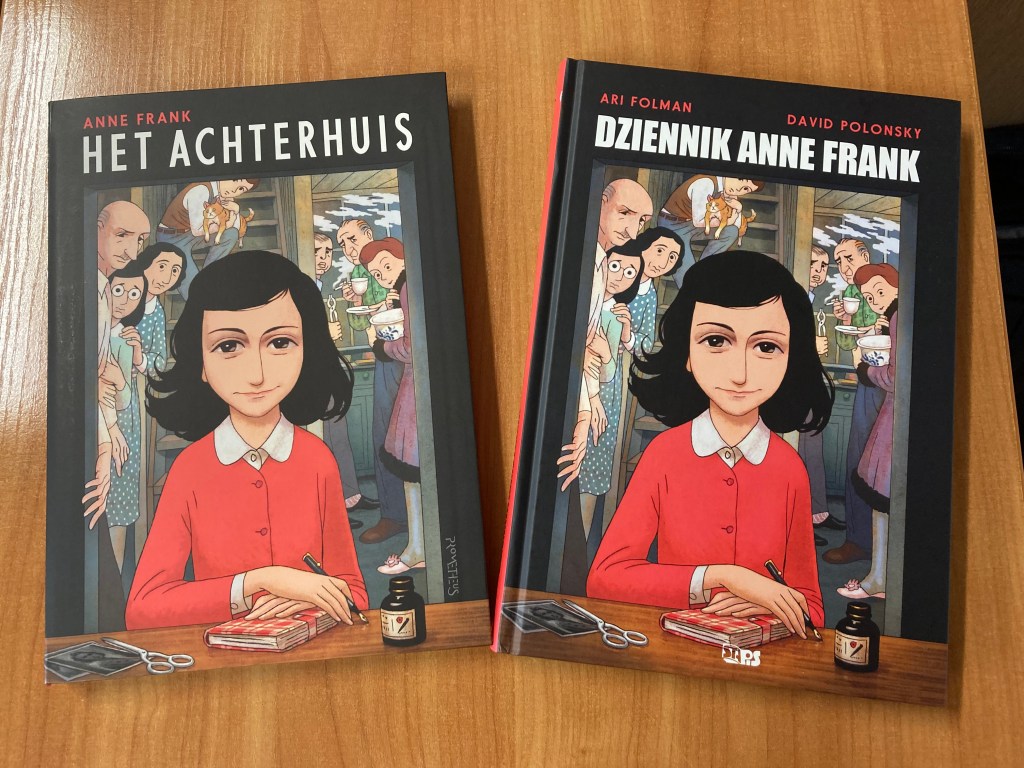
At the OMC Seminar, she spoke about an adaptation of Anne Frank’s Diary into a graphic novel by Ari Folman with illustrations by David Polonsky. It brings Anne Frank’s legacy closer to contemporary readers and opens it to new audiences.
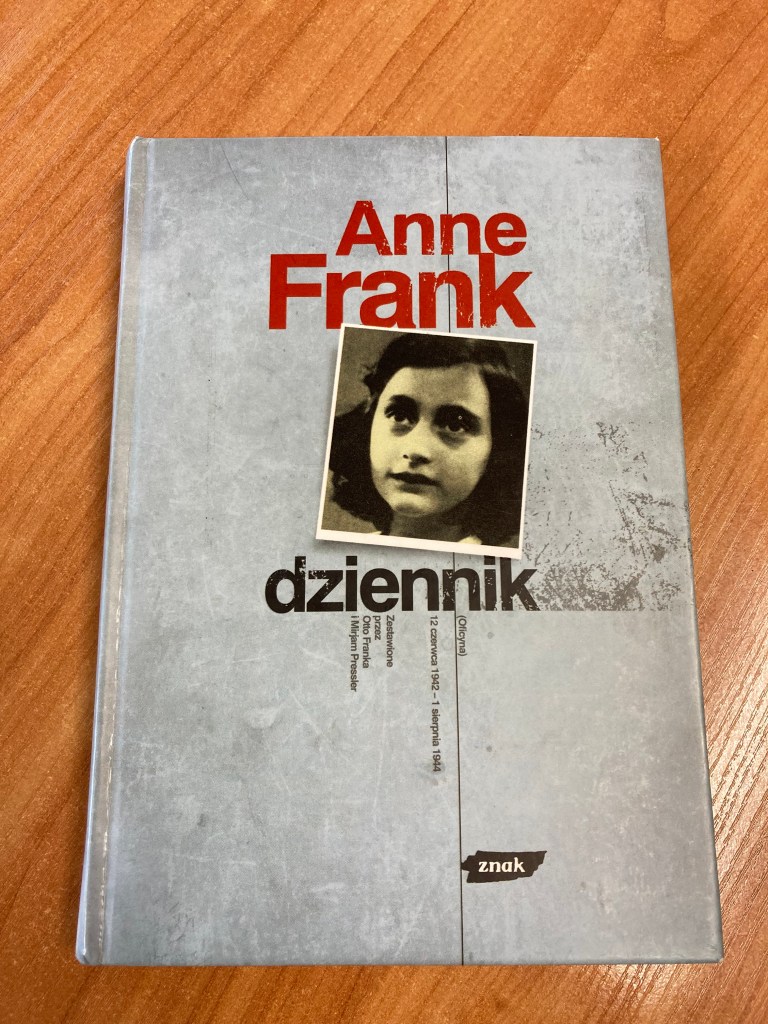
Anne Frank, Dziennik : (oficyna) : 12 czerwca 1942 –1 sierpnia 1944, ed. Otto Frank and Mirjam Pressler, trans. Alicja Dehue-Oczko, Kraków: Wydawnictwo Znak, 2006 – photo by Katarzyna Marciniak, due to Krzysztof Rybak’s courtesy.
Dutch and Polish editions of Ari Folman’s and David Polonsky’s graphic adaptation of Anne Frank’s Diary – photo by Katarzyna Marciniak, due to Krzysztof Rybak’s courtesy.
The lecture was followed by a Q&A session, and a discussion of impressions and details of the adaptation that speak best to young audiences. The students were able to compare original fragments of the Diary with corresponding passages in the graphic novel to better grasp how the text was adapted, as well as to discuss whether they liked or not what was done and how effective and justifiable the adaptation was in rendering Anne’s personality more vivid for a contemporary readership and at the same time remaining true to the legacy of the Diary.
Karoline Thaidigsmann giving lecture on Anne Frank’s Diary to students of the Faculty of “Artes Liberales”, University of Warsaw – photo by Katarzyna Marciniak.
Our outstanding guest also shed new light on the use of ancient motifs in the graphic novel, and how they were anchored in the original contents of the Diary.
Thank you, Karoline! Looking forward to your next visit!
Bibliographical data on the graphic novel and some of its translations:
Dutch: Ari Folman and David Polonsky, Het Achterhuis graphic novel, Amsterdam: Prometheus, 2017.
English: Ari Folman and David Polonsky, Anne Frank’s Diary. The Graphic Adaptation, [London]: Penguin Books, 2017.
French: Le Journal d’Anne Frank. Roman graphique, trans. Claire Desserrey, Isabelle Rosselin, and Philippe Noble, Paris: Calmann-Levy, 2017.
German: Das Tagebuch der Anne Frank, trans. Klaus Timmermann and Ulrike Wasel, Berlin: S. Fischer, 2017.
Hebrew: אנה פרנק : היומן הגרפי [Anah Franḳ: ha-yoman ha-grafi], trans. and ed. Michal Paz-Klapp, trans. Ḳarlah Perlshṭain, Kineret: Zemorah-Bitan, 2017.
Italian: Anne Frank. Diario, trans. Laura Pignatti, Elisabetta Spediacci, Torino: Einaudi, 2017.
Spanish: El diario de Anne Frank. Adaptación gráfica, trans. Diego J. Puls and Neus Neuno Cobas, Nueva York, NY: Vintage Español (Penguin Random House LLC), 2017.
Danish: Anne Franks dagbog. Graphic diary, trans. Tove Dueholm Nielsen, [Kbh.]: Lindhardt og Ringhof, 2019.
Polish: Dziennik Anne Frank. Powieść graficzna, trans. Kamil Budziarz, Katowice: Stapis, 2019.
Russian: Дневник Анны Франк. графическая версия [Dnevnik Anny Frank: graficheskai︠a︡ versii︠a︡], trans. Мария Скаф, C. Белокриницкая, M. Новикова, Moskva: Mann, Ivanov I Ferber, 2019.
Chinese: 安妮日记 : 漫画版 [An’ni ri ji: man hua ban], trans. Yuchan Lü and Yihui Ye, Zhangsha [Changsha]: Hu nan wen yi chu ban she, 2020.
Post by Marta Pszczolińska, proof-read by Elżbieta Olechowska, placed by Olga Strycharczyk