A Day of Health and Myths with Foundation Fact Orphanage

This post has been prepared by Heliana Onomo, an American Fulbright Scholar. Heliana was researching oral literature, traditions, and women experience at École Normale Supérieure in Cameroon as part of the 2020–2021 Fulbright Scholar Program. She worked under the tutorship of our team member Prof. Daniel A. Nkemleke. May her uplifting text be a source of hope and inspiration to us all!

On July 11, 2021, I partnered with the organizations Come Over II[1] and Proximity Doctors[2] to organize a day of health and fun at the Foundation Fact Orphanage[3]. The purpose of this event was to teach children about proper hygiene and entertain them with Cameroonian oral stories.
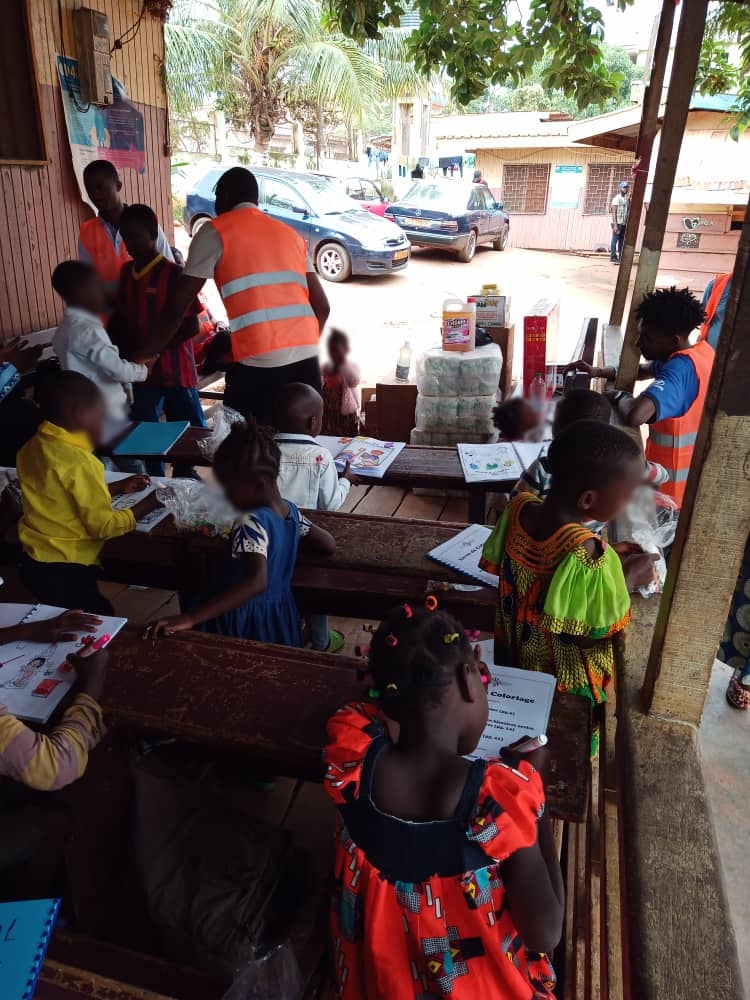
A day of health and myths at the Foundation Fact Orphanage in Essos, Yaoundé. Photo by Heliana Onomo.
Ms Suzane Liheb the Head of the Foundation Fact Orphanage. Photo by Heliana Onomo.

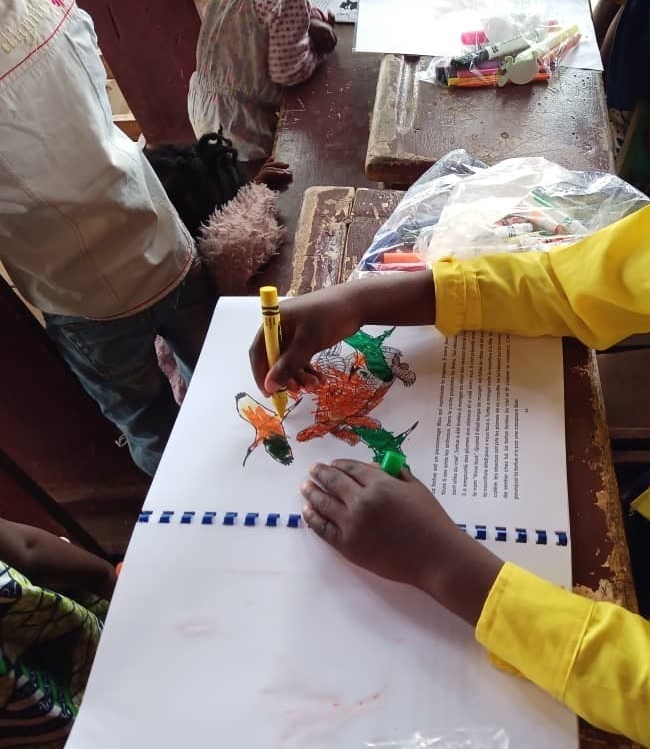
At the start of the event, each child was given a coloring book. This coloring book was divided into three sections. Come Over II designed the first section with drawings about hygiene. The third section, titled “Career Paths”, featured drawings of different careers from Like a Girl! A Girl-Powered Coloring Book[4] by Ayelet Keshet and Black Boys, Big Dreams Coloring Book[5] by Abby Baldeh. I designed the second section of the book, titled “Popular Characters in Cameroonian Oral Stories and Their Meanings”. John Onomo, a student at the University of Dallas, prepared original drawings and photoshopped designs based on existing myths and folktales to create the coloring pages.

The coloring book prepared for the workshop. Photo by Heliana Onomo.
Coloring pages. Photo by Heliana Onomo.
Illustration of the folktale “The Birds Are Going to the Sky”.
Photo by Heliana Onomo.

I referenced certain three myths from the Our Mythical Childhood Survey. The Bamoun myth “Myth of Ntiteuh”[6] was used to describe the power of love within the African Mother. The Mboum myth, “Autan and the Monster”[7], was used to describe the Baby Hero character. The Bafut folktale, “The Orphan Child and Her Uncle’s Wife”[8] was used to describe the Powerful Old Woman character. Other myths and folktales were referenced to describe other characters such as the Beba folktale “The Birds Are Going to the Sky”[9] for the trickster turtle and the Tikar folktale “Hare and Lion: Lion Is My Horse!”[10] for the strong but easily fooled lion.

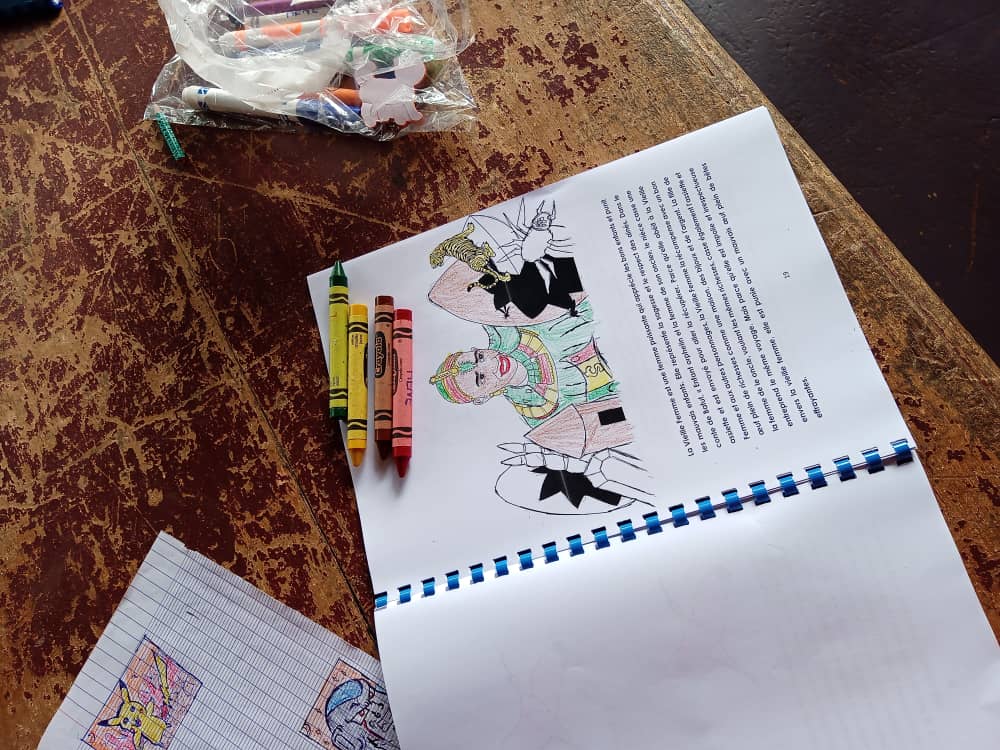
Illustration of the myth of Ntiteuh. Photo by Heliana Onomo.
Illustration of the myth “The Orphan Child and Her Uncle’s Wife”. Photo by Heliana Onomo.

The first part of the event was dedicated to health and hygiene. Members of Come Over II used drawings from the coloring book to give a presentation on healthy hygiene habits. They focused on important aspects such as how to brush teeth, hand-washing, and COVID and malaria prevention. To make sure that the children understood the lessons, the presenters asked questions and gave treats for every correct answer. As a result, the children were engaged and excitedly blurt out the answers to questions such as how to wash your hair. After the presentation, we gave the children crayons, markers, and stickers to use on their new coloring book.

Part of the event dedicated to health and hygiene, prepared by the Come Over II organization and the Proximity Doctors group. Photo by Heliana Onomo.

The next events were the dentist and doctor consultations. The Proximity Doctors group graciously donated their time and supplies to provide the children health care. While waiting to be consulted, the children worked on their books and had lunch.

The workshop continues. Photo by Heliana Onomo.

Afterwards, it was storytelling time! Professor Emmanuel Matateyou, author of many children’s books and professor of oral literature at École Normale Supérieure, performed the folktale, “La dette de Kimanga” (“The Debt of Kimanga”) from his book, Les Mervilleux récits de Tita Ki (The Wonderful Stories of Tita Ki).

Professor Emmanuel Matateyou. Photo by Heliana Onomo.

With grand gestures and comical voice-acting, he captured the children’s attention and recited how the tortoise tricked the pig into giving his food. He also incorporated a participation tactic from Caribbean storytelling. When he said “Crick”, the children were to respond “Crack!”. This made the children part of the story. They even danced and sing along with Professor Matateyou. This oral performance was entertaining to watch. After storytelling, the last activity was hand-painting, where the children decorated a wall with blue, orange, and green handprints.
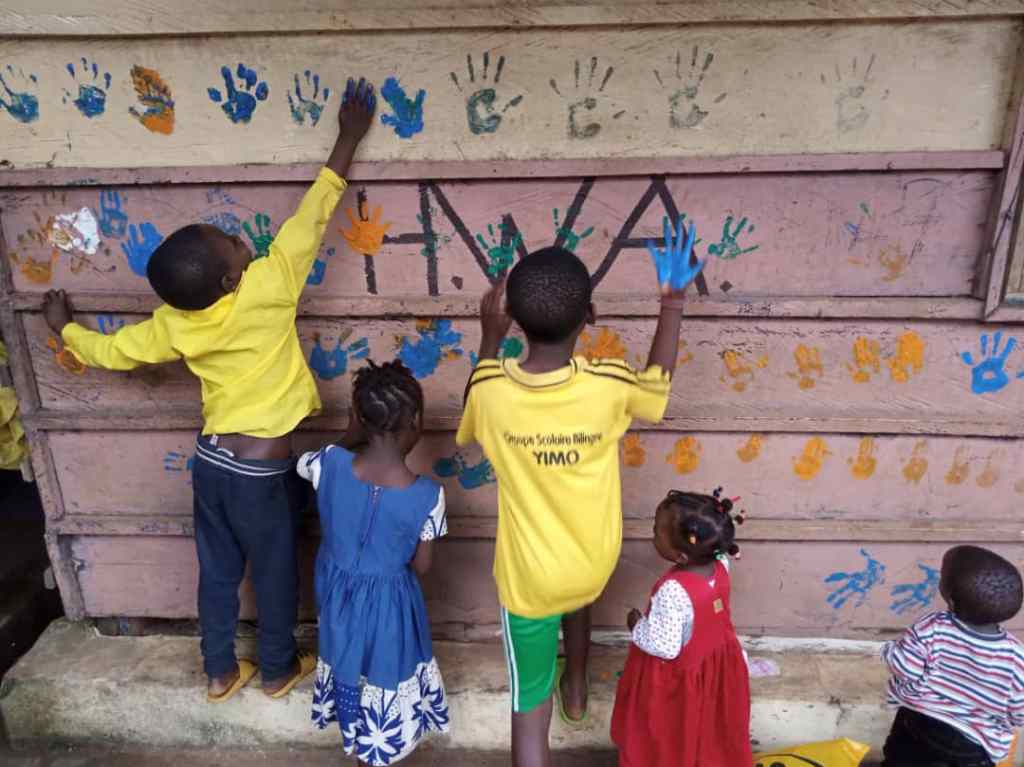
Children decorating the wall with hand-painting. Photo by Heliana Onomo.

Overall, the children responded well to the lessons and had a great time. This event taught me that coloring pages are a fun and effective activity to teach children about cultural stories. They were enthusiastic to read the descriptions of the myths. At the end of the event, we donated necessary items to the orphanage, such as medical supplies, hygiene products like toothpaste and toothbrushes, food like fish and rice, and a TV. Working on this event was an inspiring and heartwarming experience.

Post by Heliana Onomo, placed by Olga Strycharczyk

References

[1] Come Over II is a local non-profit organization based in Yaoundé whose mission is to visit local villages and orphanages to teach proper hygiene and provide healthcare. To learn more about them, visit: https://m.facebook.com/ComeOver2Cameroon/.

[2] Proximity Doctors is a local non-profit organization in Cameroon whose mission is to provide medical care to places in need. To learn more, visit: https://www.facebook.com/proximitydoctors/

[3] Foundation Fact orphanage is a private Christian-based orphanage situated in Essos, Yaoundé. It currently has 55 children in its care. To learn more about them, visit their site: https://www.fondation-fact.cm/ or their Facebook page: https://www.facebook.com/Orphelinat-Fondation-Famille-Chretienne-FACT-554699851386639

[4] Keshet, Ayelet, Like a Girl! A Girl-Powered Coloring Book, Raindoe Publishing, 2016. 

[5] Baldeh, Abby, Black Boys, Big Dreams Coloring Book, Independently Published, 2020. 

[6] “Myth of Ntiteuh (the Most Beautiful Woman on Earth) Who Married the Sky King by Emmanuel Matateyou”, collected by Daniel A. Nkemleke for the Our Mythical Childhood Survey: http://omc.obta.al.uw.edu.pl/myth-survey/item/184.

[7] “Autan and the Monster by Tidjani Yaya”, collected by Daniel A. Nkemleke for the Our Mythical Childhood Survey: http://omc.obta.al.uw.edu.pl/myth-survey/item/434

[8] “An Orphan Child and Her Uncle’s Wife by Peter Numfor Ambe”, collected by Divine Che Neba for the Our Mythical Childhood Survey: http://omc.obta.al.uw.edu.pl/myth-survey/item/412

[9] “The Birds that Went to the Sky”, published in The Sacred Door and Other Stories: Cameroon Folktales of the Beba by Makuchi, Athens: Ohio University Press, 2008. 

[10] “Hare and Lion: The Lion is my Horse! by Assamahou Ndouyou”, published in Anthology of Myths, Legends, and Folktales from Cameroon by Emmanuel Matateyou, Lewiston, N.Y.: Edwin Mellen Press, 1997. 
“Our Mythical Nature” Conference

The international conference “Our Mythical Nature: The Classics and Environmental Issues in Children’s and Young Adults’ Culture” took place online at the Faculty of „Artes Liberales”, University of Warsaw, on 29–30 September, 2021, to summarize the third stage of the Our Mythical Childhood Project:

Zbigniew Karaszewski, A Girl with Doves Googling Arcadia (2020)
– logo of the 3rd stage of the Our Mythical Childhood project.

Here you can read the conference materials – the programme:

and the conference booklet:

The lectures and presentations from the conference are available as a playlist on our YouTube channel, so if you search for a nice background for jogging in the middle of Nature… 😉

***

The subject of Nature was also taken up by high-school students. Here you can watch their films on ecology, prepared within the competition Antiquity–Camera–Action!:

Moreover, the students of three high schools in Poland (Bartłomiej Nowodworski from Kraków, Mikołaj Rej from Warsaw, and “Strumienie” from Józefów) prepared a joint publication Naturae cognoscere causas (Open Access: http://www.omc.obta.al.uw.edu.pl/naturaecausas). They present their research results in the reportage:

We wish You All a good start into the New Year MMXXII!

***

For more information see the conference page: http://omc.obta.al.uw.edu.pl/our-mythical-nature

Post prepared by Katarzyna Marciniak and Olga Strycharczyk

Minerva Meets Ariadne

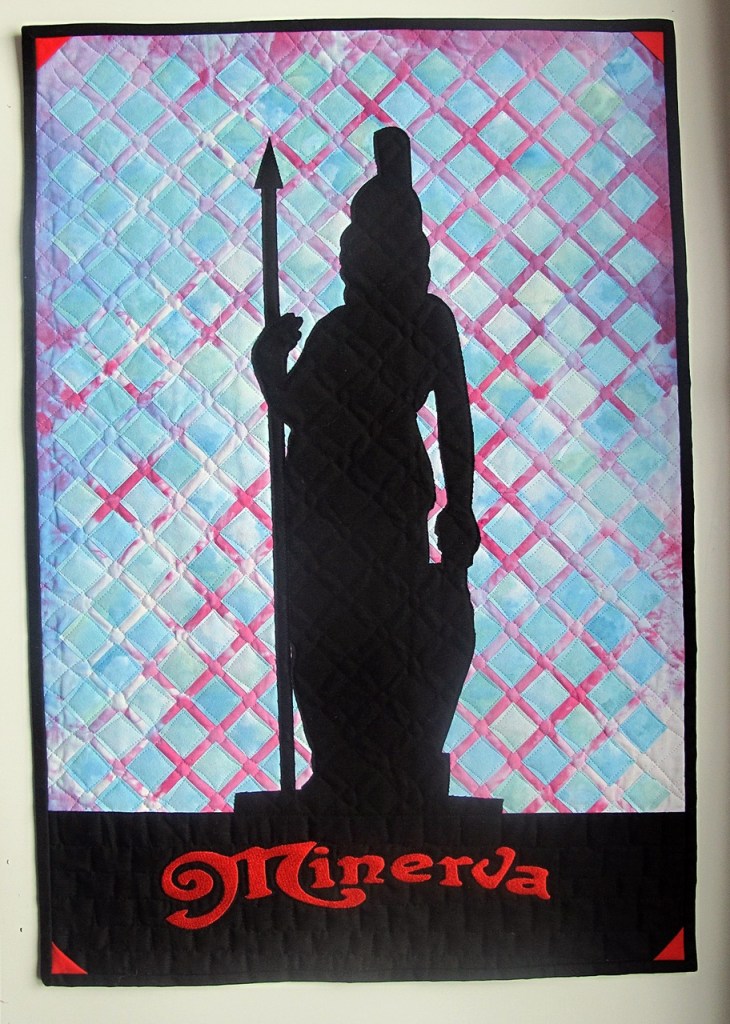
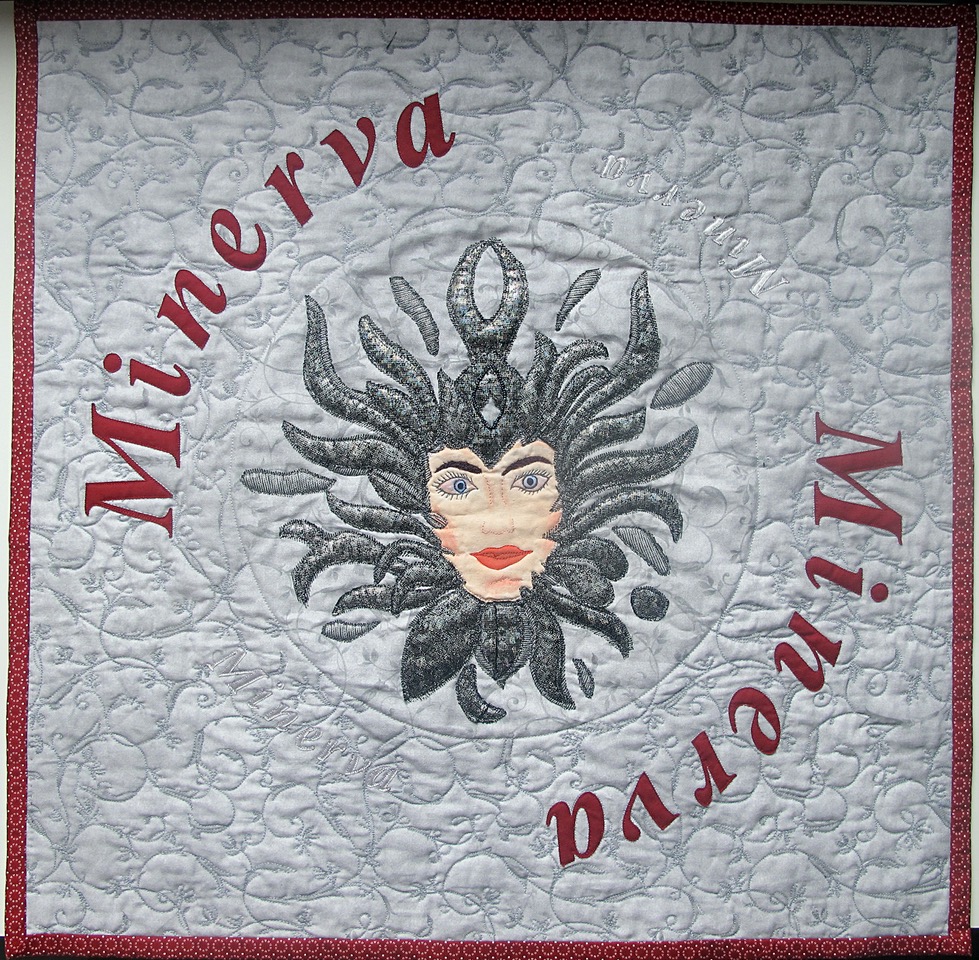
Minerva was the main theme of the recent patchwork competition: “Minerva – bogini rzemiosła” [Minerva – The Goddess of Crafts] organized by Stowarzyszenie Polskiego Patchworku [Polish Patchwork Association] together with the distributor of Minerva sewing machines. The first “Minerva” was created in Austria in 1871, during the second wave of the industrial revolution. It was adorned with an image of the goddess and the motto “MELIORA SUNT BONO INIMICA”.

Minerva has many mythical cousins in the family of sewing machines. Vesta popular for its home machines, Titan, Trojan, Vulcan miniature and toy machine, or Venus overlock are just a few examples.

Ariadne also finds her place among those mythical heroes as a patron of the Polish thread factory called “Ariadna”. The company’s website proudly tells the story of the goddess. The list of Ariadna products includes: Heros, Flora, Iris, Titan, HectorDaedalusIcarus, Maia, Talia, Leto, and Muse.

Depiction of the goddess on the
vintage Minerva sewing machine [source].
Vulcan sewing machine for children [source].
Patchwork “Patrona 2021”
by Sylwia Haluch [source].
Patchwork “Pani M.” [Ms M.]
by Joanna Szymczyk [source].
Minerva sewing machine – photo by Maria Makarewicz.
A bag with the logo of Ariadna thread factory – photo by Katarzyna Marciniak.
Ariadna braided thread
of universal use named Heros [source].
Ariadna high tenacity sewing thread
named Leto [source].
Ariadna thread named Daedalus resistant to high temperatures [source].
Ariadna thread and Minerva sewing machine – photo by Maria Makarewicz.

See also:

Stowarzyszenie Polskiego Patchworku [Polish Patchwork Association]: https://polskipatchwork.pl/index.php/2021/10/03/bawmy-sie-razem-czyli-minerva-bogini-rzemiosla/ (accessed December 23, 2021).

Post prepared by Maria Makarewicz and Olga Strycharczyk.

Proletarian Classics?

A fascinating international workshop – Proletarian Classics? – took place online during the weekend of 23–24 October, 2021. It was organized by the University of St Andrews, School of Classics in collaboration with Classical Reception Studies Network, University of Ljubljana, and Faculty of “Artes Liberales”, University of Warsaw. The workshop, under the direction of Henry Stead, explored the relationship between ancient Greek and Roman culture and world communism from 1917. It constituted a follow-up and further development of three projects, Classics and Class and Brave New Classics conducted by Henry Stead (University of St Andrews) and Edith Hall (King’s College London), and Classics and Communism currently continued by David Movrin (University of Ljubljana) and Elżbieta Olechowska (Faculty of “Artes Liberales”, University of Warsaw).

Poster of the workshop (source: Brave New Classics blog).

Twenty-five scholars discussed in five panels topics ranging from The Ancient Proletarian Hero, Classics and Communism in and beyond the Soviet Block, Greek Tragedy and the Left, Leftist Ancient History to Animating the Past, Classicising the Future. The workshop ended in a roundtable offering comments and conclusions for future research. Faculty of “Artes Liberales” was represented in the workshop by Hanna Paulouskaya and Elżbieta Olechowska.

See the Workshop programme.

Post by Elżbieta Olechowska, placed by Olga Strycharczyk

Mythical Housing Estate in Warsaw

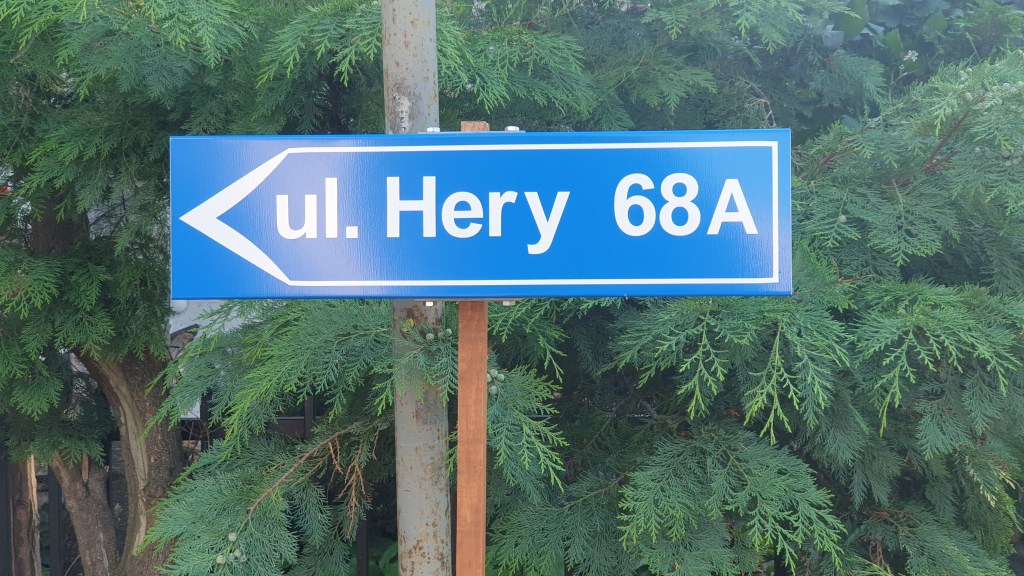
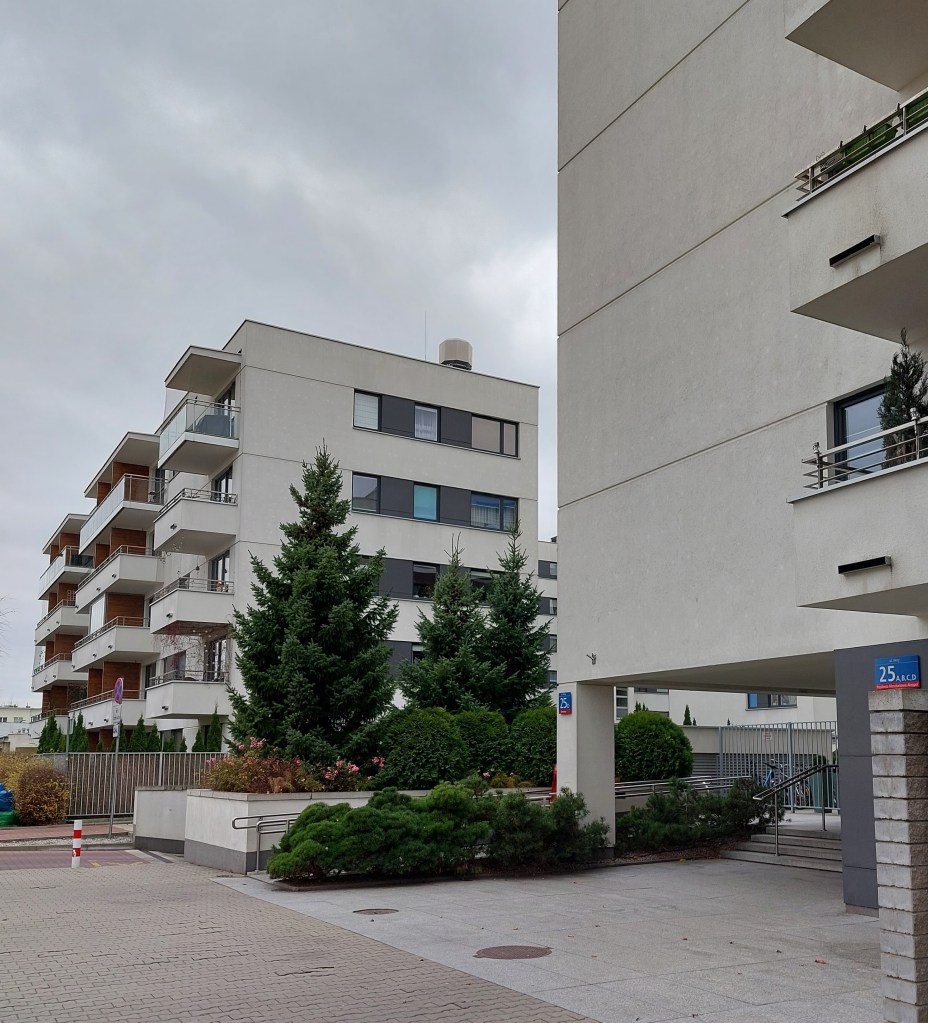
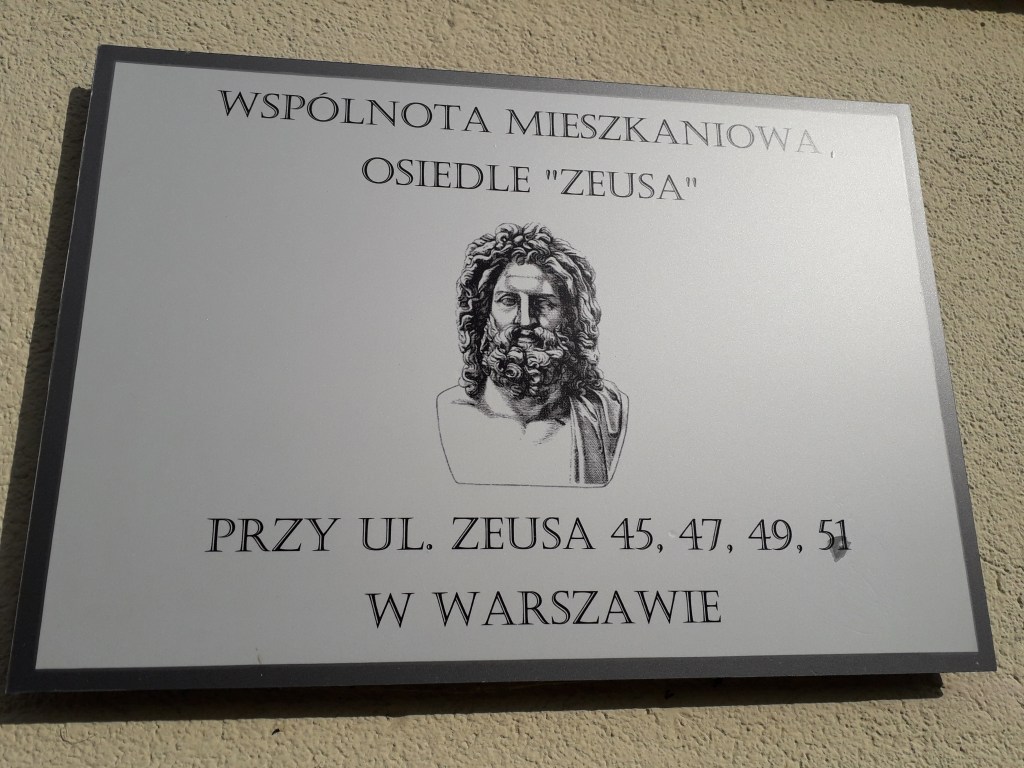
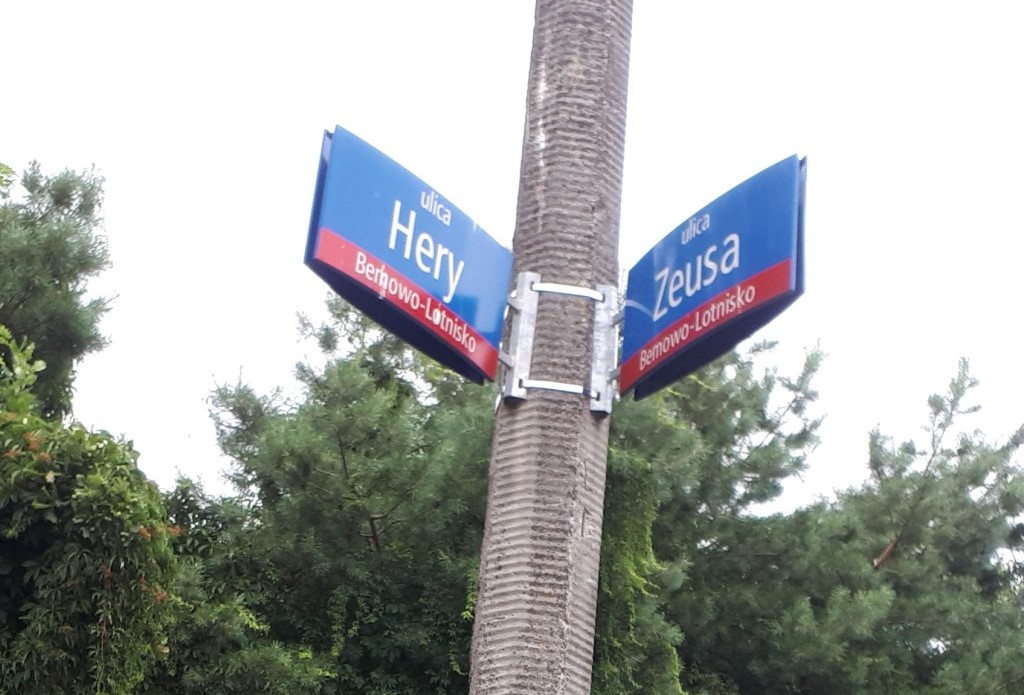
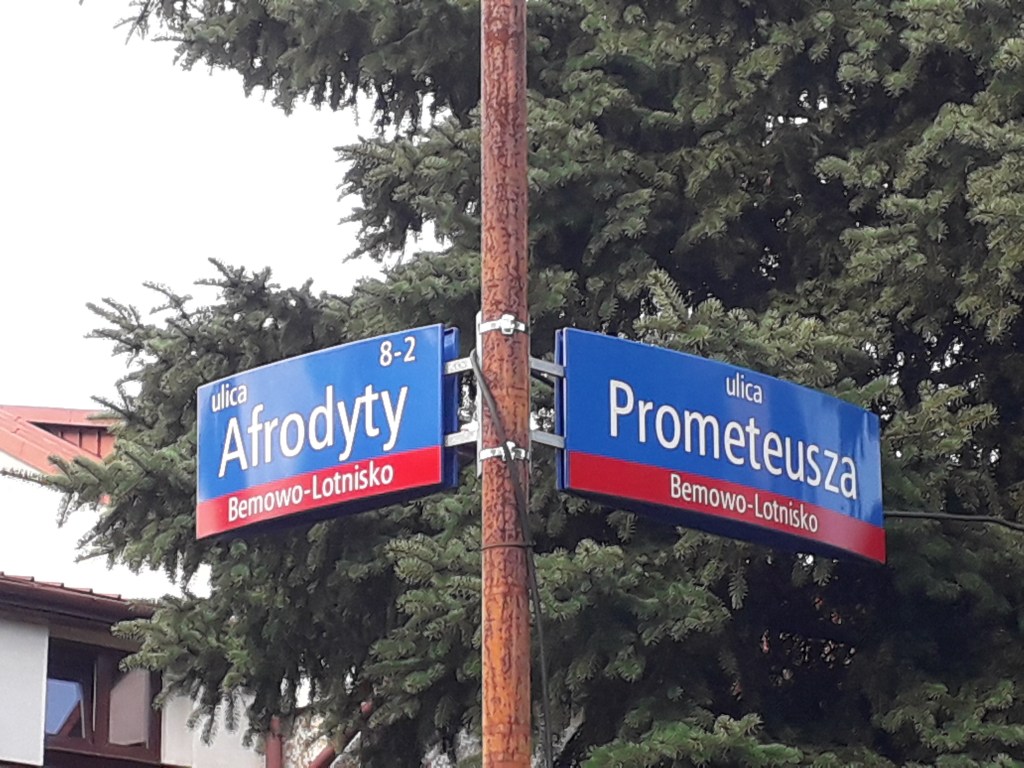
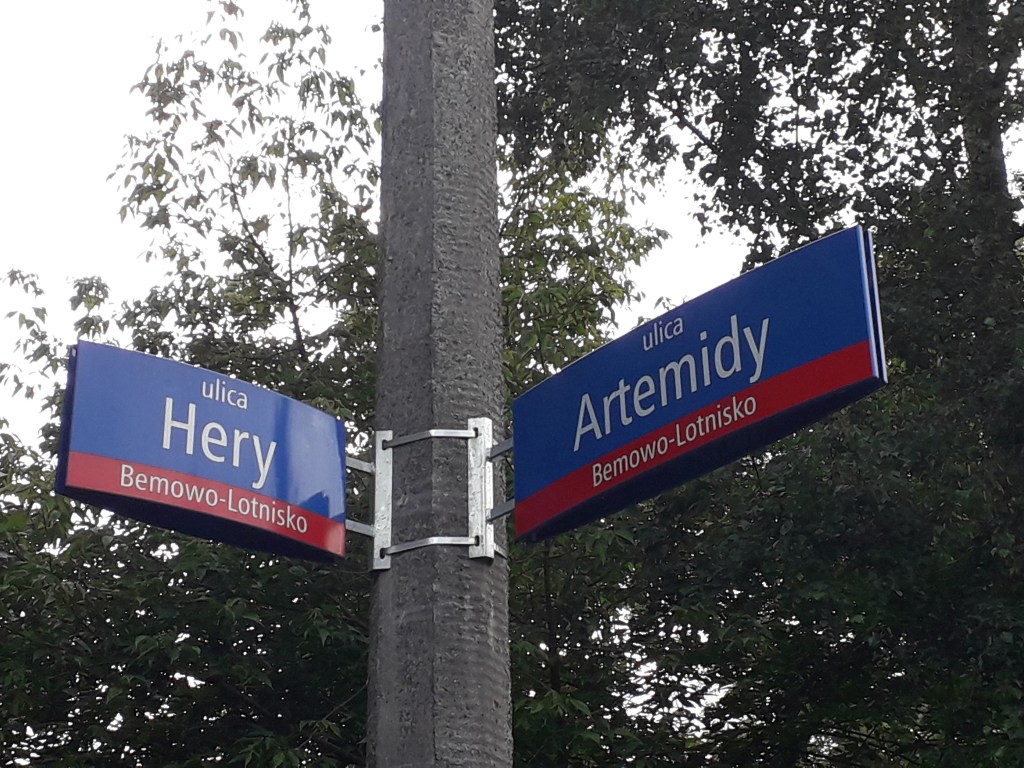
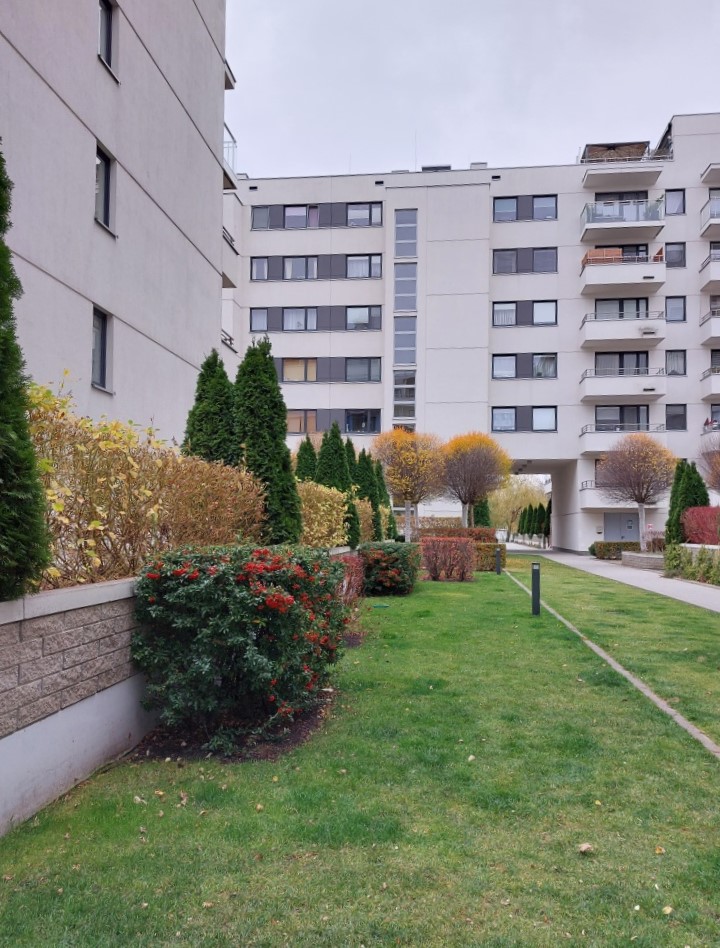
Warsaw has its own mythical housing estate! In the Bemowo district, incorporated into Warsaw in 1951, there are small settlements of houses built in the last forty years, encircled with streets named after Hera and Zeus, intersected with streets named after Prometheus, Artemis, Poseidon, Aphrodite and Electra. Four fenced-in multifamily buildings in the middle form the Zeus Housing Estate surrounded by single-family houses. The local housing community named after the Acropolis and the Hera Housing Estate are close by.

Plaque of Hera Street – photo by Maria Makarewicz.

Information plaque about Hera – photo by Maria Makarewicz.
Aerial view of the mythological streets.
Source: Google Earth (accessed 9 November 2021).
See also on Google Maps.

Hera Street – photo by Maria Makarewicz.

Plaque of the Housing Community of Zeus Settlement – photo by Maria Makarewicz.

Plaques of the streets of Hera and Zeus – photo by Maria Makarewicz.

Plaques of the streets of Aphrodite and Prometheus – photo by Maria Makarewicz.

Plaques of the streets of Hera and Artemis – photo by Maria Makarewicz.

Buildings of Acropolis Housing Community, autumn view – photo by Maria Makarewicz.

Post by Maria Makarewicz and Olga Strycharczyk.

“Dioscuri, the Divine Protectors of Rome” by Michał Kuźmiński

This post has been prepared by Michał Kuźmiński, a student of Cultural Studies – Mediterranean Civilization at the Faculty of “Artes Liberales”, University of Warsaw, within the Our Mythical Childhood Seminar. Michał spent the Summer term in Rome, at his Erasmus Plus stay, and, as much as the situation permitted, he was preparing these reports on the traces of some ancient gods, goddesses, and heroes in Urbs aeterna.

Among the Greek gods Zeus was the one who presented the strongest liking and passion for human women and their beauty. His most famous child, whom he had with a mortal, was undoubtedly Heracles. However, the hero was not the only one, in fact Zeus could boast of quite numerous heroic offspring. And among them were also the twin brothers called Dioscuri, literally the “sons of god” – Castor and Polydeuces.

Their mother was Leda, the wife of the king of Sparta, Tyndareus. According to Homer both Dioscuri were children of mortal parents [1], but in a more widely spread version, at least one of them (Polydeuces) was a son of Zeus. They were considered as excellent horsemen and hunters, who took part in the hunting of the Calydonian Boar as well as the expedition of Argonauts. Since they were brothers of famous Helen of Troy, they also saved her when she was abducted by Theseus and taken to Athens. After the death of Castor, Polydeuces decided to give half of his immortality to his brother and at the end they both became the stars known as the Gemini (“twins”).

The divine brothers were also much respected by Romans who worshipped them as Castor and Pollux. The veneration of Dioscuri was founded on a solid basis of the story which became one of the most prominent founding myths of the Roman state. As it was described by Livy in his monumental work Ab urbe condita (history of Rome from the founding): shortly after the establishment of the Roman Republic the war with the Latin League broke out. During it, the last king of Rome, Tarquinius Superbus tried to reclaim the throne of Rome. However, he was defeated by Romans in the Battle of Lake Regillus in 496 BC [2]. According to the legend, the divine brothers showed up during the battle and fought with Romans, leading them to a victory [3].

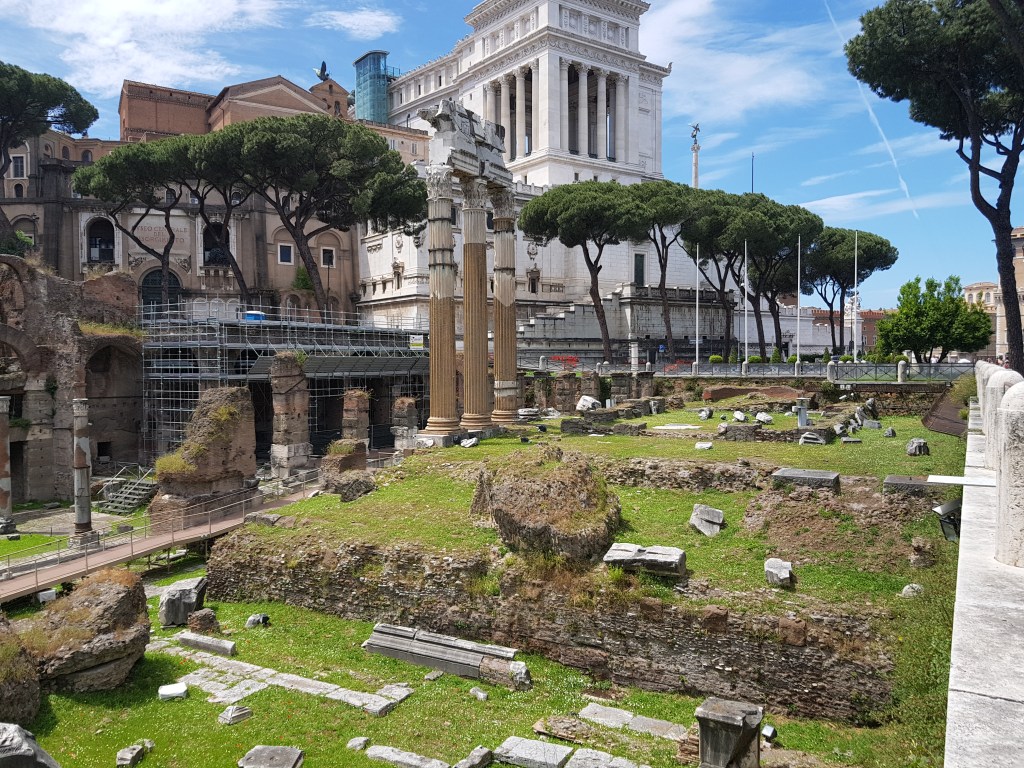
The commander of the Roman troops, Aulus Postumius vowed to build a temple devoted to Dioscuri to express gratitude for their help. The legend says that the divine twins appeared after the battle in the very heart of Rome, watering their horses at the spring of Juturna, just beside the Forum. A few years later the temple of Dioscuri was constructed in this place, as a fulfilment of the Roman general’s vow. For the centuries the building stood in the central area of Rome’s political life, acknowledging the significance of Castor and Pollux as the divine protectors of the Roman state. Only the ruins remain today – the podium of the building and three lone columns which draw an attention of the visitors in the archaeological park of the Forum Romanum.

Dioscuri were also adapted as the patrons of the ancient Roman noblemen – the equites. They constituted a wealthy (though not the richest) social class, whose members’ name meant in Latin the “cavalrymen”. Thus, Castor and Pollux, the master horsemen were the natural choice for the protectors of equites. This dual patronage over the state and its noblemen survived the fall of Roman Empire and Dioscuri remained an important motif in the visual narrations of the public spaces of Rome.

It’s very well visible on the Capitoline Hill, not far from the ancient temple of Dioscuri. The area which played a vital role in Antiquity thanks to the temple of Jupiter (the most important one in Rome) upheld its status in subsequent centuries, for it became a seat of the civil government in the city. The magistrates called “Conservators” used to gather in Palazzo dei Conservatori which today is a part of the Capitoline Museums. The visitors can admire inside the lavishly decorated halls with walls covered with frescoes depicting some episodes from the early history of Rome. Naturally, the painting with the Battle of Lake Regillus couldn’t be missing. The divine twins are depicted there mounting white horses in the middle of the battle turmoil. They carry the spears and wear the helmets with stars above them – a traditional allusion to their transformation into stars after death.

Tommaso Laureti (1530–1602), Victory at Lake Regillus, 1587–1594, fresco in Palazzo dei Conservatori, Musei Capitolini, Rome — photo by Michał Kuźmiński.

The fresco is located in the hall which was used to administer justice and the surrounding paintings were supposed to remind the magistrates about the ancient Roman virtues to which everyone should aspire. That is, however, not the only place where Dioscuri can be found. They dominate the Capitoline Hill, as they tower over the monumental stairs leading to the central square. The layout of the area is owed to the design of Michelangelo, who created a vision of a truly impressive and harmonious seat of a city government. In accordance with the plan, two monumental ancient sculptures of Castor and Pollux were set on either side of the entrance to the main square of Capitoline Hill. The statues were found in about 1560 near Circus Flaminius, so it’s possible that they belonged to another temple of Dioscuri from this area of the city. The marble sculptures depict Castor and Pollux standing in rather static poses with their indispensable horses. Their arms are raised in a gesture which indicates that originally they held the bridles which didn’t survive until today. On the top of the hill they stand relaxed, looking at the passing citizens of the city which they helped with divine aid.

Castor and Pollux, marble sculptures at the top of the balustrade leading to the Capitoline Hill, Rome, found and re-erected in the 2nd half of the 16th century — photo by Michał Kuźmiński.

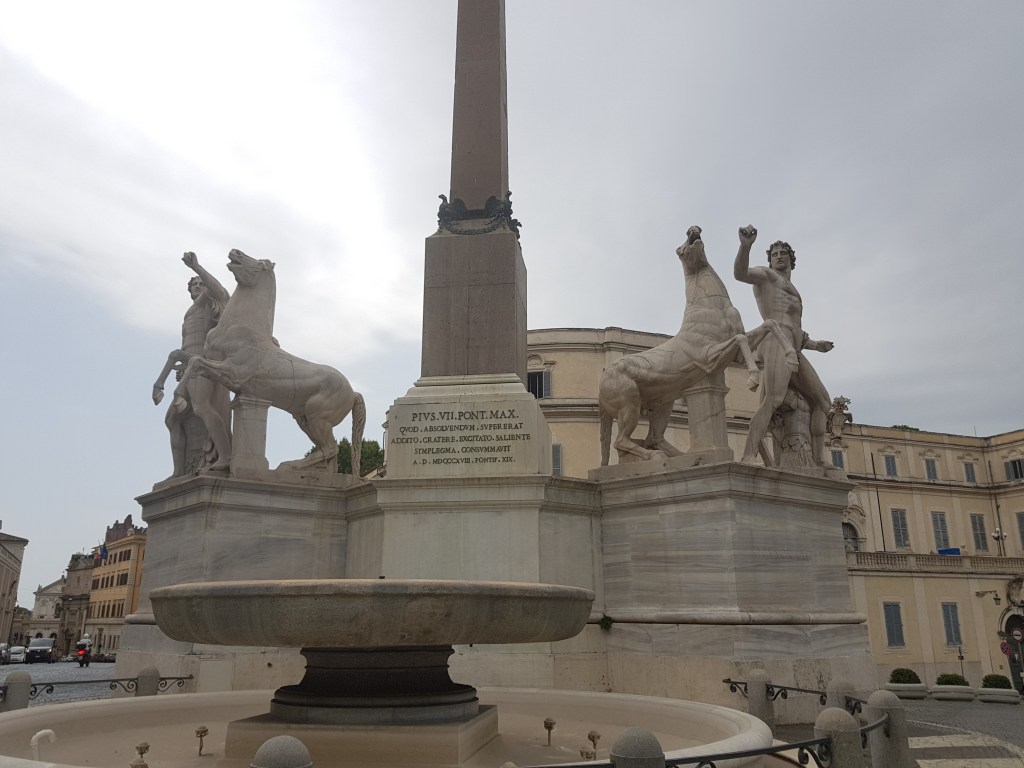
And that is not the only place in Rome, where two monumental sculptures of Dioscuri tower over the passers-by. The other one is Piazza del Quirinale, the spacious square in front of the Quirinal Palace, nowadays a residence of the President of the Italian Republic. The building used to serve for centuries as a residence of numerous Popes and Kings of Italy. Thus, in terms of history it’s been very closely related to the offices representing the highest ranks of government.

On the square there is a large fountain with an obelisk in the middle and two statues of Castor and Pollux with horses on either side. The sculptures were recorded standing there already in the Middle Ages, giving the name to the area – Monte Cavallo (“the horse hill”). Therefore, it’s believed that Dioscuri survived the fall of Rome untouched in their original position, perhaps being a part of the decoration of Constantine’s Baths which existed in that place. The statues from Quirinal could be confused with those from Capitoline Hill. However, they’re not identical, since Dioscuri from Quirinal Hill are much more dynamic, captured in motion, as if they struggled to tame the restless horses.

Raffeale Stern (1774–1820), Fountain of Dioscuri, 1818, Piazza del Quirinale, Rome; The marble sculptures and the obelisk are spolia date back to the Roman Empire — photo by Michał Kuźmiński.

Both places became iconic and their images appeared widely on various reproductions throughout the centuries. As a consequence, the visual relation of the sculptures of Dioscuri and the idea of the power of rulers became fixed in people’s minds. So, the motif was used once again by Antiquity-loving dictator of 20th century Italy: Benito Mussolini. He planned the construction of a whole new district to the south from the historical centre of Rome. The so-called Esposizione Universale di Roma (EUR) was supposed to be a spot of 1942 World’s Fair which was cancelled due to an outbreak of war.

One of the most prominent structures of the EUR district is Palazzo della Civiltà Italiana (Palace of the Italian Civilisation), a wonderful example of modernist architecture. The building has a strikingly simple design, with a façade dominated by rows of arches – an obvious reference to the most iconic of the ancient buildings – Colosseum, to which it owes a nickname “Square Colosseum”. The structure is located on the top of the hill, to which monumental stairs lead. Such a combination – a hilly location and a building expressing the power of government and a good fortune of the state called inevitably for a specific artistic adornment, namely the statues of Dioscuri.

Giovanni Guerrini (1887–1972), Ernesto La Padula (1902–1968), and Mario Romano (n.d.), Palazzo della Civiltà Italiana, Rome, 1938–1943 — photo by Michał Kuźmiński.

Four sculptural groups were made of travertine blocks, the same material which was used for a cladding of the façade. Dioscuri resemble more the versions from Quirinal Hill – they’re depicted in dynamic poses, next to the horses captured in a rapid motion. They refer to the ancient culture, but their details are far less refined and their bodies express rather a brutish massiveness of the fascist regime which conceived them, than the elegance of classical art.

Publio Morbiducci (1889–1963) and Alberto de Felci (n.d.), one of four equestrian marble sculptural groups of the Dioscuri marking the corners of the Palazzo della Civiltà Italiana, Rome, 1942–1956.
— photo by Michał Kuźmiński.

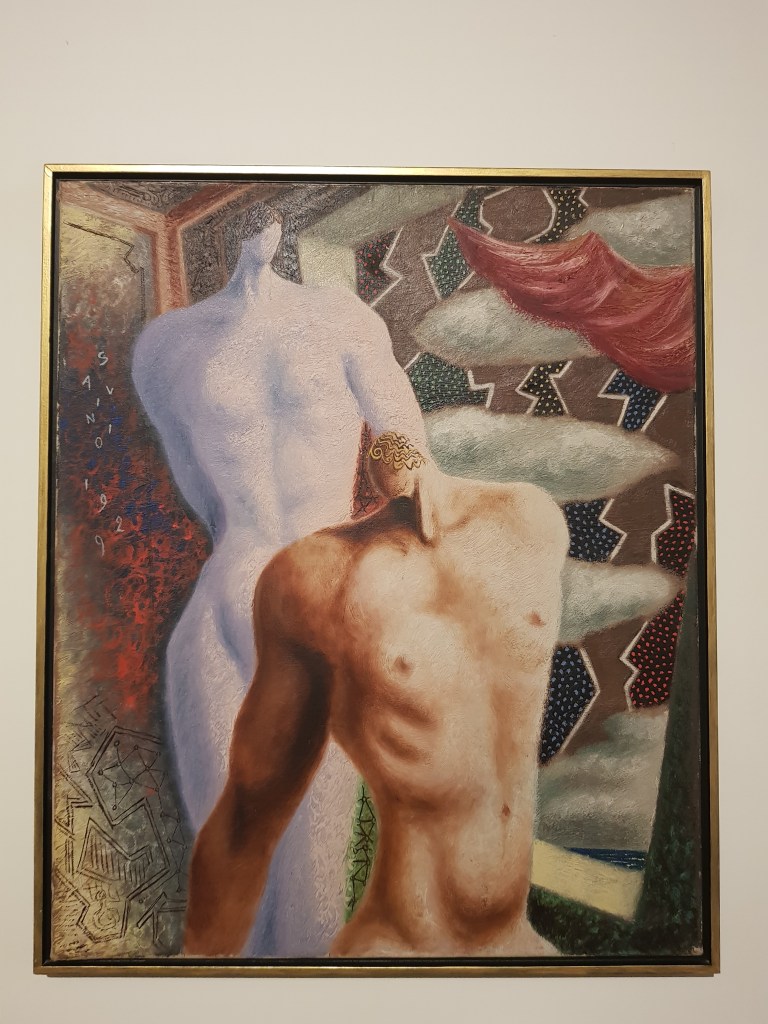
The overview of a presence of Dioscuri in Rome can be concluded with a more intimate example, a small painting by Alberto Savinio exhibited temporarily in the museum in Palazzo Altemps. Savinio was born as Andrea de Chirico in 1891 and became a very active writer, painter, and composer. He was an outstanding artist, who left a prodigious number of various works. Savinio was deeply influenced by contemporary modernist authors and incorporated in his works many surrealist elements. In 1929 he painted Dioscuri in an unprecedented way. First of all, they’re not accompanied by their indispensable horses. Secondly, their naked, muscular bodies dominate over very small, reduced heads which lack faces. The twins stand by the window, through which the clouds on the sky and some geometrical figures are visible. It’s rather debatable what was the exact idea of Savinio, however one thing seems to be sure. They’re definitely not the divine protectors of the state, expressions of the noblemen’s power or easily recognizable heroes. It’s as if Savinio granted them a well-earned tranquility and anonymity of people who finally don’t have to stand for any public cause any more, don’t need to comply with standards of “public celebrities” and can enjoy being just themselves.

Alberto Savinio (1891–1952), The Dioscuri, oil on canvas, 1929, temporary exhibition Savinio. Incanto e mito at the Museo Nazionale Romano di Palazzo Altemps, Rome, 8 February – 13 June 2021
— photo by Michał Kuźmiński.

Sources

Cicero, De natura deorum, transl. Harris Rackham, Harvard University Press, London 1967, p. 127.

Homer, Iliada, transl. Kazimiera Jeżewska, Zakład Narodowy Imienia Ossolińskich, Wrocław 1986, p. 77.

Livy, The History of Rome, transl. Canon Roberts, J. M. Dent & Sons, Ltd., London 1905, pp. 101–103.

Claridge, Amanda, Rome. An Oxford Archaeological Guide, Oxford 2010, pp. 94–95.

Haskell, Francis and Nicholas Penny, Taste and the Antique: The Lure of Classical Sculpture 1500–1900, Yale University Press, London 1981.

Jewell K., The De Chirico Brothers & the Politics of Modernism, The Pennsylvania Staff University Press, Pennsylvania 2004, pp. 1–2.

Leeming, David, The Oxford Companion to World Mythology, Oxford University Press, Oxford 2005, p. 63.

Roman, Luke and Monica Roman, Encyclopedia of Greek and Roman Mythology, Facts On File, New York 2010, pp. 139–140.

About the statues of Dioscuri in EUR:

https://www.eurspa.it/it/asset-property/patrimonio/arte-e-design/opere-scultoree/i-dioscuri (accessed September 10, 2021).

See also Michał Kuźmiński’s post about Hercules in Rome and about Venus in Rome.


[1] Homer, Iliada, transl. Kazimiera Jeżewska, Zakład Narodowy Imienia Ossolińskich, Wrocław 1986, p. 77.

[2] Livy, The History of Rome, transl. Canon Roberts, J. M. Dent & Sons, Ltd., London 1905, pp. 101–103.

[3] Cicero, De natura deorum, transl. Harris Rackham, Harvard University Press, London 1967, p. 127.

Post written by Michał Kuźmiński

Post edited and placed by Dorota Rejter and Olga Strycharczyk

Children’s Experiences and Cultural Identity through Classical Myth and History in Britain, c. 1800–2005

— an Our Mythical Childhood panel at the Children’s History Society Biennial Conference “Children and Young People, Speaking Up and Speaking Out”, Manchester Metropolitan University, 16–19 June 2021

by Owen Hodkinson

The Children’s History Society of the UK hosted its biennial conference in 2021 at Manchester Metropolitan University (MMU), in association with organizers from both the History Research Centre and the Manchester Centre for Youth Studies and MMU. It was a large international conference, three days long, with 24 panels running in parallel, along with several masterclasses, plenary sessions, and three keynote lectures, including by bestselling children’s author and poet Michael Rosen and award-winning Young Adult author Alex Wheatle MBE (full programme and further details available here). The conference — titled “Children and Young People, Speaking Up and Speaking Out” — included a strong focus on children’s and young adults’ own voices, in all forms, rather than only the voices of historians, authors, and others writing for and about them. 

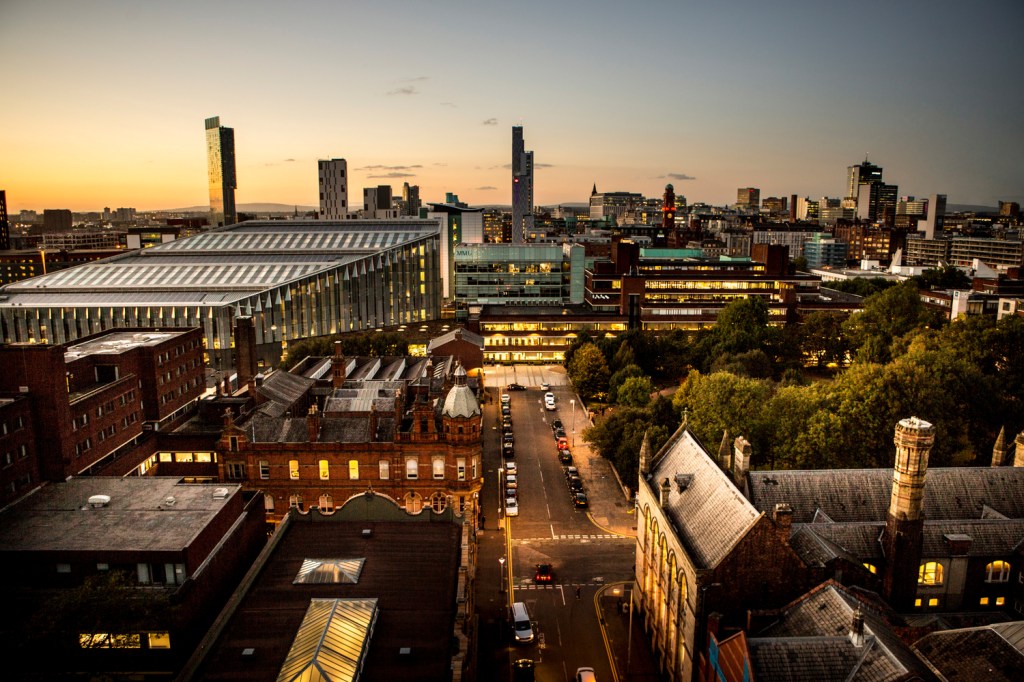
Manchester Metropolitan University [source]

One of the host organisers, ancient historian Dr April Pudsey, is Head of History and Archaeology of Childhood at the Manchester Centre for Youth Studies; being aware of Our Mythical Childhood through its UK contributors in classics and ancient history, she approached some of us to see whether we might like to propose a panel of OMC participants, and a few of us jumped at the chance to meet new people with research interests in childhood studies across all eras, regions, and disciplines — and to plug the work and resources of OMC! Originally scheduled as an in-person event in 2020, rather than the online-only 2021 event it became because of Covid, the idea was just to submit a small panel of UK-based regular contributors to OMC to the conference. To that end, OMC researcher Sonya Nevin, and OMC conference and volume contributors Rachel Bryant Davies and Owen Hodkinson put together a panel focused on British uses of Classical myth and history over the last two centuries (and a bit); we addressed the conference’s emphasis on young voices by each choosing examples from our own research that are not only products (literary, ludic, and pedagogical) for children and young adults, but were also produced by young people, or afford researchers insights into children’s responses to them. Thus our panel was titled “Children’s Experiences and Cultural Identity through Classical Myth and History in Britain, c. 1800–2005”. Sonya explored juvenilia written by the Brontë sisters (long before their famous novels) along with their brother Branwell, which engaged creatively with the figures they learned about as part of the classical education that was so central to British schooling in the 1800s. Moving from around 1800 to the turn of the 19th–20th centuries, Rachel spoke about puzzles and games in Victorian children’s periodicals, focusing especially on submissions on Graeco-Roman themes sent in by child readers and published in the magazines. Finally, moving forwards another century, I spoke about prodigious Nigerian-British novelist Helen Oyeyemi’s astoundingly sophisticated debut YA/Crossover novel The Icarus Girl, a fusion of Yoruba and Greek myth written when she was still at school taking her A levels (age 17–18). All three papers examined issues of cultural, national and other forms of identity; they considered the place of classical education, history, and myth in shaping the identities of the young voices we heard from, along with the ways in which these classical elements were combined with more contemporary cultural phenomena or put to use by the creative instincts and distinctive voices of our various young authors and contributors. Our panel abstract and individual abstracts are given below. 

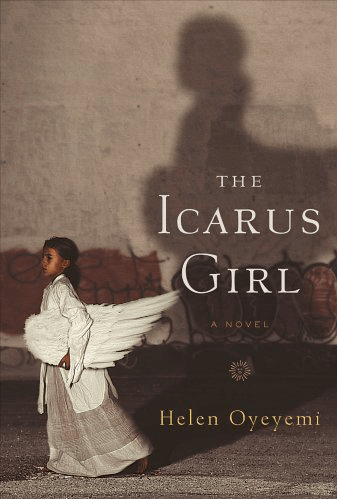
Helen Oyeyemi, The Icarus Girl [source]

OMC was also represented at the conference by Susan Deacy and Lisa Maurice, in a presentation about the ACCLAIM Autism and Myth Network titled “Hercules and Classical Myths for Autistic Children”. For more see Susan’s post on her blog.

Outside our own panel, we were able to hear several other individual contributions on aspects of classical history, myth, and literature, among thematic panels ranging widely, from children’s toys and games throughout world history, to young people’s participation in activism today. Other contributions with connections to classical antiquity included the papers by PhD students Emma Gooch, “‘A Place to Play and Be a Child’: Using material culture to explore the home lives of children in Classical Greece, 480–323 BC”; Felix Seibert, “The Construction of the Juvenile Style in Ancient Roman Literature”; and by April Pudsey herself, “The Lives and Concerns of Girls in Antiquity”. In addition there were two Masterclasses, one by Cora Beth Knowles: “The Autistic Labyrinth: Anyone May Enter…” and one by Sally Waite and Andrew Parkin: “Material Cultures of Childhood”.

Altogether, the conference was a rewarding experience, with a very rich and diverse offering of pre-recorded panel papers (which could therefore all be watched at our leisure, even those clashing with our own panels!) and live plenary sessions. This was a very welcome chance for some of the UK-based OMC regulars to participate, and to spread the word about OMC to new audiences. 

Videos of the pre-recorded papers and live Masterclass related to Classics are now available on the Manchester Classical Association YouTube channel:

https://www.youtube.com/channel/UC0tZAstEiodVOWoNoJyBaSw/playlists

Panel Abstract

Children’s Experiences and Cultural Identity through Classical Myth and History in Britain,  c. 1800–2005 — an Our Mythical Childhood panel

Dr Owen Hodkinson, University of Leeds

Ancient Greek and Roman history and myth, as cornerstones of British education and culture until at least the early 20th century, have long played a central role in children’s own writing and play, as in literature for children since its inception. While children’s voices can be heard using Classical heroes and narratives to mediate their own experiences and to express their identities in cultural products and practices throughout the last two centuries, the changing status and place of Classical narratives in an evolving British society — from discourses of colonialism and the military experience to postcolonial explorations of non-European cultural inheritances — have inevitably altered the ways in which children express themselves in terms of and in opposition to models from antiquity. Likewise, the ways in which adult voices have taught children about and via Classical narratives, and have mediated children’s expressions in their writing and play, have changed to reflect socio-cultural trends in pedagogy, in the creation of consumer products and texts for children, and other areas. This panel examines young voices in Britain speaking out in play and in creative writing across a broad chronological scope (ca. 1820s–2000s), exploring how knowledge of Classical culture both informed their perceptions of the world around them and was used to mediate their own experiences and construct their identities. This chronological scope will allow the panel to shed light on substantial continuities and radical changes alike in three case studies of young people choosing or encouraged to use Graeco-Roman antiquity as a central facet of their self-expression.

Individual Abstracts

The Voice of the Young Brontës. Antiquity and Social Comment in the Brontë Juvenilia

Dr Sonya Nevin, University of Roehampton 

The Brontë children’s world changed one eventful afternoon when their father arrived home with a box of toy soldiers for his son, Branwell. The toys inspired an outburst of creative writing in which the soldiers were the daring protagonists. With their usual precociousness, the Brontë children depicted themselves as god-like genii controlling the toys’ universe. They created a fictional world for the toy soldiers that would dominate their imaginative play and writing even into adulthood. It was a creative apprenticeship that would inform their ground-breaking adult work. 

The Brontë juvenilia offers a fascinating insight into the lives of these writers as young people. This paper will focus primarily on the juvenilia of Charlotte and Branwell and their creation, Angria, a colonial society in West Africa. It will analyse how the two children drew on their knowledge of classical antiquity to enrich their imaginative writing. The worlds of ancient Greece and Rome provided them with tools to use in their growing command of metaphor and characterisation. For Charlotte in particular, reference to classical antiquity also offered an opportunity to comment critically on the heavily gendered nature of contemporary education. Who knows what, who is learning what, who reads what, and who is described as what all take on deep significance in this fictional world, reflecting the children’s own attempts to understand and respond to the real world around them. This paper will also refer to the Our Mythical Childhood database of antiquity in young people’s culture, a valuable resource for exploring the Brontë juvenilia and young people’s culture more broadly.

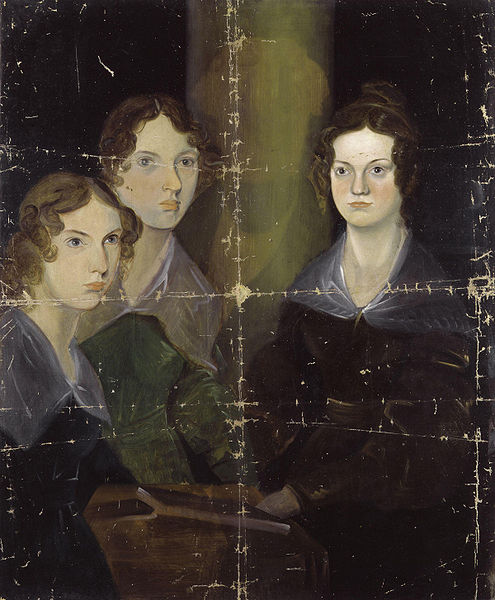
Patrick Branwell Brontë, The Brontë Sisters, painting c. 1834,
National Portrait Gallery, London [source]

***

‘Classics […] is not defunct yet’: Interacting with Greco-Roman Antiquity through Victorian Children’s Magazines

Dr Rachel Bryant Davies, Queen Mary University of London

Even as the privileged status of Classics in education began to be questioned towards the end of the nineteenth century, versions of Greco-Roman antiquity created for―and by―children proliferated. Some of children’s most sustained encounters with the past were enabled by the Victorian press. The burgeoning variety and relative affordability of periodicals enabled large readerships, encouraged interactivity through competitions, and fostered a sense of community, particularly through letters pages. While young characters re-enacted ancient scenes or attended fictional schools, informative articles explained historical characters and archaeological discoveries: details which could be mined for answers to puzzles or recounted in prize essays. 

In this paper, I will examine how Greco-Roman antiquity became a prime example of the balance many periodicals strove to achieve between pedagogy and play. Tracing entertaining and informative content across a representative sample of titles, including Boy’s Own PaperGirl’s Own Paper, Boys of England, Young Folks, and St Nicholas, I will focus on the Trojan War. This was the backbone of both popular entertainment and school curricula, and a prominent subject for serial stories, puzzle clues, and “How-to” articles promoting the creation of classical pastimes, such as Trojan horses, from everyday items (including brooms) and generic toys (wooden horse and lead soldiers). 

Such evidence demonstrates the challenges of reaching historical children’s voices through their submissions, when these were mediated by adult editors, or retold as adult reminiscences of school-days — which often highlighted traumatic experiences at public schools and sometimes represented this as comic. It also emphasizes the specific ideologies — particularly patriotism, religious or moral qualities and gendered role-models — promoted to child readers and by child contributors, camouflaged by the classical content. When such interactive journalism is placed alongside children’s encounters with antiquity in other media, the reception of Greco-Roman antiquity in children’s culture becomes a powerful measure of societal values.

***

Constructing Dual-Heritage Identity through Classical and African Myth: Helen Oyeyemi’s The Icarus Girl

Dr Owen Hodkinson, University of Leeds

Icarus’ myth has remained a popular subject in British children’s literature from its beginnings: from straightforward retellings (usually in collections of Greek myth for children), to more allusive and allegorical adaptations or receptions of Icarus as a figure for exploring transformation and transcendence, and their failure. Like many characters of culturally shared narratives retold for children, from “Classical” and other mythologies to national histories, the capacity of child readers to identify with Icarus has at various times been exploited by adult authors using literature for didactic or moralizing purposes, as well as encouraging a notion of cultural identity constructed from the assumed common heritage of Classical myth in traditional European children’s literature. 

Children’s literature in recent decades has responded to cultural changes both by the increasing attempts at convincing portrayals of children’s voices like the readers’ own (instead of “talking down” to children and using literature as an overtly didactic tool); and by becoming in some cases more inclusive to readers whose heritage is not that of the dominant culture where the book is published, necessitating the revision of previous easy assumptions about shared narratives and common heroes for child readers to identify with. Helen Oyeyemi, a dual-heritage Nigerian-British author, entered into the tradition of creative adaptations of the Icarus myth with her 2005 novel The Icarus Girl, written when she was still studying for her A-Levels. She employs the Icarus myth and other Classical allusions in concert with more prominently foregrounded Nigerian myths in order both to construct and to explore the dual-heritage identity of the novel’s 8-year-old girl protagonist, who has one Nigerian and one British parent. As a child author giving voice to a protagonist who shares many of her own experiences, Oyeyemi speaks to other children wrestling with plural identities, discrimination, and with the feeling of not being “at home” in either culture. The possibility of escaping through flight is one way in which the eponymous Icarus myth is hinted at.

Dr Owen Hodkinson is an Associate Profesor of Classics in the Department of Classics at the University of Leeds, UK, an Alexander von Humboldt Foundation alumnus, with research interests in Greek and Roman epistolary literature and ancient prose fiction, the Second Sophistic, Philostratus, and Reception in 20th and 21st-century literature.

Elaborated by Olga Strycharczyk

“The Faces of Venus in Rome” by Michał Kuźmiński

This post has been prepared by Michał Kuźmiński, a student of Cultural Studies – Mediterranean Civilization at the Faculty of “Artes Liberales”, University of Warsaw, within the Our Mythical Childhood Seminar. Michał is at the moment in Rome, at his Erasmus Plus stay, and, as much as the situation permits, he is reporting on the traces of some ancient gods, goddesses, and heroes in Urbs aeterna.


According to Hesiod, goddess Aphrodite was born from the sea foam near Cyprus [1]. She appeared on the sea shore not far from the city of Paphos, where her cult was always highly popular and the people boasted about the goddess of love originating from their city. Due to that she earned a nickname Cyprogenes referring to her birthplace – Cyprus.

As a goddess of love, passion, and beauty Aphrodite enjoyed a very privileged position in the ancient pantheon. She was addressed by the entire population, since the agonies of misplaced feelings are among the most universal troubles shared by humans. Thus, Aphrodite was worshipped commonly by the ordinary people. But private piety was not the only case; the goddess of love played also important role in the official cult.

Aphrodite played significant role in the myths which constituted the cultural identity of Romans. Known in their pantheon as Venus, she was believed to be the special carer of the Roman state and the mythological source of the country and the nation. According to one of the myths, Venus had a love affair with Anchises – a member of the Trojan royal family. They had a son, Aeneas, who became a founder of the city of Lavinium in Italian peninsula. That moment was the very beginning of the history which led from merging the Trojan refugees and local Latins to creation of Romans and founding of Rome.

Therefore, the cult of Venus was a significant component of Roman identity in respect of the people’s history. However, she was also important for more private history of one family – gens Iulia. It was one of the most pre-eminent and ancient noble families in Rome. Its members believed to be descendants of Aeneas and as a result originating from Venus herself. The most famous member of this family was Gaius Julius Caesar – Roman dictator and talented general, who used the history about the divine origins of his family in order to elevate its prestige.

Some of his attempts left material traces which can be still seen today. In the very heart of Rome Caesar ordered to build a forum of his name, just next to the old Forum Romanum. Apart from the practical reasons (creation of additional public space beside the existing forum which became too small for growing city), Forum of Caesar was meant to be a visible sign of Caesar’s power and high position. In the centre of the new complex a temple devoted to Venus Genetrix (Venus the Mother) was built, creating a convincing image of the family with divine origins and the pre-eminent position in the society and politics. The remains of both the Forum of Caesar and the temple of Venus can be seen today from a level of Via dei Fori Imperiali (a wide alley created in time of the other dictator – Benito Mussolini) which in fact was another architectural project with aim to demonstrate specific ideological concepts.

Remains of the Temple of Venus Genetrix (photo taken by the author)

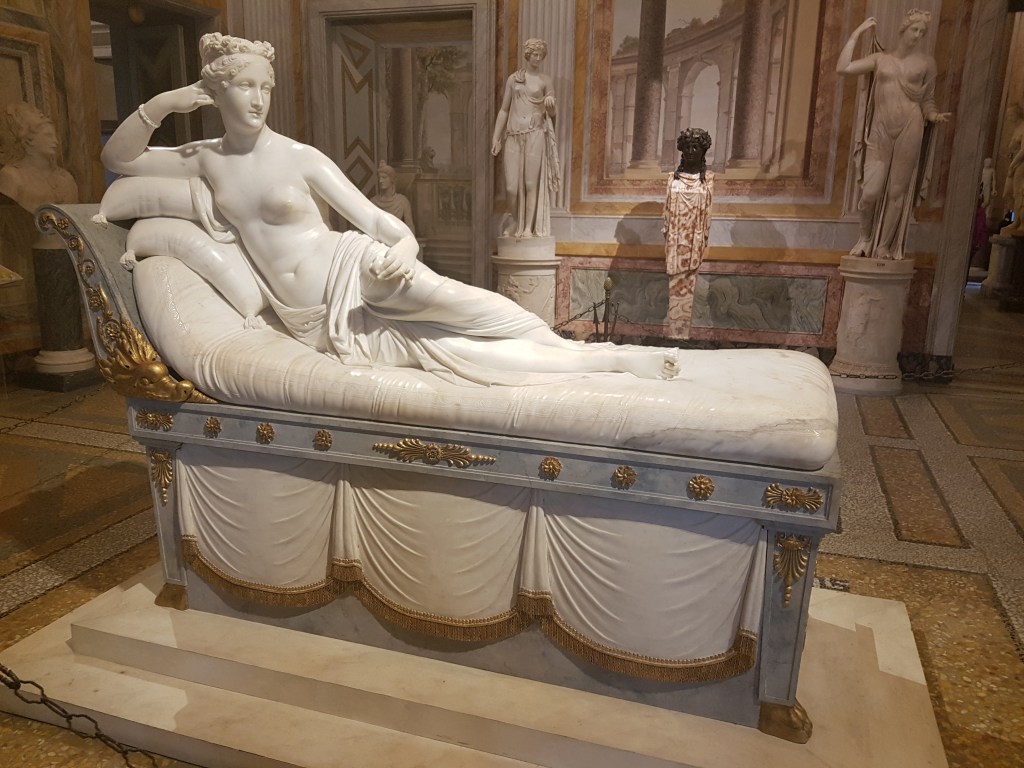
However, not only men recoursed to Venus in creating their public image. The goddess of beauty and love was natural choice for women who wanted to present themselves as the most attractive and desirable ones. Not far from the strict historical centre of Rome we find a splendid Villa Borghese, aristocratic residence from the 17th century surrounded by tranquil gardens. The building houses today a famous collection of art: paintings and sculptures, among them Paolina Borghese as Venus Victorious, a work by Antonio Canova.

Paolina Borghese as Venus Victorious (photo taken by the author)

Paolina, who was a sister of Napoleon Bonaparte, married Camillo Borghese. Husband was so proud of his stunning wife that he commissioned her portrait in disguise of the goddess of love. Paolina is reclining on a long sofa exposing naked upper part of her body. In one hand she is holding an apple, an obvious reference to the judgement of Paris. Thus, Paolina was depicted as Venus who has just won the contest for the most beautiful goddess. Therefore, through this image the woman already extremely beautiful distanced herself from all the other people even more.

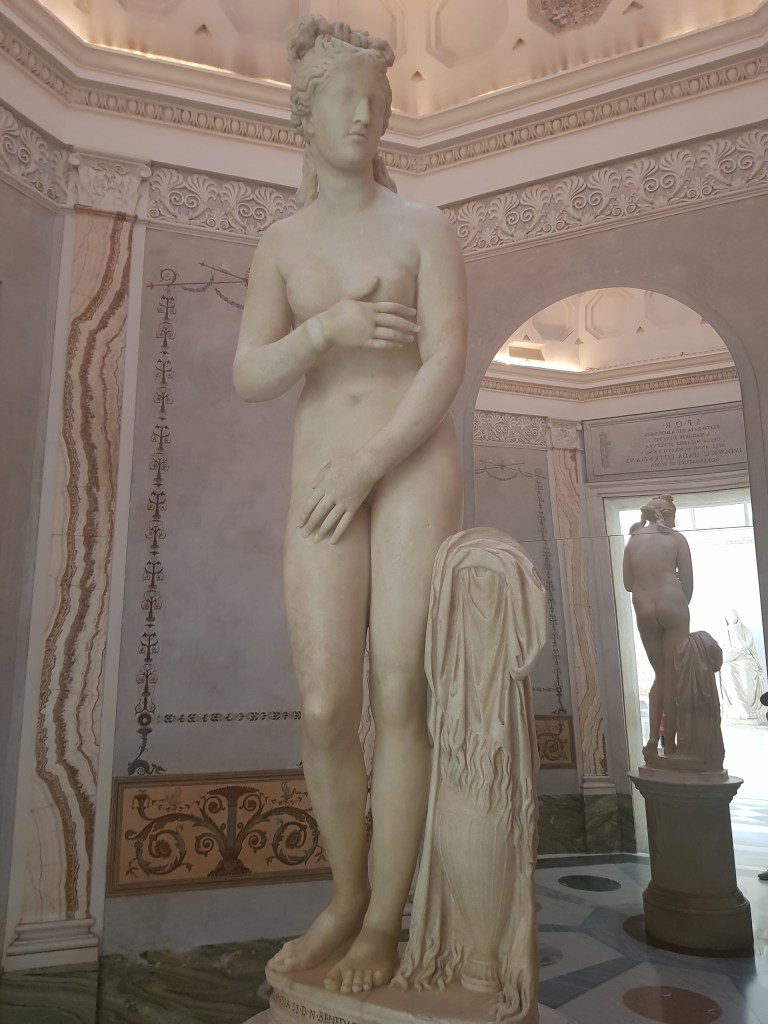
But Venus was not only a symbol of divine beauty used by the wealthy and powerful people to separate themselves from the ordinary ones. There are also depictions of the goddess less monumental and much closer to the universal human experiences. In fact, they were far more wide-spread than the others and can be found in many places as a range of copies in slightly different versions. One such example we can see in the Capitoline Museums. It is a so called Capitoline Venus – statue of standing naked goddess that is a Roman variant of a Greek sculpture from 4th century BC. Venus was captured in the moment right after bath, her towel lying on a vase. She covers her intimate parts with hands, as if she was surprised naked by someone who should not see her.

Capitoline Venus (photo taken by the author)

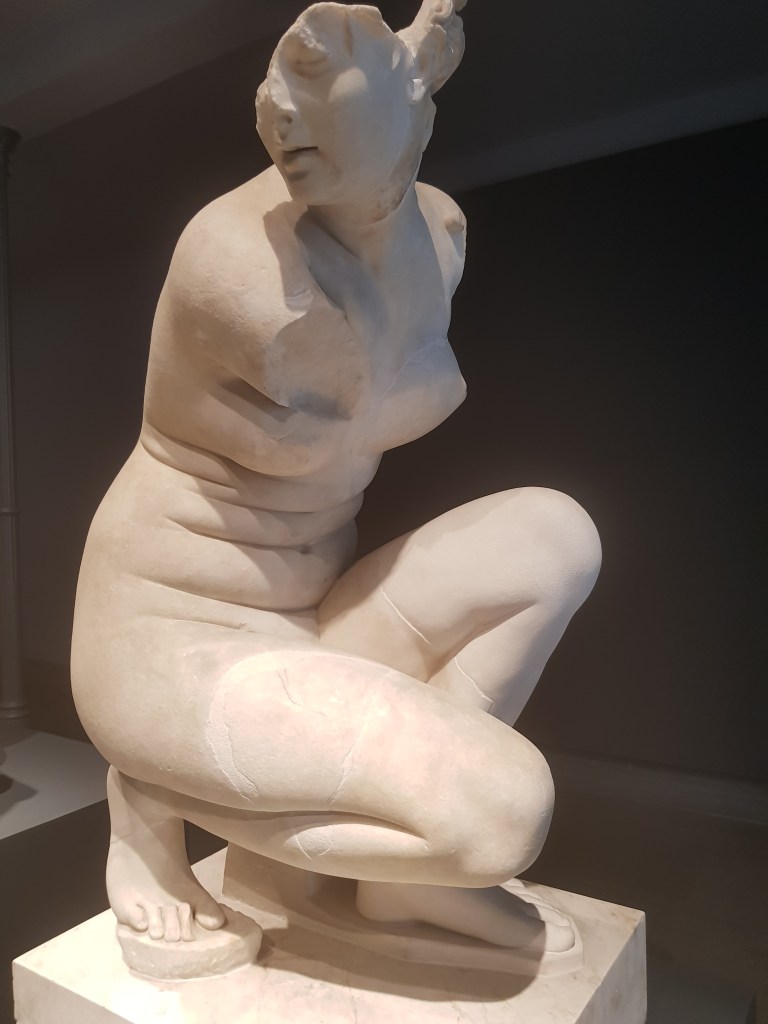
We find another statue which depicts a similar situation in the museum in Palazzo Massimo. However, in this version the naked goddess is crouching, not standing. As a result of bending, a few folds on the abdomen of goddess became visible which is something that we would not associate with the image of a perfect goddess of beauty. Thus, Venus from this kind of statues, imperfect, depicted in common situations, becomes somehow less distant for the ordinary people.

Crouching Venus (photo taken by the author)

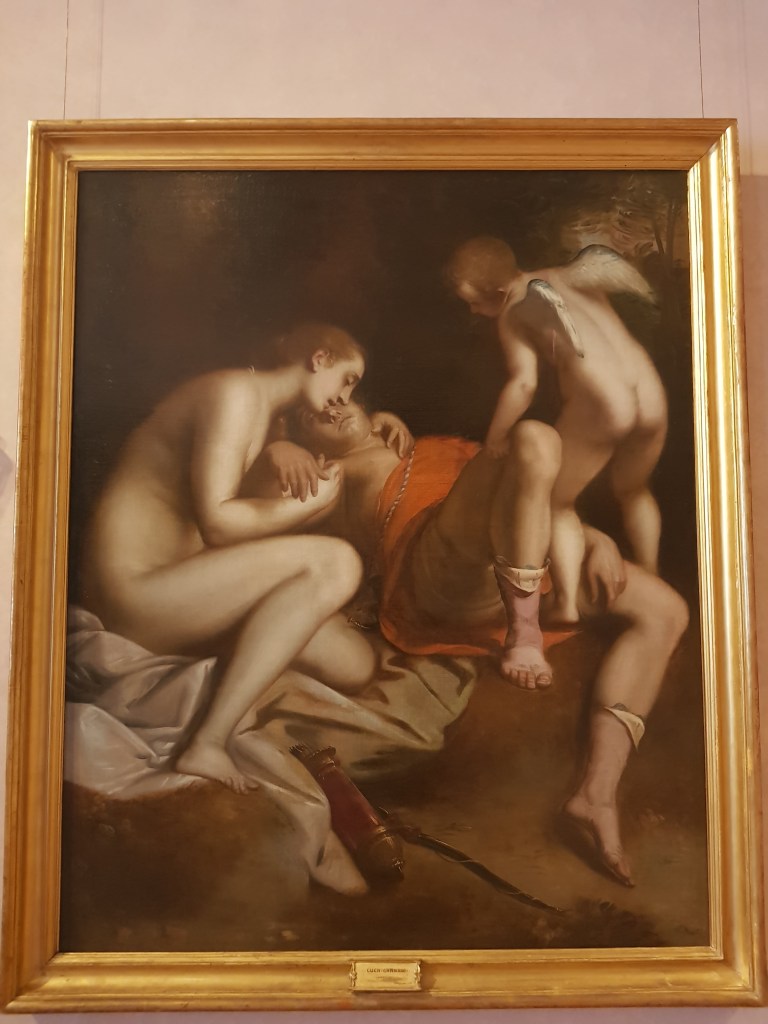
Venus can be, however, even more familiar to us. It is because, despite being the goddess, she experienced a heavy loss. According to Ovid’s Metamorphoses another lover of Venus was Adonis [2]. Unfortunately, the beautiful young man got heavily wounded by the wild boar during the hunt. As a consequence, he bled to death in Aphrodite’s arms. In Palazzo Barberini, which houses a magnificent collection of paintings, we find a work which refers to this myth. It is a painting by Luca Cambiaso, a 16th-century artist. Lying Adonis is almost dead, his eyes are barely open. Venus is sitting next to him, tenderly embracing his head. The naked goddess is very beautiful but the most striking is her visible pain caused by the loss which is so familiar to every human being.

Venus and Adonis (photo taken by the author)

Thus, Venus can be encountered in Rome in many places and in various guises. She shows us different faces, every time referring to some other part of life and human experience. That is explained by her relation with people – always so close to their ordinary problems. Also today she sparks our imagination and inspires diverse reflections on the nature of life.


[1] Hesiod, Theogony, Works and Days, Testimonia, transl. Glenn Most, Harvard University Press, London 2006, p. 19.

[2] Ovid, The Metamorphoses, transl. Horace Gregory, The Viking Press, New York 1960, pp. 295–296.


Bibliography

Hesiod, Theogony, Works and Days, Testimonia, transl. Glenn Most, Harvard University Press, London 2006.

Ovid, The Metamorphoses, transl. Horace Gregory, The Viking Press, New York 1958.

Claridge Amanda, Rome. An Oxford Archaeological Guide, Oxford University Press, Oxford 2010, pp. 165-166.

Leeming David, The Oxford Companion to World Mythology, Oxford University Press, Oxford 2005, pp. 21-22.

Haskell Francis, Penny Nicholas, Taste and the Antique: The Lure of Classical Sculpture 1500–1900, Yale University Press, New Haven-London 1981, p. 323.


About Paulina Borghese as Venus Victorious: https://galleriaborghese.beniculturali.it/en/canova-paolina-borghese-as-venus-victorious/ (accessed 20 May 2021).

About Venus Capitolina: http://www.museicapitolini.org/en/collezioni/percorsi_per_sale/palazzo_nuovo/gabinetto_della_venere/statua_della_venere_capitolina (accessed 20 May 2021).


See also Michał Kuźmiński’s post about Hercules in Rome: https://ourmythicalchildhoodblog.wordpress.com/2021/04/08/in-the-footsteps-of-hercules-in-rome-by-michal-kuzminski/.


Post written by Michał Kuźmiński

Elaborated by Dorota Rejter

“Antiquity-Camera-Action!”: The Results of the Movie Competition – 3rd Edition “Ecology”

We are pleased to announce that the Jury of the 3rd edition of “Antiquity-Camera-Action!” (motif “Ecology”) decided to award the following teams:

1st prize – for the group “Bogowie z Zana” from the 1st Tomasz Zan High School with Bilingual Branches in Wschowa for the movie “You want to change the world – start with yourself”. The Jury appreciated the interesting script, the involvement of young members, surprising changes in the plot, situational humor, the choice of costumes, props, and the setting of the action.

Team tutor: Tomasz Wojnarowski

Movie with English subtitles

*

2nd prize – for the “Akcja Animacja” group from the Social School Complex of the Social Educational Society in Szczecinek for the film “Eco-myths”. The Jury appreciated the use of interesting animation, a good selection of mythological characters and a suggestive message related to the protection of the environment.

Team tutor: Jolanta Sierpińska

Animation

*

3rd prize – for the group “O.K. stuDio” from the Krzysztof Kamil Baczyński High School in Nowa Sól for the film “(Un)divine fault” directed by Olivia Kościuszko. The Jury appreciated the courage in creating the film in a form simillar to TikTok convention, the interesting selection of characters and costumes, and above all, very professional and original lyrics of the song.

Team tutor: Iwona Paszkowska

Movie with Polish subtitles

*

Special award – for the Akcja Animacja (Juniors) group from the Social School Complex of the Social Educational Society in Szczecinek for the film “Eco-gods”. The Jury accepted the movie for the evaluation outside the official competition due to the age categories in the regulations, appreciating the originality of the illustrations, interesting composition, and the important message.

Team tutor: Jolanta Sierpińska

Animation

Congratulations!


The award ceremony and workshops organized for the participants were held online on 27-28 April 2021. The workshops were led by Dr Agnieszka Korytkowska, the Head of the Jury Krzysztof Korwin-Piotrowski, Dr Michał Oleszczyk, and Dr Maria Wiśniewska with the Laboratory Leadership – Green Artes. It was an amazing and inspiring time for all of us!

Post elaborated by Dorota Rejter.

Pictures above – courtesy of the 1st Tomasz Zan High School with Bilingual Branches in Wschowa.

For the presentation of the project “Green Artes” at the Faculty of “Artes Liberales”, University of Warsaw see also here:

Sketches from Olympus in the University of Warsaw Gallery [ENG/PL/BY]

For Belarusian click here / For Polish click here

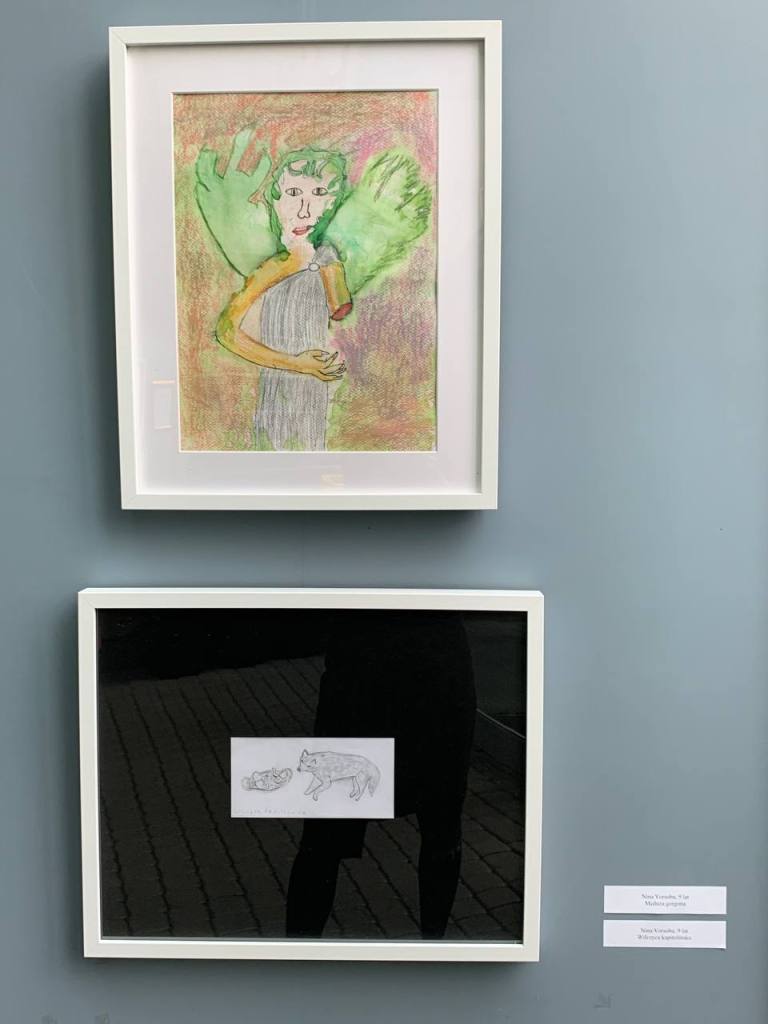
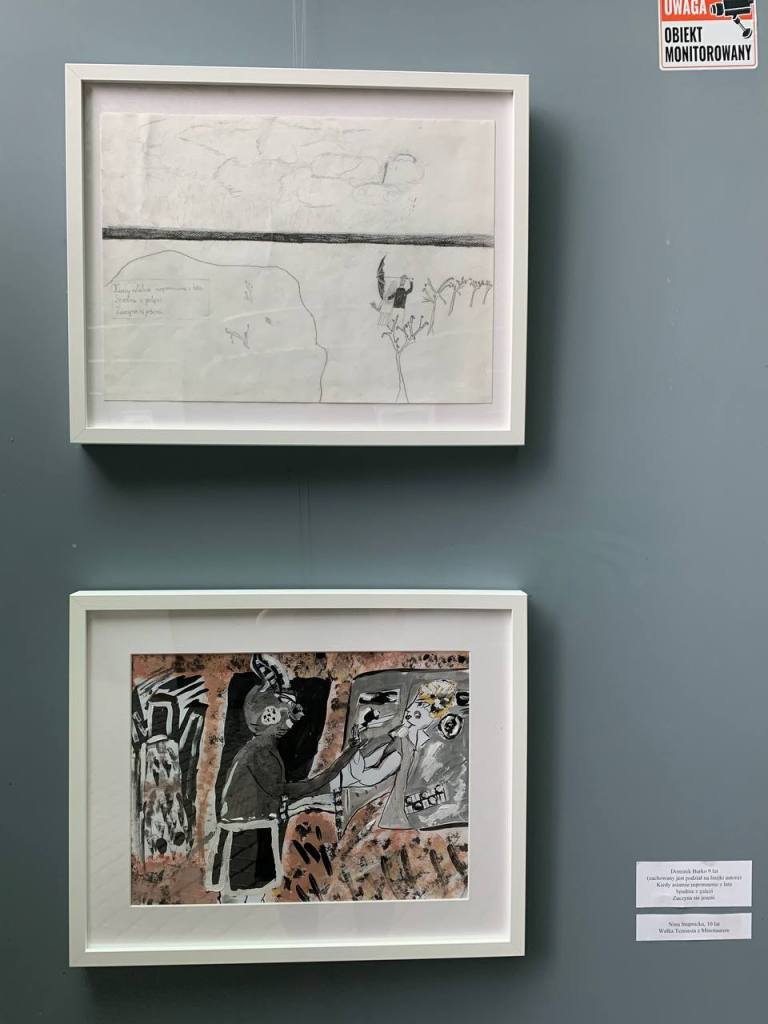
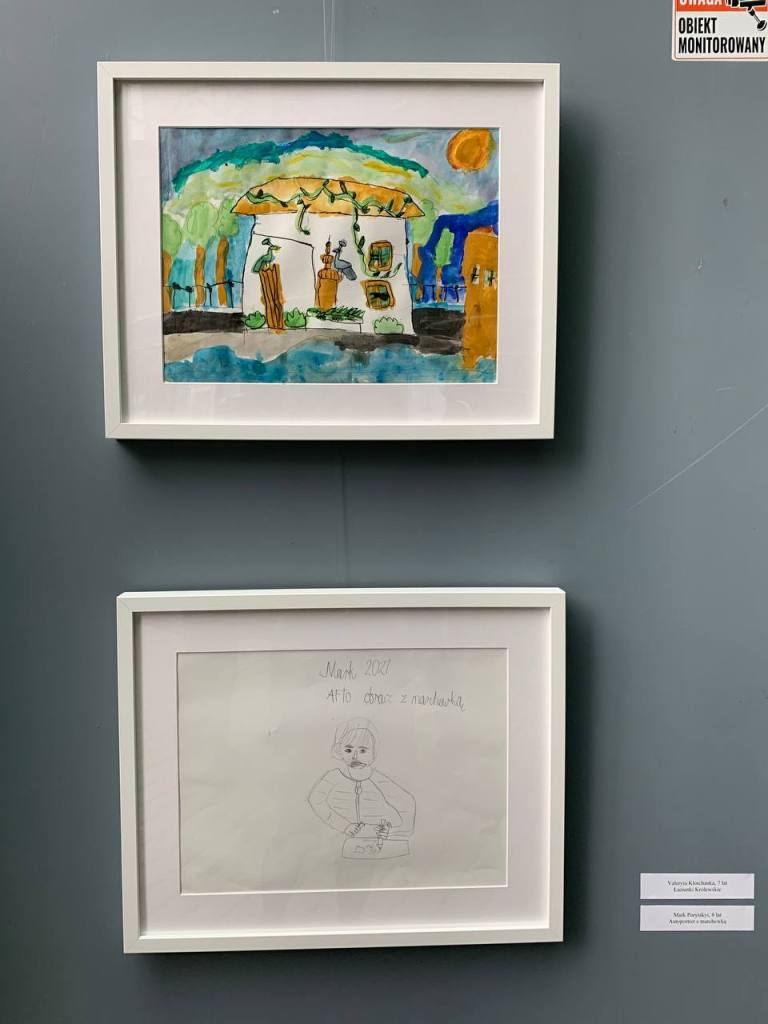
On 29th April the exhibition “Sketching on Olympus” was inaugurated at the University of Warsaw Gallery in the UW Library (BUW). It accompanies the Our Mythical Nature conference within the Our Mythical Childhood… The Reception of Classical Antiquity in Children’s and Young Adults’ Culture in Response to Regional and Global Challenges project at the Faculty of “Artes Liberales” UW. The exhibition presents works by children from Belarus and Ukraine, currently living in Warsaw, on Greek mythology and more. These drawings were created during classes in an art studio for children “Цёплы круг” (The Warm Circle).

Exhibition poster

The studio “The Warm Circle” was founded in September 2020 by two Belarusian artists from Minsk, graduates of the Belarusian Academy of Fine Arts: Tatiana Karpachova and Liza Mikhadziuk. Currently, 13 children aged between 5 and 15 years old attend the studio. The aim of the studio is to teach children the basics of drawing and painting in a comfortable atmosphere of concentration, creative joy, and inner peace. The studio creates the conditions for sharing energy and experience, while at the same time developing the ability to think outside the box and releasing creativity by spending time in an artistic environment.


Tatiana Karpachova, Liza Mikhadziuk and Olga Anisko at the exhibition.

All photos have been published with the consent of the project participants (or their parents).
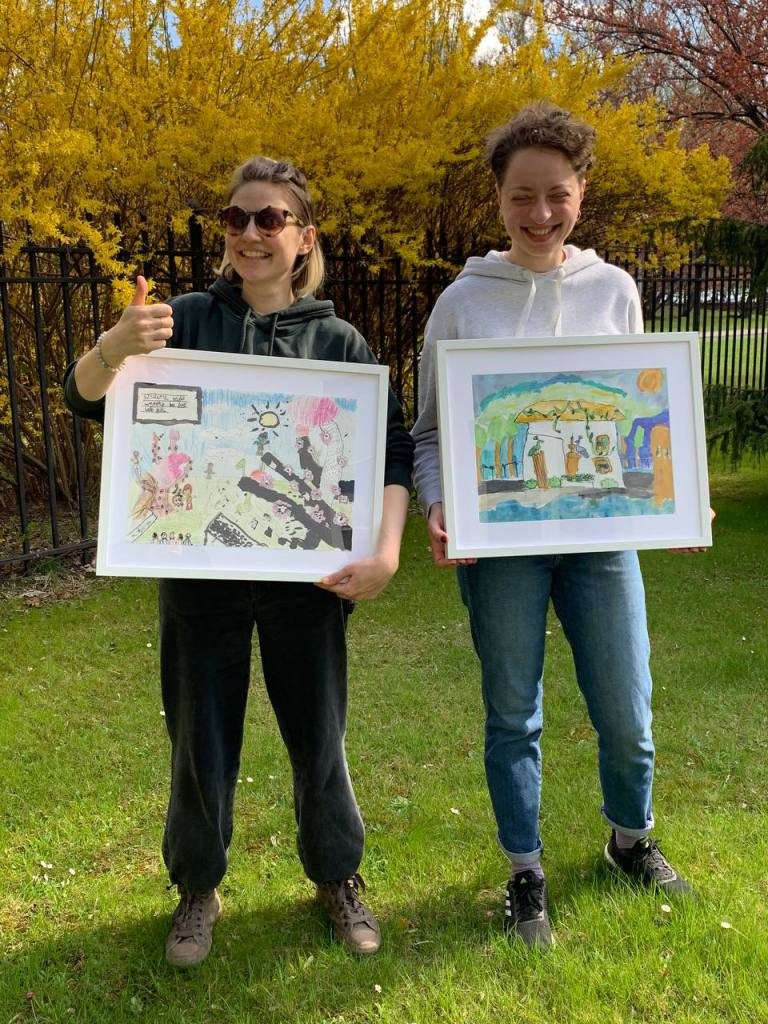
Tatiana Karpachova and Liza Mikhadziuk.
All photos have been published with the consent of the project participants (or their parents).

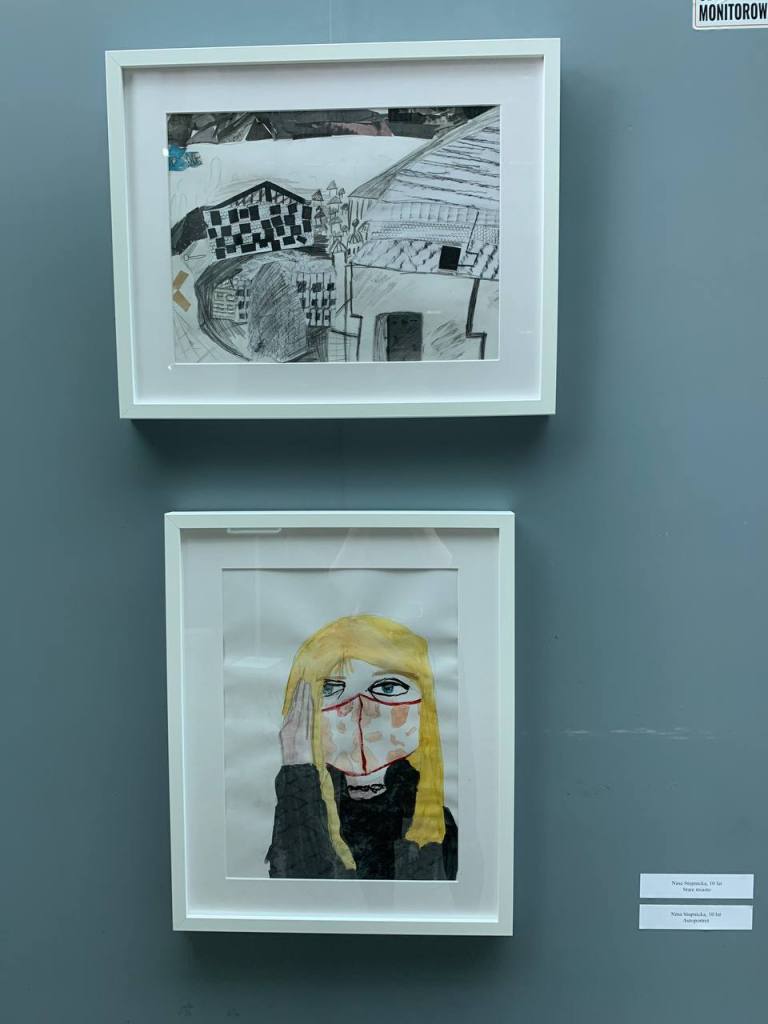
During the classes, the children worked on different themes: “Warsaw”, “Self-portrait”, “Home”, “Hokku”, “Japanese still life”, etc.

In order to create the exhibition “Sketching on Olympus”, the children and their teachers, armed with the necessary equipment: paintbrushes, pencils, paper, and an inexhaustible imagination, spent a month exploring Mount Olympus in order to tell us, the viewers, what “really” happened there. Beforehand, the children listened to the myths and legends of ancient Greece and Rome and familiarized themselves with the works on the subject of the most prominent artists of the world.

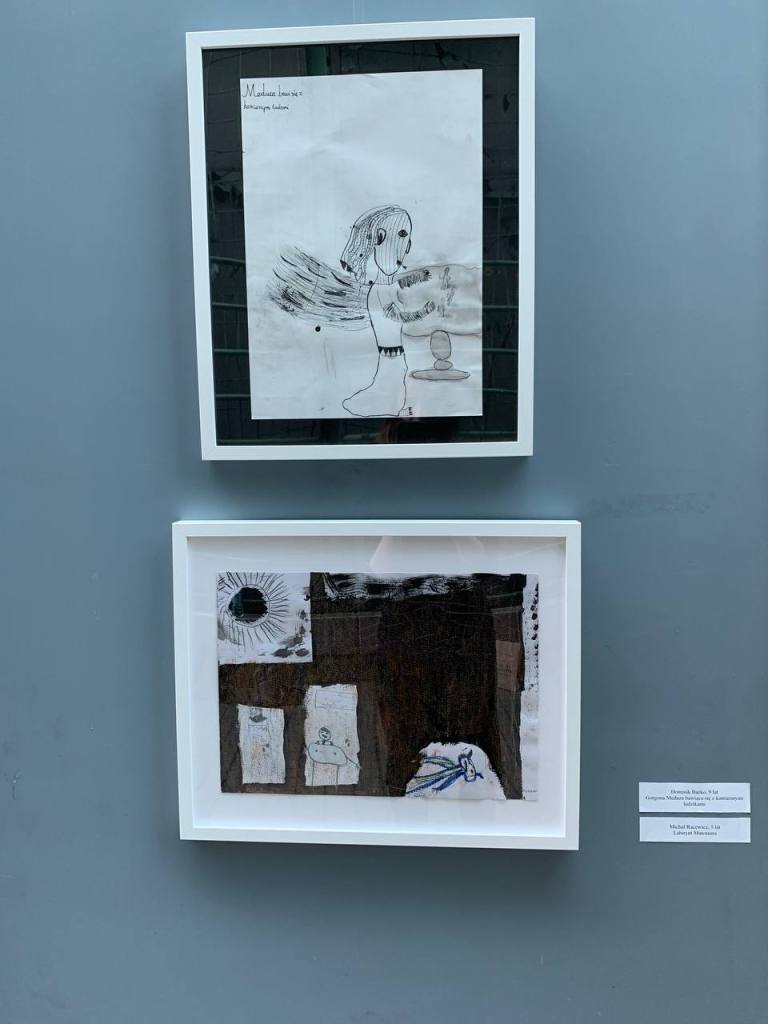
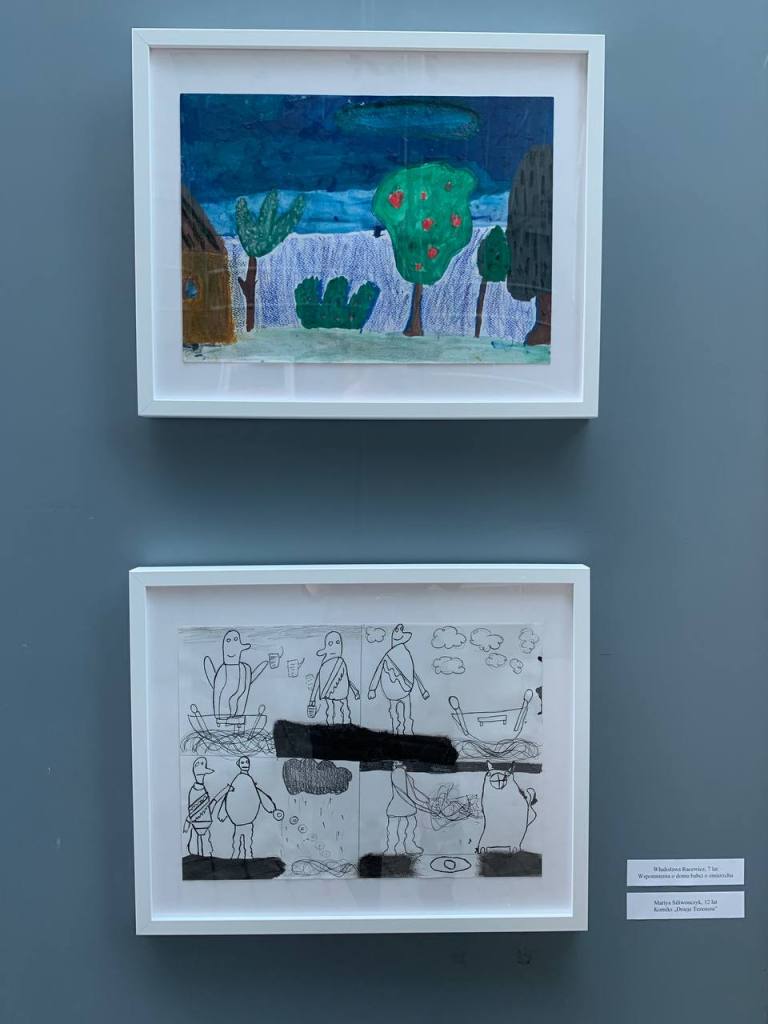
Michał Racewicz and his artwork.
 All photos have been published with the consent of the project participants (or their parents).
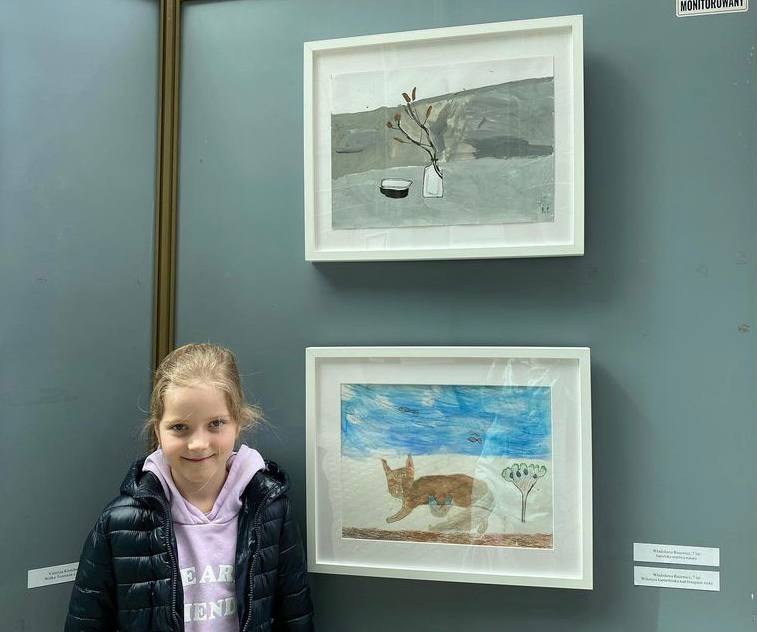
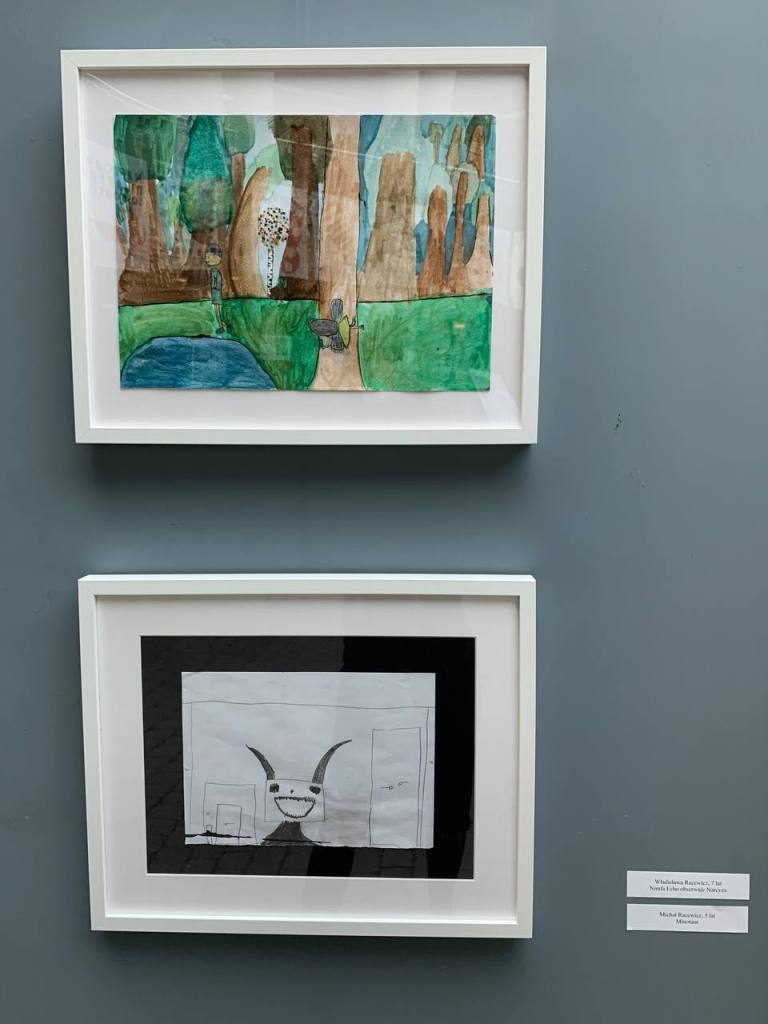
Władzisława Racewicz and her artwork.
All photos have been published with the consent of the project participants (or their parents).

In studying the mythological characters in detail, many difficult questions arose. Could the royal shepherd Faustulus, who raised Romulus and Remus, have had a woollen overcoat? Was Medusa Gorgona’s entire body covered in scales and how long were her nails? If the Minotaur had the head of a bull, was his body hairy? Why did the Minotaur eat so rarely (once in seven years)? Why do all the paintings and sculptures by prominent artists have curly hair?

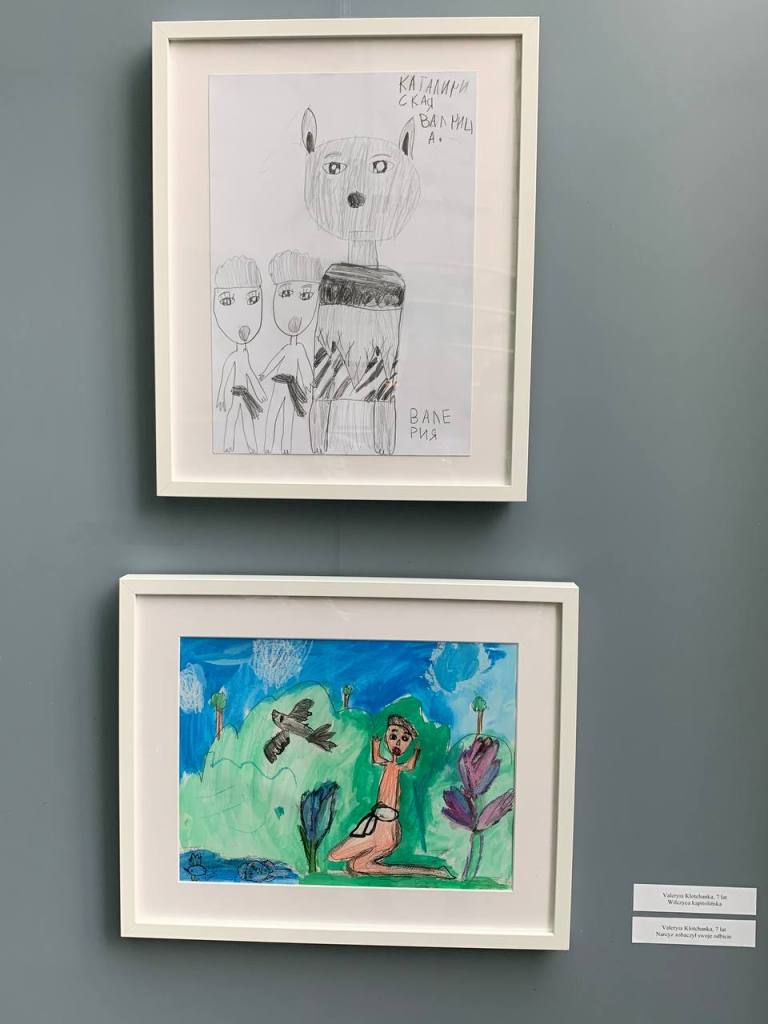
Children’s creativity is full of improvisation and experimentation, hence the Minotaur here does have horns, but his head is square, and the Labyrinth at Knossos is a room with many doors. The comic book which illustrates the journey of Theseus is also worth mentioning – try to find Ariadne in it. In the exhibition we meet Theseus fighting the Minotaur, Medusa playing with stone men, a modern Narcissus wearing a mask but dressed according to 15th-century fashion, and a Narcissus so beautiful that even birds fly away at the sight of him.

The curator of the exhibition is Olga Anisko.

Cooperation with Belarusian scientists, students, and artists has been coordinated for years by Dr Hanna Paulouskaya.

We would like to express our heartfelt thanks to Dr Tomasz Strączek, the Director of the University of Warsaw Gallery, for his invitation, hospitality, and assistance in organizing the exhibition.

We also wish to express our gratitude to the Artes Liberales Institute” Foundation for its financial support which made the exhibition possible.

The exhibition is on display at the University of Warsaw Gallery in the main hall of the University of Warsaw Library (BUW) until June 28, 2021. Here on the blog, we are pleased to share all the works online for all those who are outside of Warsaw or cannot move freely due to the pandemic.


Замалёўкі з Алімпу ў Галерэі Варшаўскага ўніверсітэта

29 красавіка ў Галерэі Варшаўскага ўніверсітэта, якая знаходзіцца ў універсітэцкай бібліятэцы, адбылося адкрыццё выставы “Szkicowanie na Olimpie” (“Замалёўкі на Алімпе”). Выстава прымеркавана да канферэнцыі Our Mythical Nature ў межах праекта Our Mythical Childhood… The Reception of Classical Antiquity in Children’s and Young Adults’ Culture in Response to Regional and Global Challenges, якая праводзіцца факультэтам “Artes Liberales” Варшаўскага ўніверсітэта. На выставе прадстаўлены працы дзяцей з Беларусі і Ўкраіны, якія цяпер жывуць у Варшаве. Гэта малюнкі па матывах грэчаскай міфалогіі, а таксама на іншыя тэмы, якія былі створаны падчас заняткаў мастацкай студыі для дзяцей “Цёплы круг”.

Студыя “Цёплы круг” была арганізавана ў верасні 2020 года двума беларускімі мастачкамі з Мінска, выпускніцамі Беларускай дзяржаўнай акадэміі мастацтваў: Таццянай Карпачовай і Лізаветай Міхадзюк. Зараз у студыі навучаецца 13 дзяцей ва ўзросце ад 5 да 15 гадоў. Мэта студыі – у камфортнай атмасферы сканцэнтраванай працы і настрою творчай радасці і душэўнага спакою перадаць дзецям моцную базу малюнка і жывапісу. Студыя – гэта магчымасць дзяліцца сваёй энергіяй і досведам, адначасова развіваць уменне нестандартна мысліць і раскрываць свой творчы патэнцыял, праводзячы час у мастацкім асяроддзі.

На занятках навучэнцы працавалі над рознымі тэмамі: “Варшава”, “Аўтапартрэт”, “Дом”, “Хоку”, “Японскі нацюрморт” і г.д.

Спецыяльна да выставы “Szkicowanie na Olimpie” дзеці разам са сваімі настаўніцамі, узяўшы з сабою неабходнае абсталяванне: пэндзлікі, алоўкі, паперу і невычэрпнае натхненне, прысвяцілі месяц даследаванню Алімпу, каб расказаць нам, гледачам, як “усё было насамрэч”. А папярэдне дзеці праслухалі міфы і легенды Старажытнай Грэцыі і Рыма і азнаёміліся з працамі выбітных сусветных мастакоў на дадзеную тэматыку.

Падчас падрабязнага знаёмства з міфалагічнымі героямі паўстала мноства сур’ёзных пытанняў. Ці мог каралеўскі пастух Фаўстул, які выхоўваў Ромула і Рэма, мець ваўняны кажух? Ці ўсё цела Медузы Гаргоны было пакрыта луской і якой даўжыні ў яе былі пазногці? Калі ў Мінатаўра была галава быка, то ці было ў яго валасатае тулава? Чаму Мінатаўр так рэдка еў (адзін раз у 7 гадоў)? Чаму на карцінах і скульптурах выбітных мастакоў усе маюць кучаравыя валасы?

Дзіцячая крэатыўнасць напоўнена імправізацыяй і эксперыментамі, таму Мінатаўр тут хоць і з рагамі, але галава ў яго квадратнай формы, а Кноскі Лабірынт – гэта памяшканне з мноствам дзвярэй. Увагі заслугоўвае комікс, які ілюструе падарожжа Тэсея – паспрабуй знайсці ў ім Арыядну. У экспазіцыі сустракаем Тэсея, які змагаецца з Мінатаўрам, Медузу, якая гуляе каменнымі чалавечкамі, сучаснага Нарцыса ў масцы, але апранутага па модзе XV стагоддзя, а таксама Нарцыса, прыгожага настолькі, што ад яго выгляду разлятаюцца нават птушкі.

Куратарка выставы – Вольга Аніська.

Супрацоўніцтва з беларускімі навукоўцамі, студэнтамі і мастакамі каардынуе кандыдат навук Ганна Паўлоўская.

Вялікі дзякуй доктару Томашу Стрончку, дырэктару Галерэі Варшаўскага ўніверсітэта, за запрашэнне, гасціннасць і дапамогу ў арганізацыі выставы.

Мы таксама хацелі б выразіць нашу ўдзячнасць Фундацыі “Інстытут Artes Liberales за фінансавую падтрымку, якая дазволіла ажыццявіць ідэю выставы.

Шчыра запрашаем на выставу, якую можна паглядзець у Галерэі Варшаўскага ўніверсітэта ў галоўным холе Бібліятэцы Варшаўскага ўніверсітэта да 28 чэрвеня 2021 года. Для тых, хто жыве не ў Варшаве, і ўсіх, хто не можа прыехаць з-за пандэміі, публікуем усе працы онлайн.


Szkice z Olimpu do obejrzenia w Galerii UW

29 kwietnia w Galerii UW w BUWie została otwarta wystawa „Szkicowanie na Olimpie”. Towarzyszy ona konferencji Our Mythical Nature w ramach projektu Our Mythical Childhood… The Reception of Classical Antiquity in Children’s and Young Adults’ Culture in Response to Regional and Global Challenges. Wystawa prezentuje prace dzieci z Białorusi oraz Ukrainy, obecnie mieszkających w Warszawie, dotyczące mitologii greckiej i nie tylko. Rysunki te powstały podczas zajęć w pracowni plastycznej dla dzieci „Цёплы круг” (Ciepły krąg).

Pracownia „Ciepły krąg” została założona we wrześniu 2020 roku przez dwie białoruskie artystki z Mińska, absolwentki Białoruskiej Akademii Sztuk Pięknych: Tatianę Karpaczową i Lizę Mikhadziuk. Obecnie do pracowni uczęszcza 13 dzieci w wieku od 5 do 15 lat. Celem pracowni jest w komfortowej atmosferze skupienia oraz nastroju twórczej radości i spokoju wewnętrznego przekazać dzieciom solidne podstawy rysunku i malarstwa. Pracownia stwarza warunki do dzielenia się swoją energią i doświadczeniem, jednocześnie rozwijając umiejętność nieszablonowego myślenia i wyzwalania kreatywności poprzez spędzanie czasu w środowisku artystycznym.

Na zajęciach w pracowni dzieci pracowały nad różnymi tematami: „Warszawa”, „Autoportret”, „Dom”, „Hokku”, „Japońska martwa natura” itd.

Na potrzeby wystawy „Szkicowanie na Olimpie” dzieci wraz z ich nauczycielkami, uzbroiwszy się w niezbędny sprzęt: pędzle, ołówki, papier i niewyczerpaną wyobraźnię, poświęciły miesiąc na badanie Olimpu, aby opowiedzieć nam, widzom, co tak „naprawdę” tam się wydarzyło. Wcześniej zaś dzieci wysłuchały mitów i legend starożytnej Grecji i Rzymu oraz zapoznały się z dziełami wybitnych światowych artystów o danej tematyce.

Przy szczegółowym zapoznawaniu się z mitologicznymi bohaterami zrodziło się wiele trudnych pytań. Czy królewski pasterz Faustulus, który wychował Remulusa i Remusa, mógł mieć wełniany kożuch? Czy całe ciało Meduzy Gorgony było pokryte łuskami i jak długie były jej paznokcie? Jeśli Minotaur miał głowę byka, to czy jego ciało było owłosione? Dlaczego Minotaur jadł tak rzadko (raz na siedem lat)? Dlaczego na obrazach i rzeźbach wybitnych artystów wszyscy mają kręcone włosy?

Dziecięca kreatywność przepełniona jest improwizacją i eksperymentami, stąd Minotaur tutaj wprawdzie posiada rogi, ale za to głowę ma kwadratową, a Labirynt w Knossos jest pomieszczeniem z wieloma drzwiami. Na uwagę zasługuje komiks, który ilustruje podróż Tezeusza – spróbuj odnaleźć w nim Ariadnę. Na wystawie spotkamy Tezeusza walczącego z Minotaurem, Meduzę bawiącą się z kamiennymi ludzikami, współczesnego Narcyza w masce, ale ubranego zgodnie z XV-wieczną modą, oraz Narcyza tak pięknego, że nawet ptaki odlatują na jego widok.

Kuratorką wystawy jest Olga Anisko.

Współpracę z białoruskimi naukowcami, studentami i artystami od lat koordynuje Dr Hanna Paulouskaya.

Z całego serca wyrażamy podziękowania dla Pana Dr Tomasza Strączka, Dyrektora Galerii UW, za zaproszenie, gościnność i pomoc w organizacji wystawy.

Chcielibyśmy również wyrazić wdzięczność Fundacji „Instytut Artes Liberalesza wsparcie finansowe umożliwiające realizację wystawy.

Serdecznie zapraszamy na wystawę, którą można zobaczyć w Galerii UW w głównym holu BUWu do 28 czerwca 2021. Dla osób spoza Warszawy, a także dla wszystkich, którzy nie mogą przemieszczać się z powodu pandemii, zamieszczamy komplet prac online.


Post by Olga Anisko and Hanna Paulouskaya