Blog for the international research project "Our Mythical Childhood… The Reception of Classical Antiquity in Children’s and Young Adults’ Culture in Response to Regional and Global Challenges", financed by the ERC Consolidator Grant led by Prof. Katarzyna Marciniak, Faculty of "Artes Liberales" of the University of Warsaw. Team members: Prof. Susan Deacy and Steve K. Simons, University of Roehampton; Prof. Elizabeth Hale and Dr Miriam Riverlea, University of New England; Prof. Lisa Maurice and Dr Ayelet Peer, Bar-Ilan University; Prof. Daniel A. Nkemleke, Dr Divine Che Neba and Dr Eleanor A. Dasi, University of Yaoundé I; Dr Elżbieta Olechowska, Dr Hanna Paulouskaya, Dr Sonya Nevin, Dott. Edoardo Pecchini, Marta Pszczolińska, Angelina Gerus and the Project Officers: Magdalena Andersen, Maria Makarewicz, and Olga Strycharczyk from the Faculty of "Artes Liberales" UW.
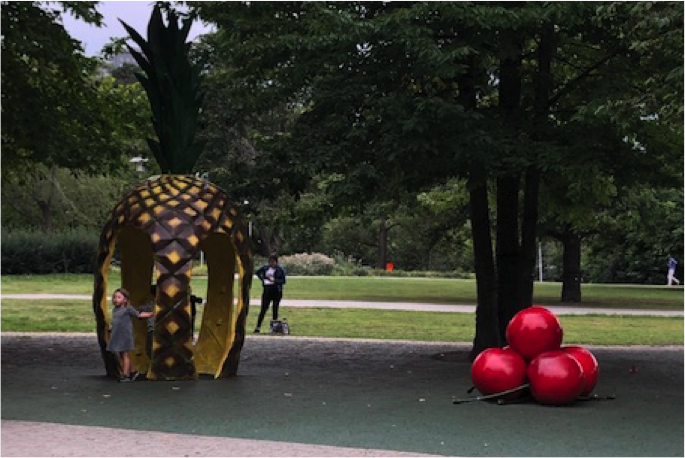
If Stockholm is not the capital of children’s literature, it certainly might be considered one of the most important centres of studies focusing on this very phenomenon. The heritage of Astrid Lindgren and influence of Tove Jansson (a Finish author writing her Moomin saga in Swedish) are present on every corner of the city and in the local children’s culture. The most beautiful playgrounds I have ever seen, are a visible part of Stockholm infrastructure:
Figures 1: Fruit playground in Liljeholmskajen district, phot. by the author of the post.
Figures 2: Fruit playground in Liljeholmskajen district, phot. by the author of the post.
No wonder this place was selected as the venue for the 24th Biennial Congress of the International Research Society for Children’s Literature, August 14–18 2019, with the theme: “Silence and Silencing in Children’s Literature” [WEBSITE]. As it was a very unique experience – and important to me personally – I have decided to share here some impressions from my visit to Stockholm.
The Congress was held in the beautiful building Norra Latin, a former boy school, where the ancient heritage (with Greek mythology and Latin language) was considered the most important part of education. In 1989 it became a conference centre and it is now already a magical place, chosen as thea ‘title character’ of a Swedish young adult novel by Sara Bergmark Elfgren:
Figure 3: Norra Latin Conference Centre in Norrmalm district, SOURCE.
Figure 4: Book cover of Sara Bergmark Elfgren’s novel, SOURCE.
The Congress itself was full of amazing lectures and opportunities to meet researchers from all around the world. Probably the most important to me were two keynote’s papers: Vanessa Joosen’s, putting an emphasis on what diversity, especially represented by young researchers, can bring to the children’s literature studies, and Boel Westin’s, the famous biographer of Tove Jansson, who reminded everyone (with a little help from Moomins) the real meanings of silence. What was also inspiring and very unique, were the events accompanying the panels – all connected to the children’s literature.
We had the opportunity to visit Swedish Institute for Children’s Books, have a tour to Astrid Lindgren’s apartment and go to Junibacken – a museum and cultural centre of Swedish children’s literature. After a greeting from Nyls Nyman – Astrid Lindgren’s grandson – we attended the meetings with Swedish authors and illustrators of children’s books – among others with Sara Bergmark Elfgrem (the author of “Norra Latin”) and Linda Bondestam, who illustrated several Ulf Stark’s books (“Mit Egen Lilla Liten”, “Djur Som Ingen Sett”):
Figure 5: Book cover of Min egen lilla liten, 2014, SOURCE.
Figure 6: Book cover of Djur som ingen set tutom, 2016, SOURCE.
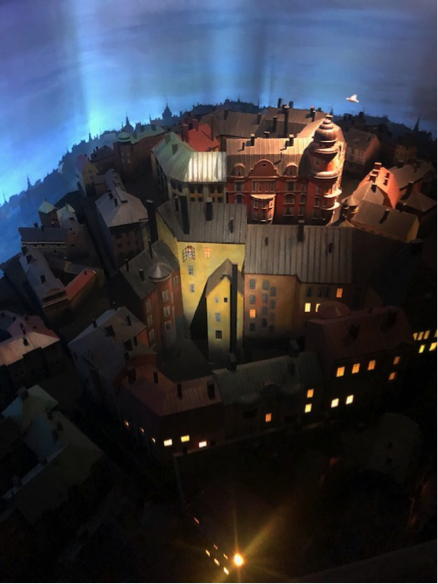
In Junibacken we also took a ride on the Story Train, where Astrid Lindgrend’s voice narrated the most famous Swedish stories from folklore and children’s literature. It certainly reminded all the researchers of the joy of childhood and showed them the magical Stockholm – just beneath their feet:
Figure 7: Stockholm by night in Junibacken, phot. by the author of the post.
My presentation took place on the last day of the congress – after all the panels and all the events. I discussed the case of the ‘silenced beast’ from Marcin Szczygielski’s book: “The Heart of Nephthys”, a numb centauride Haro [link to the entry by Maciej Skowera on the Our Mythical Childhood Survey]. Quite a lot of participants were surprised that classical antiquity has such a strong place in Polish culture. But they were even more surprised that it also is a part of Korean children’s literature – as Suh Yoon Kim presented her paper on Echo and her influence on children, dealing with parental disputes. It was one of the rare opportunities to confront the ideas of classical mythology, coming from such different (yet similar!) cultures. Especially when shared in Norra Latin – where classical tradition and children’s literature met once again.
Figure 8: Haro from “The Heart of Nephthys”, scan by the author of the post.
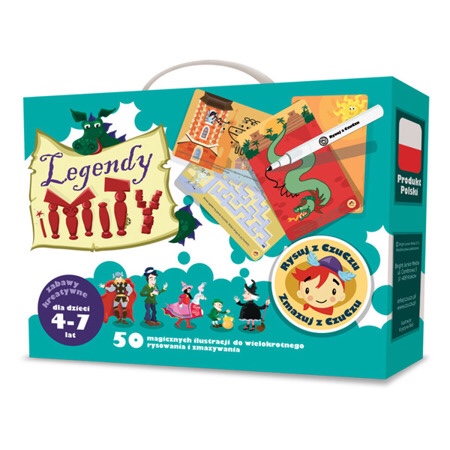
CzuCzu publishing house (part of Bright Junior Media) offers many creative and educational materials for children. Their products are being produced in Poland under the special care of teachers and specialists. All the products are especially adapted for the specific age groups.
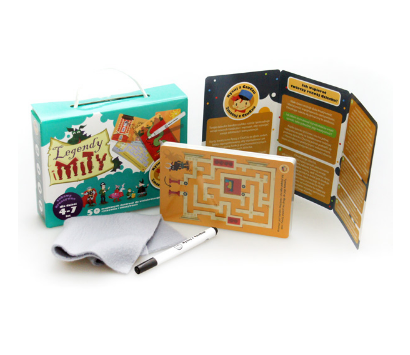
In 2011 CzuCzu produced the educational set of activity cards for children (age: 4-7), devoted to different legends and myths:
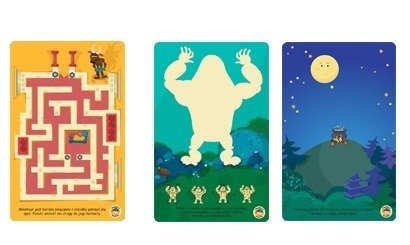
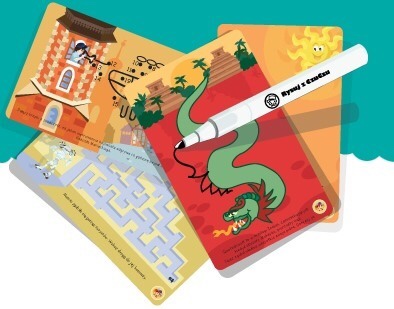
In the set children can find 25 activity cards (containing 50 different illustrations) and an erasable pen, so they can try to solve all the tasks as many time as they want. While playing, they will be able to learn (inter alia) about the famous myths and mythological monsters. On one of the illustrations below we can see the task related to the Minotaur’s Labyrinth:
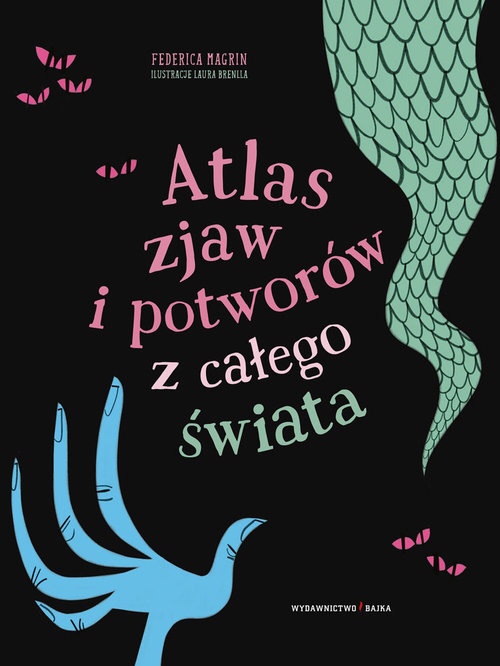
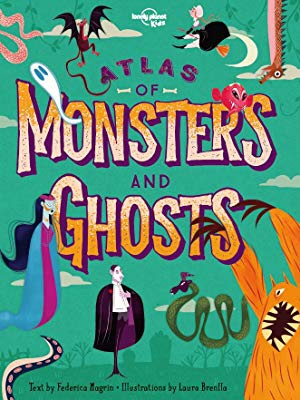
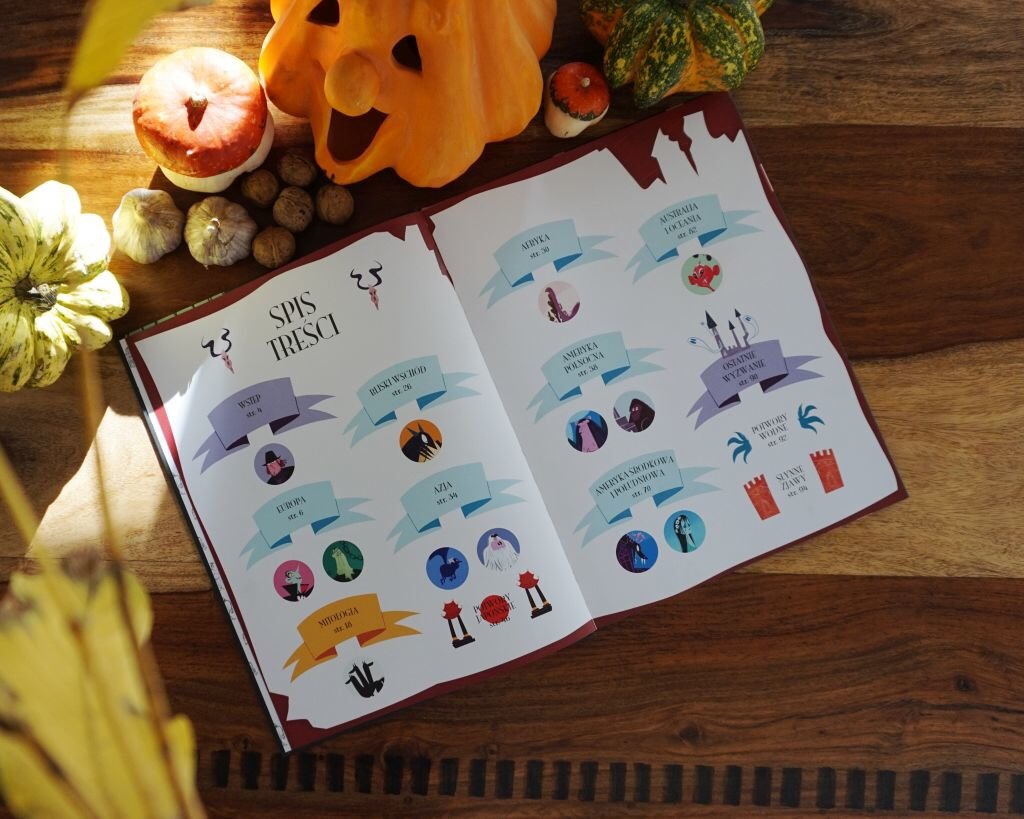
This time we would like to present you our recent discovery – the “Atlas of Monsters and Ghosts” [“Atlante dei mostri e dei fantasmi più spaventosi”, first published in 2018], created by Italian author Federica Magrin, with illustrations prepared by Spanish illustrator – Laura Brenlla:
The cover of the Polish edition, published by Wydawnictwo Bajka in 2018, translated by Ewa Nicewicz-Staszowska [source].
The author takes young readers on a world-wide tour, presenting them numerous magical and haunted places, where they can meet mysterious creatures and mythical monsters.
The cover of the English edition, published in 2019 by Lonely Planet Kids [source].
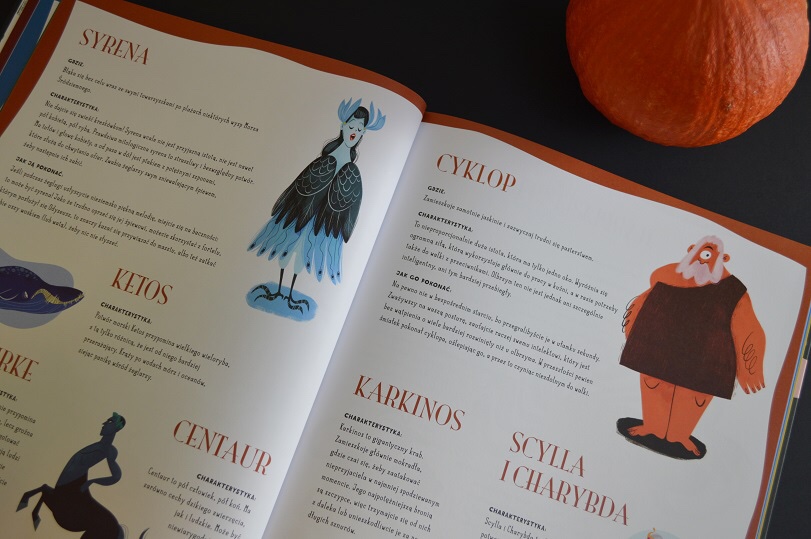
In the book we can find a special section devoted to Classical Mythology, where children can get to know some famous ancient characters, such as (inter alia): a Siren, Kirke, a Centaur and the Cyclops:
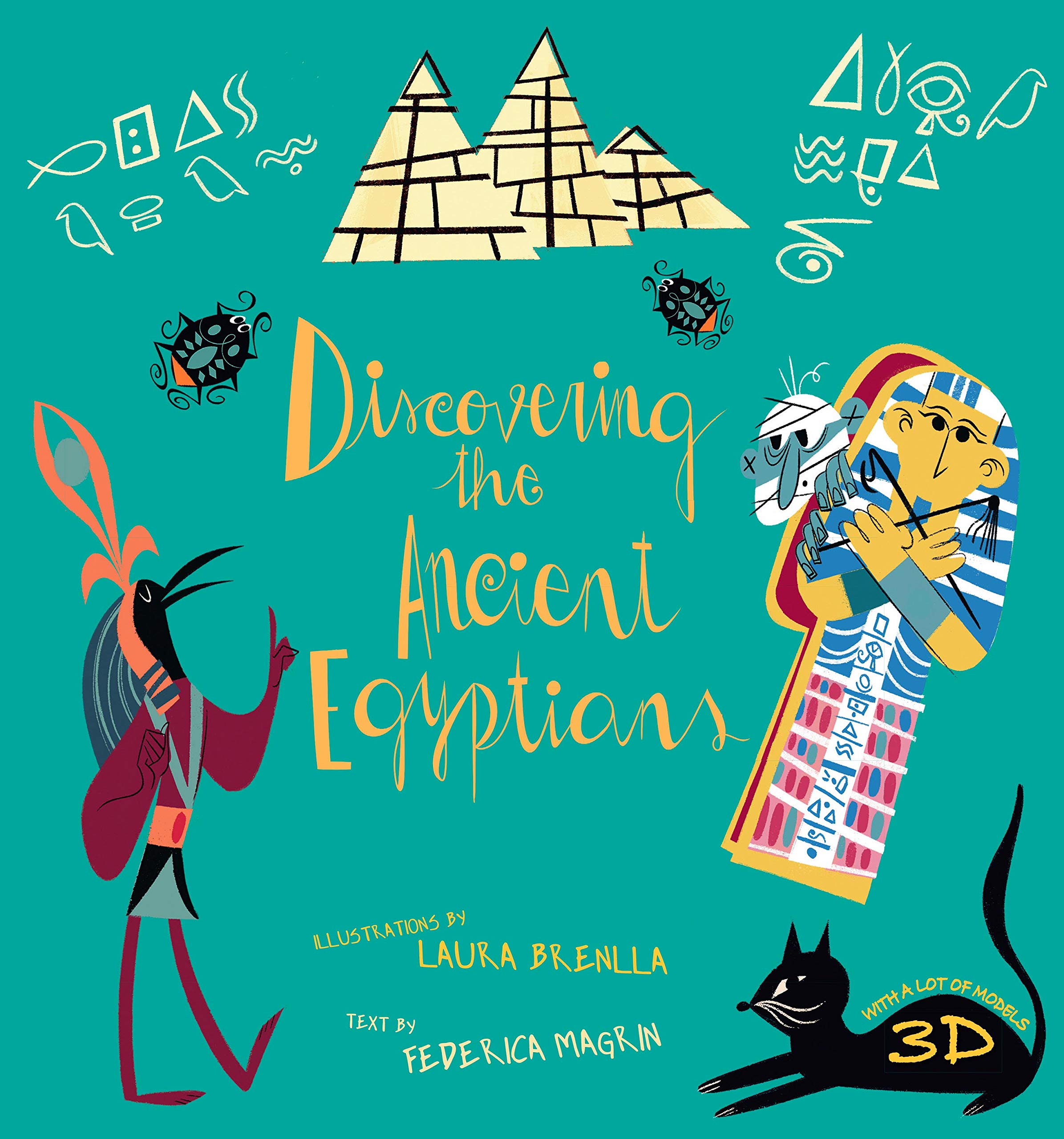
Federica Magrin & Laura Brenlla work often together, creating many interesting books for children, see for example “Discovering the Ancient Egyptians – Playing with History”:
The cover of “Discovering the Ancient Egyptians – Playing with History“, published by White Star in 2019 [source].
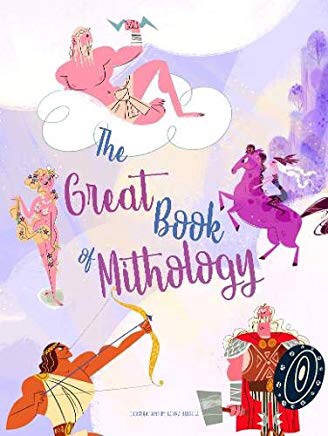
Also in October 2019 their new book entitled “The Great Book of Mythology” will be published:
The cover of “The Great Book of Mythology” – book to be published by White Star [source].See more:
Strefa Psotnika (Polish blog about children’s and young adults’ literature) about “Atlas of Monsters and Ghosts” – link
We are pleased to present the results of the second edition of the “Antiquity-Camera-Action!” movie competition, this time devoted to Ancient History:
Congratulations to all the Winners! 🙂
We would like to thank all the School Students and their Teachers who took part in the contest and we are pleased to announce the next edition already in September! More details soon. Keep visiting the official website of the competition:
1st Prize – movie “Diogenes. A Real Man” by “Galezia Studio” group
The 1st Prize has been awarded to a very interesting movie directed by Piotr Hałęza, with the suggestive and thoroughly contemporary presentation of the Greek cynic Diogenes. The Jury appreciated (inter alia) the interesting references to the stylistics of action cinema, the use of natural scenery, dynamic camera work, interesting editing, and the sense of humour.
Big applause for the Students from the Electronic and Computer Science School Complex in Sosnowiec with their Tutor – Prof. Marlena Łój-Szewczyk!!!
***
2nd Prize – movie “Spartacus’ Uprising” by the “Tribus” group
The 2nd Prize has been awarded for the original references to the character of Spartacus. The Jury appreciated the poetic way of narration, appropriately selected music, as well as interesting camera shots and the topic of juvenile addiction.
Congratulations to the “Tribus” group from Władysław Broniewski Elementary School in Wielgie, with their Tutor – Prof. Krzysztof Jagiełło!!!
***
The Jury decided not to award the 3rd Prize, but to honour two films with Special Distinctions:
Special Distinction to the movie “Antigone Primps” by the “Kurietta” group
The Special Distinction has been granted for the intriguing reference to Sophocles and his work, as well as for a very interesting use of the animation technique.
Congratulations to Małgorzata Miłek from Juliusz Słowacki VI Generalist High School in Kielce, and her Tutor – Prof. Anna Wzorek!!!
Special Distinction to the movie “Doglosophy” by “Team Mazury” directed by Olgierd Żebrowski
The Special Distinction has been granted for an interesting script and well-written dialogues, with the use of the quotations from the philosopher Diogenes, known as “the Dog”.
Congratulations to the “Team Mazury” from Jan III Sobieski School Complex in Szczytno and to their Tutor – Prof. Grzegorz Poniatowski!!!
The Jury emphasizes the high level of the works submitted to the competition, congratulates to all the Participants and expresses the hope for the continuation of this project in the next year!
Soon there will be more pictures from the award ceremony on our social network! Stay tuned!
Bio: Robin Diver is an Arts and Humanities Research Council/Midlands 3 Cities funded PhD researcher at the University of Birmingham. Her work focuses on children’s anthologies of Greek myth from 1850 to the present, and their adaptation of scenes of sexual violence. She is also General Editor for the Rosetta Journal and is currently organising a symposium on Shifting Notions of Modernity. She spoke on Troy at the FIEC in July.
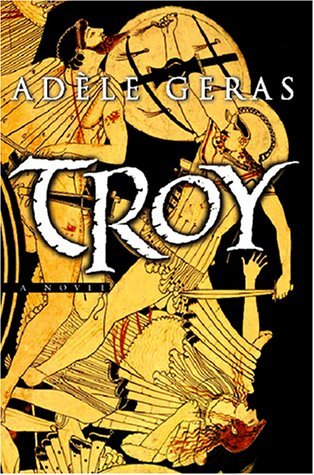
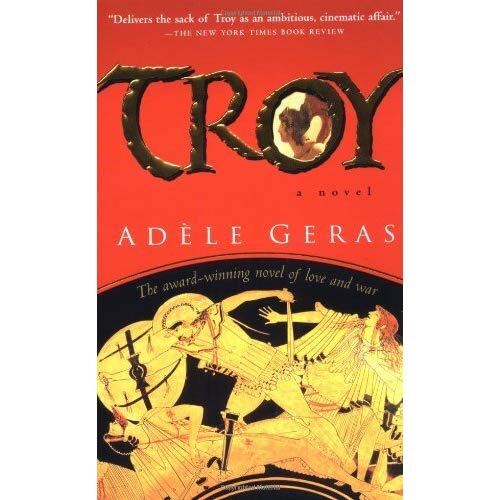
Troy(2000), as might be expected from the title, follows the city of Troy during the Trojan War. Specifically, Troy is a YA novel by well-known historical fiction author Adèle Geras about the final year of the war, covering roughly the same time period as the Iliad. The story focuses on the experiences of two sisters, Xanthe and Marpessa. Whilst dealing with hunger from the city being starved, trauma from the bloody battle beyond the walls and the despair of a city slowly realising it can’t win, the sisters also face chaos brought by the gods in their personal lives. The goddess Aphrodite becomes bored with the war and causes both Xanthe and Marpessa to fall in love with wealthy Trojan soldier Alastor. Alastor, in turn, falls in lust but not love with Marpessa. Geras wrote two sequels, Ithakawhich follows the events of Homer’s Odyssey and Didowhich follows the events of Virgil’s Aeneid. Both sequels have a similar focus on intimate love triangles, betrayal and adolescent lust.
Other major characters in Troy include Xanthe’s friends Iason the stable boy and Polyxena the granddaughter of a famous bard, Andromache whom Xanthe serves, Helen whom Marpessa serves, the infant Astyanax and the three elderly ‘gossips’ Theano, Danae and Halie who serve the palace. To further the theme of romantic complications, Iason is in love with Xanthe and Polyxena is in love with Iason. Andromache fears that Hector secretly desires Helen, and Marpessa fears Paris may desire her.
Covers
The novel has gone through a number of different covers since its initial publication, which are rather striking in the different elements they have chosen to emphasise. For example:
These five covers reflect an ambiguity as regards how Troy should be marketed. The first two covers use Greek pottery art depicting the Trojan War to suggest the novel inside will be a retelling of the Trojan War as a war by someone who knows much about the classical world, hence the use of Greek art. The first cover in particular is not obviously aimed at a female demographic, and the quote at the top: ‘Delivers the sack of Troy as an ambitious, cinematic affair’ again positions Troy as a retelling of the whole Trojan War for readers who want to, perhaps, experience a book form of the film which bears the same name. (The word ‘cinematic’ is notable.) The reader who purchased the book on the basis of these covers might be disappointed to find the focus firmly on the Trojans and primarily on the domestic lives of invented female characters within Troy, rather than on the battles.
The third cover, meanwhile, implies a novel about the personal tragedy that comes to individual characters through the famed Trojan War. The two faces on the front appear female, thus marketing the novel to girls, but they are still washed through in the reds, yellows and blacks of battle, blood and fire, positioning this as a novel that pulls no punches in its depiction of violence and war. The quote this time is: ‘Not to be missed’, which suggests the book is good as a book, not merely as a re-tread of the Trojan War.
The fourth cover is still further from the first two. It depicts an unknown woman, whose face appears older than that of a teenager, grimly facing the viewer as an army approaches. This cover places the same emphasis upon individual female suffering as the third but perhaps moves away from its YA audience to market the book towards adult women, as suggested by the older woman on the front.
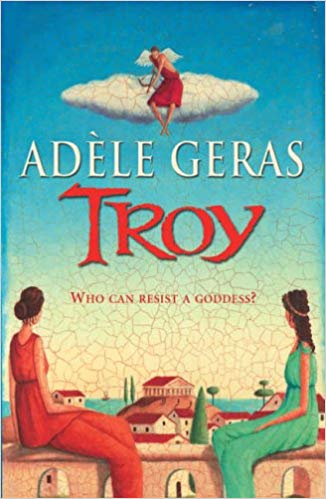
Finally, the fifth cover is very different. It does not make the story feel dark at all. The sisters are shown sitting on the Trojan walls in relaxed postures, surrounded by bright and cheerful colours. Their position is almost evocative of a tea party scene. A Cupid figure with wings sits on a cloud and aims his bow at them. The mosaic format of this cover and the classical Greek dress of the figures alludes to the novel’s historical material, but a reader picking this up might reasonably expect a light and fun read and be rather taken aback by the death, blood and drawn out infanticide of Astyanax that appear. The cottages and sea in front of the sisters are visually suggestive of Greece not Troy and their outfits are of course reflective of a later time period. The tagline: ‘Who can resist a goddess?’ draws the reader away from the direct action of the Trojan War that was emphasised on the other covers and into personal and domestic drama which might be expected to be more comedic than dark.
Structure
The story follows the major events of the Trojan War: the death and ransoming of Hector, deaths of Achilles and Paris, the Trojan Horse and the Sack of Troy. These are told through the eyes of the various characters whilst they also deal with their own dramas. Gods frequently appear as somewhat dispassionate observers of events as they unfold. One quirk of the story is that as soon as a god leaves the scene, everyone besides Marpessa immediately forgets they were ever there.
The novel is written in omniscient third person, with short chapters divided by scene, e.g. ‘The Plains’ or ‘Helen’s Palace’. Geras uses a style emphasising streams of thought. For example: ‘It was horrible, and I must, Xanthe said to herself, stop thinking about it. I must find something else to fill my mind.’ (P.2.) This placing of thoughts in first person and within their own sentence is done often and allows for the intimacy of first person narrative to sometimes break into the omniscient third person narrative, as well as creating a sense of destabilisation that fits the chaotic setting.
Lust – and Love?
The first central theme in this novel is that of love and lust. Troy is perhaps unusual among YA exploration of teenage sex and lust, but for its rather cynical portrayal of these things. Sex is not necessarily paired with love and the young protagonists are rather more matter of fact (and less idealistic) in their attitudes to sex than is typical of the genre. For example, Marpessa hopes no one will see her having sex with Alastor because she believes sex looks absurd to anyone who is not involved and caught up in the act. Xanthe, on the other hand, has the naïve and romantic attitude to love more stereotypically found in YA protagonists of the time, but this appears to be portrayed as a flaw.
Sexual obsession also features prominently. Geras plays with ideas and expectations about both love and lust. Marpessa struggles with confusion about whether she loves or desires Alastor, whilst he initially only desires her until Aphrodite causes him to fall in love at the end. However, Alastor also appears to assume that Marpessa must be in love with him because she is sleeping with him. Xanthe declares her love for Alastor immediately after meeting him in a way that seems somewhat unrealistic as love. Xanthe’s immediate infatuation with Alastor and the way she becomes caught up in romantic fantasies might in fact be read as a criticism or commentary on romantic tropes found in Hollywood and in YA fiction generally.
There is much debate among the characters about Hector’s feelings for Helen, and the question is never resolved. It is suggested he might have loved Andromache and lusted after Helen and even implied at one point he may have made advances on Helen. Overall, when compared to other historical YA, Troy does not make romantic love sound very appealing.
Other Themes
A second theme is that of gender division. The dismissive attitude Trojan men have towards women receives a lot of focus in the novel. For example, near the beginning Xanthe reflects that ‘Men are less than Gods, and women are less than men, and poor women are less than rich women, and girls are least of all and poor girls are even less than that. Better to be an ox.’ (P.18.) Marpessa reflects several times on the misogyny of Alastor. For example, when he complains he is being treated ‘like a young girl who can’t do anything except faint and lie around moaning’, she thinks that ‘Men thought women were weak, which amused her. She had seen girls screaming in the agony of childbirth and wondered how men would manage if the Gods had arranged it for their bodies to be torn nearly in two.’ (P. 104.) Geras does not take the fairly standard route within historical or fantastical YA of having her male love interest be less misogynistic than the average man in his society.
A third central theme is, of course, that of war. Although the novel takes place in the last year of the war, when the Trojans are beaten down and the glory of the war has long since faded, some characters still display idealistic sentiment towards it. For example, Alastor dreams of killing Greeks and is surprised by the reality of the war when he goes into battle, and Astyanax plays war games.
Xanthe, on the other hand, despises the war and refuses to watch it from the walls with the rest of the city, having seen first hand the real damage weapons do working in the room where wounded soldiers are treated. This links Troy to another YA war novel, Theresa Breslin’s Remembrance published two years later in 2002, in which the female protagonist also loses her enthusiasm for the first world war after reading a medical textbook describing the damage the weapons she makes do to human bodies. The horror of the sack of Troy is given a lot of space at the end.
Finally, gods and free will are also major themes. The gods regularly appear and speak to the characters. Typically, a god will tell a character what is about to happen in the war; for example who is going to die, and the character will mistake them for a crazy mortal and refuse to believe them. Once the god has left, the character will forget the conversation ever happened. In this way, the gods appear mysterious and otherworldly, perhaps rather like fairies of folklore. They come across as having a greater plan, but also as rather bored and aimless at times.
Marpessa, the only human who can remember her encounters with the gods, is a strange, silent character who holds herself apart from the rest of society, suggesting either that seeing the gods has changed her or that there was something ‘other’ in her nature that allowed her to see them in the first place. Aphrodite regularly talks to her, but Marpessa does not have a positive view of the goddess.
Since the gods seem to control so much, including who falls in love with whom, this raises questions about free will. Geras is unusual in including the gods in her YA Trojan War novel; other similar works published around the same time usually omit them and give rationalistic explanations for the characters’ behaviour. (E.g. McLaren, Inside the Walls of Troy; Cooney, Goddess of Yesterday; Friesner, Nobody’s Princess; Tomlinson, The Moon Riders.)
Historical Fiction
Although Geras is a frequent contributor to the network of female historical fiction writers ‘The History Girls’ (http://the-history-girls.blogspot.com/), Troy definitely comes across as the novelisation of a myth rather than an attempt at historical fiction. Few things set the story within a specific historical context and the characters generally act like ancient Greeks and appear to be speaking the same language as their invaders. This can be contrasted to the depiction of the Trojans as Hittites in the more recent novelisation A Song of War (2016) by Kate Quinn et al. or the historically detailed YA Trojan War novel of two years later, Theresa Tomlinson’s The Moon Riders.
The authors’ acknowledgements section at the start identifies her source material as Lattimore’s translation of the Iliad and Wilcock’s commentary on the Iliad. Polyxena’s grandfather, a famous bard or ‘singer’ of wars, is presumably a nod to Homer himself.
Further
I spoke on Troy and three other YA Trojan War novels, Nobody’s Princess, The Moon Riders and Inside the Walls of Troy on Sunday the 7thof July at the FIEC conference in London in my paper ‘Rape, Sisterhood and Deadly Love: Attempting to Centre the Female Experience in YA Novels About the Trojan War’. The programme can be found here: http://fiec2019.org/sunday-7-july-2019/ and the FIEC website here: http://fiecnet.blogspot.com/.
On one of the “Our Mythical Childhood” seminars we got the task to look for the famous Cleopatra VIIin texts of culture for children and young adults. My first field of research was (of course) the animation and cartoons for the youngest. And although there are probably more Cleopatras lurking within the animated world, I have found two versions of the Egyptian queen with particularly interesting traits alluding to two concepts: animality and monstrosity.
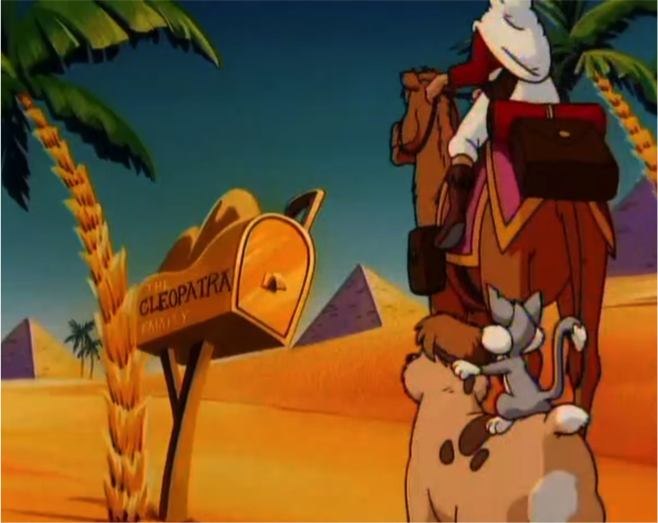
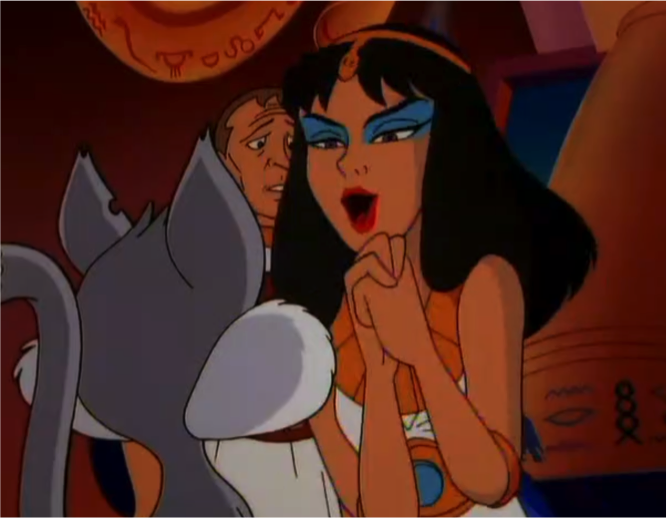
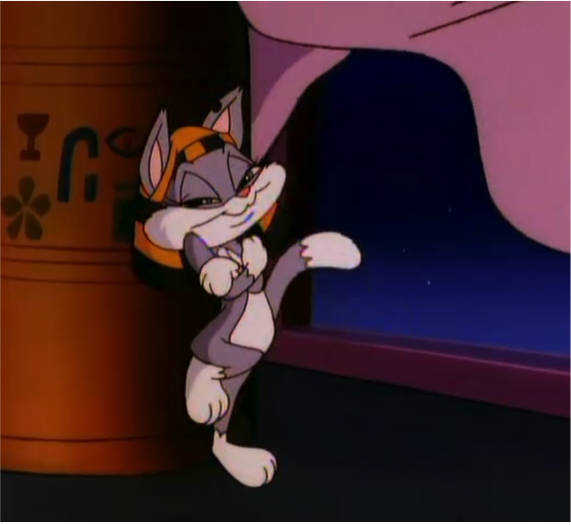
The first Cleopatra I found interesting comes from Home on De-Nile (1993), an episode from the “Animaniacs” series. It starts with two of the returning characters: Rita (the cat) and Runt (the dog) entering the Egypt – thinking it is Palm Springs – and looking for a new home. While Runt is almost immediately taken to work at the pyramid construction, Rita finds herself at home of Cleopatra. The queen is stunned by her presence and decides to keep her. Because of Cleopatra’s influence, the cat pictures herself as a beautiful and powerful queen of Egypt. Even though her illusion is quite “purrrfect” and she is considered to be an embodiment of the goddess, Rita and Runt have to run from the palace as soon as they find out the cat is being prepared for a sacrifice. In the cartoon Cleopatra poses as a ruthless and self-centred queen that everyone is afraid of. Those negative traits are reflected in the cat, who is as egoistic as cat can be.
Rita and Runt heading to Egypt (screenshot)
Cleopatra LOVING Rita
Rita LOVING being Cleopatra
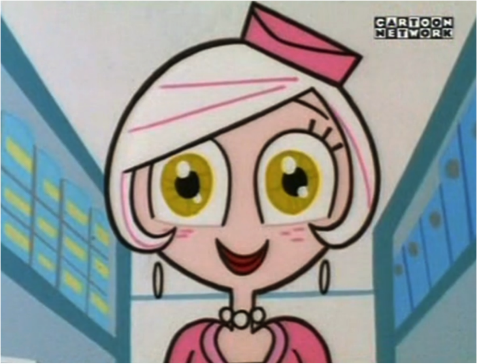
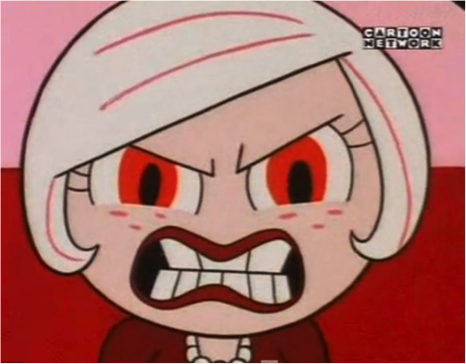
The second Cleopatra of my choice is Sedusa from the “Powerpuff Girls”. She appears in several episodes as a returning villain. During the first episode with her character, Mommy Fearest(1998), she is introduced as a caring and lovely new partner of Professor Utonium, Powerpuff Girls’ creator and guardian. She goes by name Ima Goodlady, hiding her hair under a blonde wig. Shortly, Sedusa shows her real nature and real, snake-like hair, which along with the name, recalls the inspiration of Medusa. Her true-self does not appeal to Professor’s taste, and feminine villain has to be defeated.
Sedusa’s transformation (as a blonde, she really gives the Dolores Umbridge vibe)
Sedusa’s transformation
Sedusa’s transformation
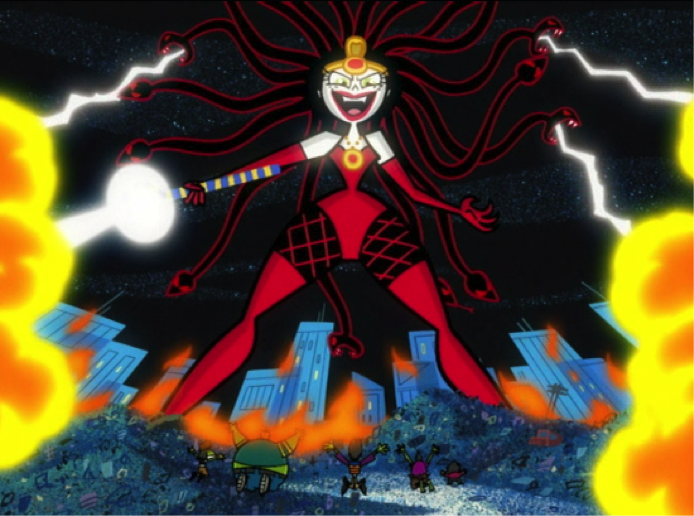
Sedusa re-appears in several episodes, but the most important for this post would be Aspirations (2004). Due to the previous events she is now completely bald and seeks revenge on the Powerpuff Girls. She assembles Cleopatra’s attributes: tiara, sceptre, and neckless, and – what seems the most important – she grows snake-hair! Cleopatra’s image helps her to grow (literary) and turn into a powerful villain. At the end, she is defeated by the girls, and Sedusa/Cleopatra falls one more time.
Sedusa as powerful Cleopatra
It is interesting how the creators of Powerpuff Girls series combined traits of two ancient characters, both “monstrous”, although in a different way, both associated with snakes – maybe for the same reasons. Sedusa can be perceived as a “super” cultural hybrid: femme fatale (seducing man), Medusa and Cleopatra: all women who man were and maybe still are uncomfortable with.
As for the former example, the animality of Cleopatra and the association not only with snakes, but also with cats, brings the animality of the fierce queen to the first row. Cleopatra in Home on De-Nile is “barely human” (or maybe – she is, very much so?), as she is focused only on herself and power. Even though it is “only” a cartoon, it sustains the negative portrait of Cleopatra, who might have been not as scary as popular culture pictures her.
We are pleased to share with you the programme of the conference Our Mythical History: Children’s and Young Adults’ Culture in Response to the Heritage of Ancient Greece and Rome:
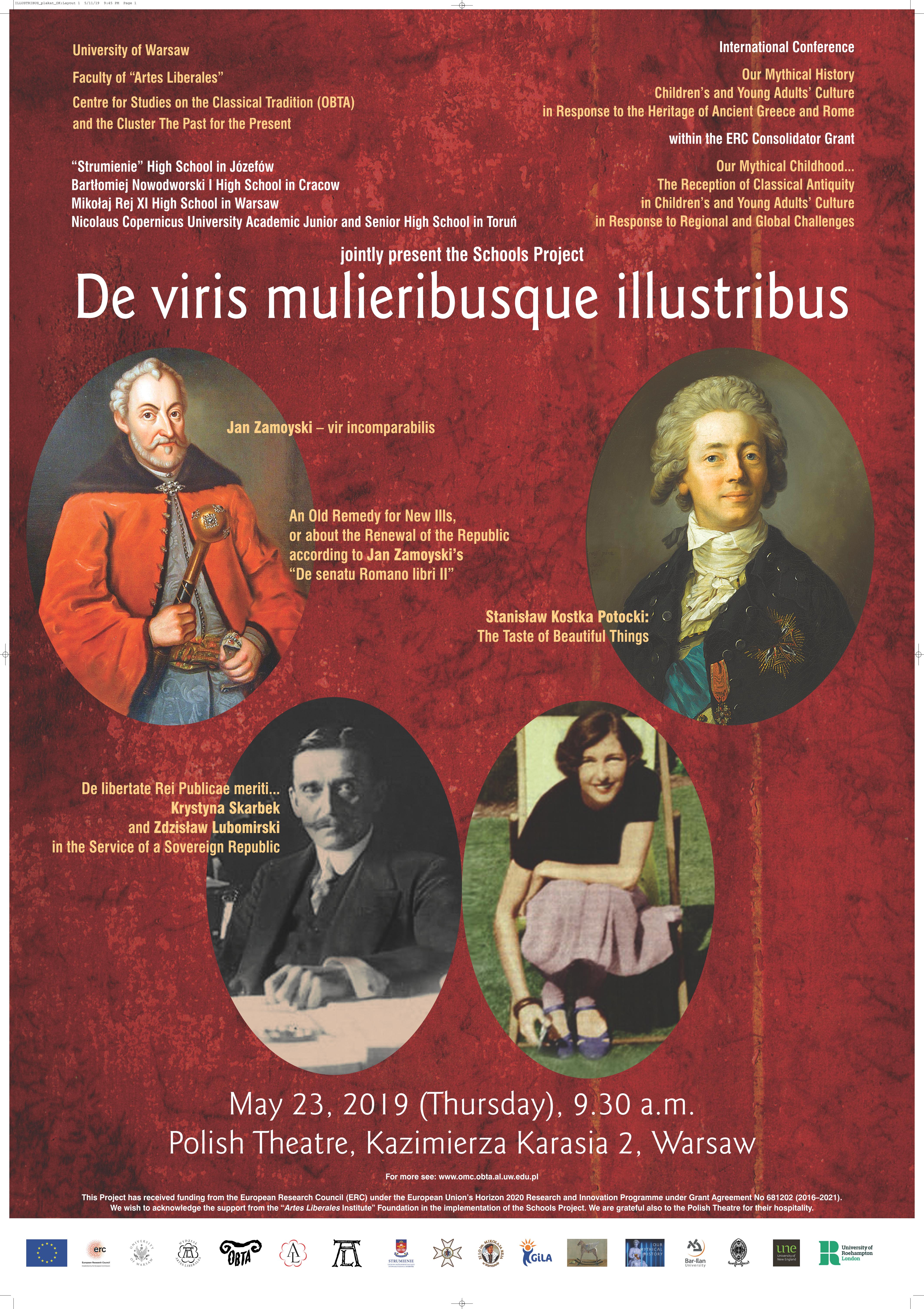
During the conference also the results of the Schools Endeavour “De viris mulieribusque illustribus” will be pesented – a task carried out by four high schools in Poland within the project:
Moreover, we will know the winners of the video competition for youth “Antiquity–Camera–Action!” for the short movies inspired by the Ancient History. There will be also two workshops: on new approaches to ancient vases by Dr. Sonya Nevin and Steve K. Simons and on the use of the myth of Hercules in the work with the children on autism spectrum by Prof. Susan Deacy. Thus, we hope to contribute to establishing a new holistic model for work in the Humanities on the frontiers of research, education, and culture. For more materials see also here.
The presence of Classical Antiquity in our world is sometimes stronger than we are aware of it. This potential is used by the creators of marketing campaigns. They use the associations the names of the ancient gods and heroes evoke to build a positive image of a given brand. Let’s have a look at three examples, chosen with the following criteria: one is crucial for the reception of Classical Antiquity in the history of marketing and the two next are the examples I have discovered most recently.
It is not widely known today that in 1947 Ajax the Great from the myth of the Trojan War gave his name to a line of detergents. This mythological hero is a bit forgotten in our times, but he belonged to the canon of education still in the late 1940s and the founders of the brand assured us that he was famous for his strength and “for marching into battle with the cleanest uniform” (http://ajaxlaundry.com/our-history/, no longer active). Ajax fitted perfectly also into the first slogans used in the brand’s advertisements: “Stronger than dirt”, or even “Stronger than grease”, which in English evokes an additional association with the land of myths – Greece. But if the Greek hero resembled sometimes a Mediaeval knight in these advertisements? Well… all is possible in the field of reception:
The time passes, but the power of Classical Antiquity is as strong as ever. Today, on 21th April, the birthday of Rome, it is worth to recall a recent commercial of a kind of chips with Julius Caesar in the leading role. Though there is room enough also for Brutus in the clip:
The commercial presentations have a say also in the reception of the fundamental myths, like the one of Sisyphus. One may wonder what Albert Camus would have thought had he been given the opportunity to come accross this clip:
The research into the reception of Classical Antiquity in marketing campaings is still awaiting for a deep elaboration. A topic particularly interesting in this context may be the branch of commercial presentations directed at young audience. But this is a theme for another blog post in the future. And probably it is also worth posing the following question: Do the commercial presentations only draw the inspiration from the ancient heritage or do they also inspire us to study the ancient myths and tales, or at least to re-check some details in the Internet, while watching an especially good campaign?…
Post by Katarzyna Marciniak
Bibliography:
Martina Treu, “Ajax”, in: Rosanna Lauriola, Kyriakos N. Demetriou, ed., Brill’s Companion to the Reception of Sophocles, Brill, Leiden–Boston 2017, p. 69.
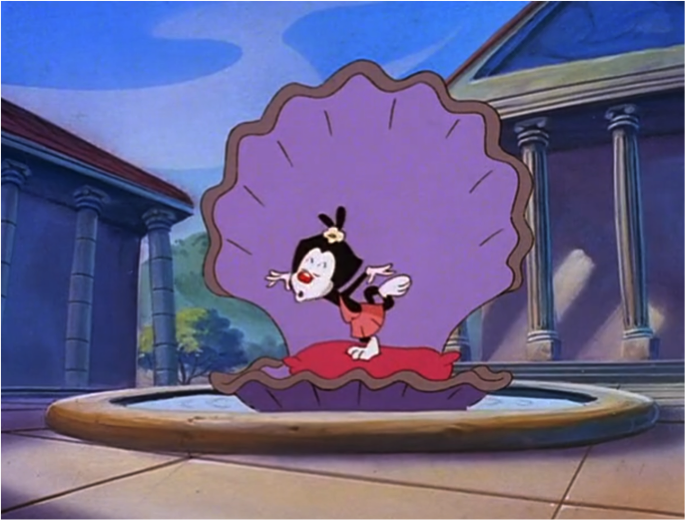
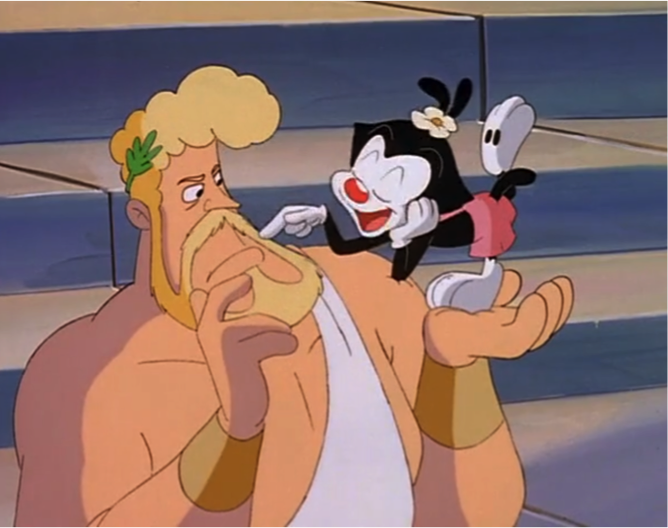
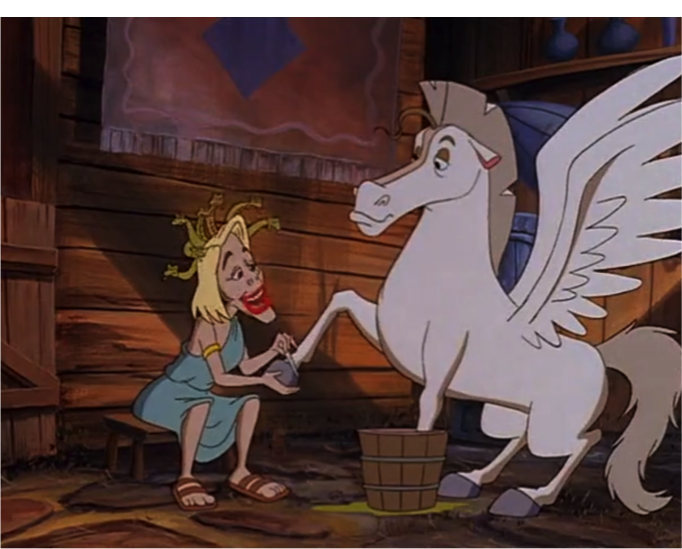
It’s time for Animaniacs! In the episode Hercules Unwound (dir. Audu Paden, 1995), crazy sibilings are taking us to ancient Greece, where the sun is bright, centaurs are philosophers, and Medusa’s doing Pegasus’ manicure. Yakkoleus, Wakkamemnon, and the goddess of cuteness – Aphrodottie visit young Hercules, who really, really does not want to do his twelve labours (and daddy Zeus is not very happy about it). “The ultimate symbol of strength and courage” is presented here as a spoiled brat having a tantrum before cleaning Augeas’ stables. Unfortunately, crazy sibilings cannot help the hero, as his breath smells like garlic and Dot is not able to kiss him. Animaniacs retreat and skip the episode, but there are other cartoon celebrities ready to take over.
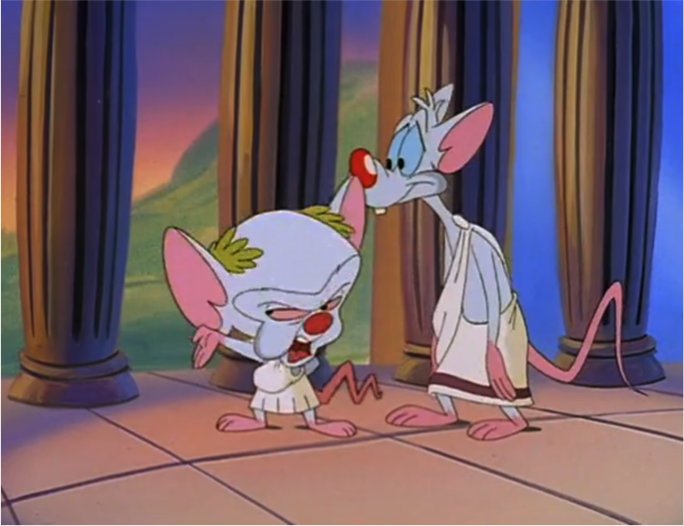
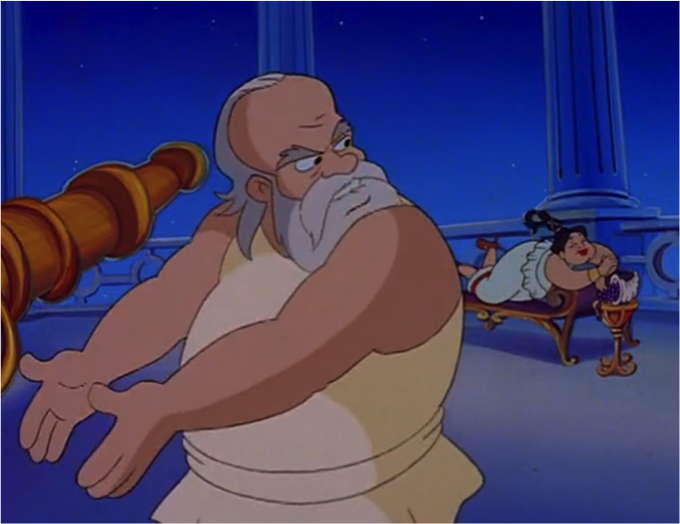
Nearby, Pinkus and the Brain overhear Mr. Artistotle saying that Zeus “lightning bolt equals unlimited power” – hence, there is a perfect occasion to “overthrow his kingdom and take over the world”. They fly on Pegasus to Olympus and visit the home of a balding, short, and chubby Zeus. While the god is checking on his son’s progress (which is none, as Hercules decided to take a coffee break), mice steal the lightning bolt to lose it in a few seconds. The bolt breaks the aqueduct and the escaping water cleans out the nasty stables. Zeus, happy with his son’s work, rewards him with marriage to the most amazing goddess in the ancient Greece – Aphrodottie of course – who decides to wear a gas mask for a final kiss.
Packed with action and Latin puns, with the star guests Pinky and the Brain, Animaniacs prove to be a real mythical treat.
Figure 1: Dot as Aphrodottie, screenshot
Figure 2: Dot before the kiss, screenshot
Figure 3: Pinkus and the Brain, screenshot
Figure 4: Medusa and Pegasus – bonding, screenshot
Report by Daniel A. Nkemleke, Department of English, Univeristy of Yaoundé 1, Cameroon, e-mail: nkemlekedan@yahoo.com
Professor Daniel A. Nkemleke brings a unique African perspective to the Our Mythical Childhood… Project. He and his colleagues have the exciting task of documenting African myths for the wider academic and non-academic audience. They present these myths via various disseminations activities, while also meeting with the local societies and (re)discovering together this fascinating heritage.
Cameroonian rural areas are a repository of many myths about the gods, the ancestors, creation, migration, births, deaths, the afterlife, etc. For one thing, it is in these rural areas where we still have people with original unpublished stories, and who are willing to share them. Rural areas in Cameroon are also fascinating in many ways: the natural environment, the habitat, the level of detachment from the things that matter in modern cities.
Honouring our long-cherished goal to introduce the Our Mythical Childhood (OMC) Project to the people that are not of the university, I travelled to Loua 1 village on Sunday, October 28, 2018, to talk to villagers with whom I had had previous contact in the context of a community building project, about the OMC Project.
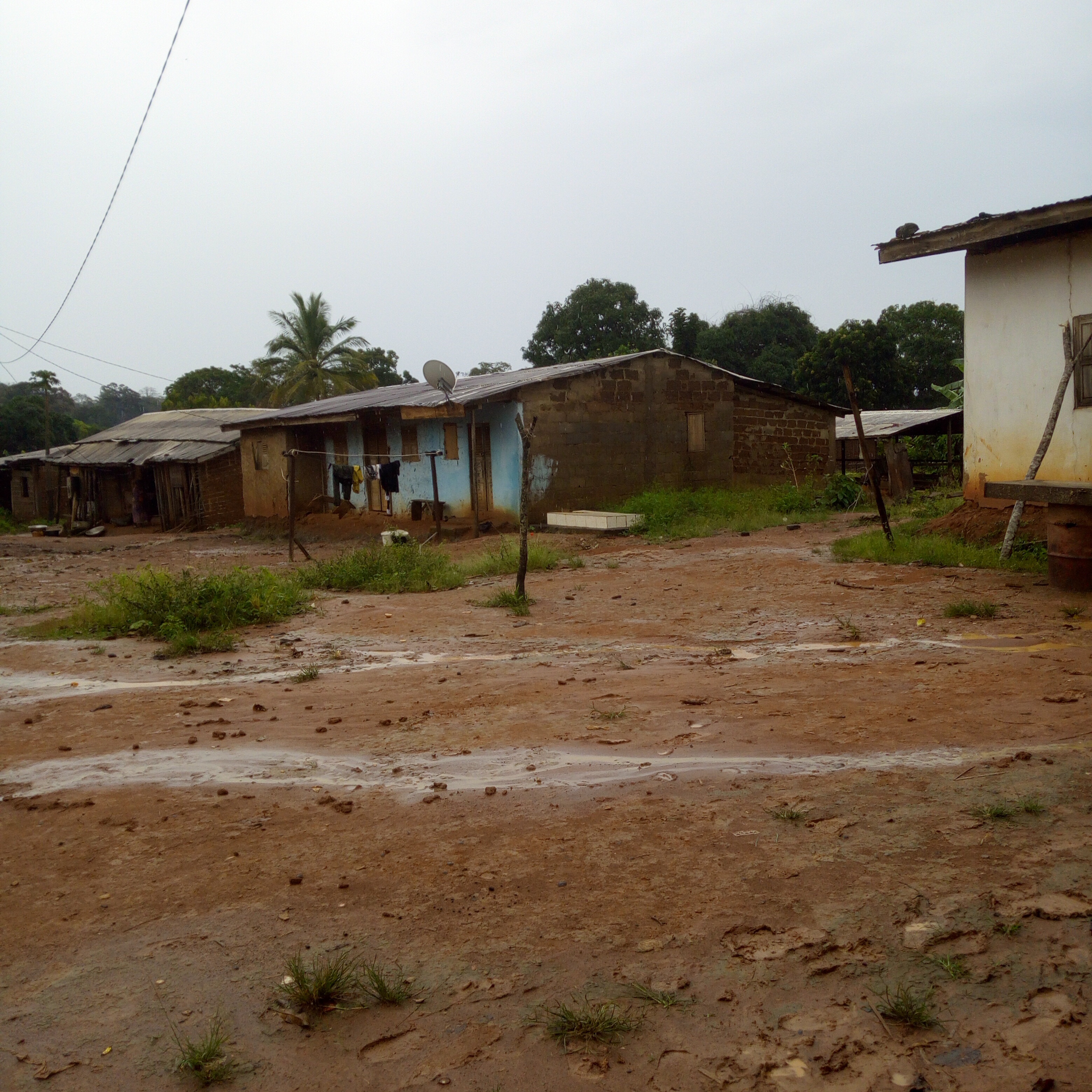
Loua 1 is a small village of about 500 inhabitants, situated some 30 km East of the city of Yaoundé, Cameroon (photo 1):
Photo 1: A section of the village of Loua 1.
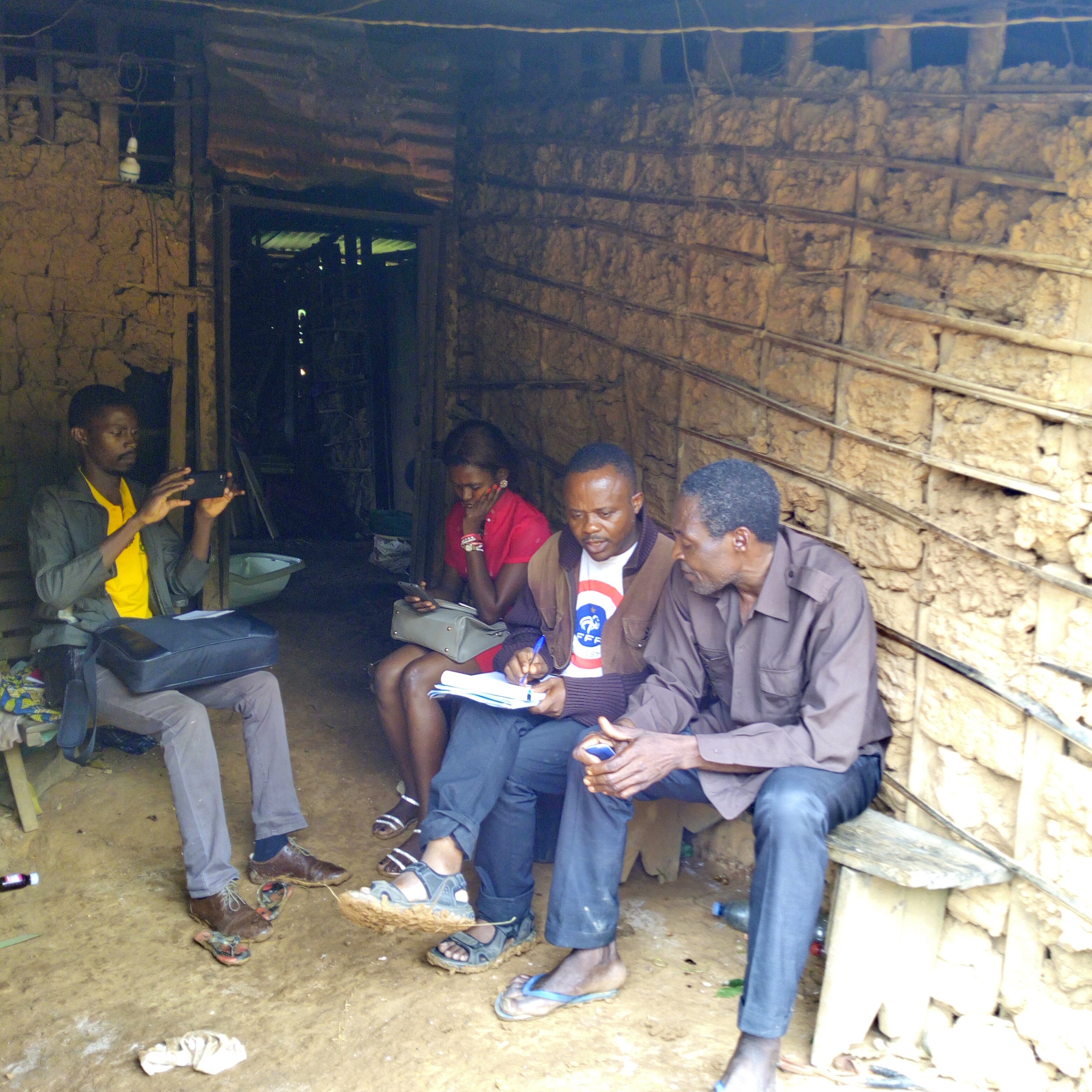
Before I arrived at this village, my contact person had already informed them of my interest in their local myths. They had specifically designated Mr Ngah Zobo Vandelin as the person to narrate the myth to me: Why Mount Loua Is Sacred Place to Loua People. After a welcome meeting at the veranda of the house of my contact person, I was taken to the house of the narrator, Mr Ngah Zobo Vandelin (photo 2):
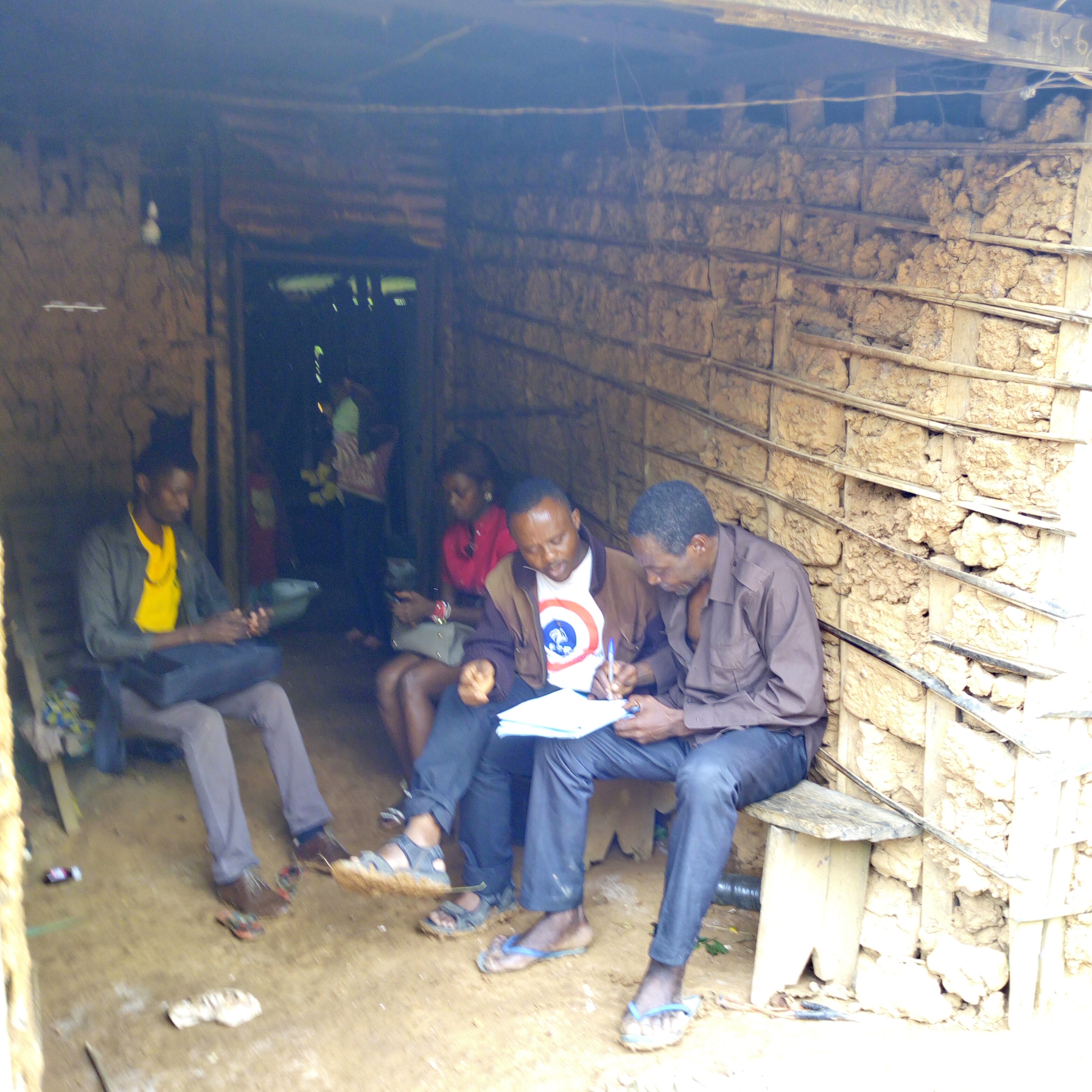
Photo 2: A myth narration event: Mr Ngah Zobo narrates his story as Daniel Nkemleke listens and takes note. Close to them are two participants who were interested in the narration.
The substance of the story which is being written as a separate entry for the Our Mythical Childhood Survey is this: In the distance past the people of Loua 1 moved from one place called Asama to where they now live. This movement was an instruction from Zama, their god, whom they considered to be the creator of the Earth, and who also made sure that his people should not undergo any kind of suffering. When there was great famine, their leader received a message from Zama that he should move the people out. They moved out, and under the guidance of this leader, whom Mr Ngah only referred to as “The Patriarch”, they came to settle in Loua 1.
According to the story, Zama was actually the one guiding their steps, because they encountered many challenges on the way, losing men, women, and children because of hunger. The few that survived the hash journey settled in Loua 1, and had since multiplied to occupy other villages around. Zama went to settle in Mount Loua, since he could not live in the same place with human beings.
Photo 3: Mr Ngah Zobo signs a consent form to authorize that his story and photo can be published.
Today, the people of Loua 1 offer yearly sacrifices to this mountain, situated some 10 km from the village, to thank Zama for his guidance and protection. If there is to be a tragedy in the village, Zama gives a special message to the people through the Patriarch, to prepare them for the tragedy. Mr Ngah told me he is one of the Patriarchs, capable of decoding messages from Zama to the people.
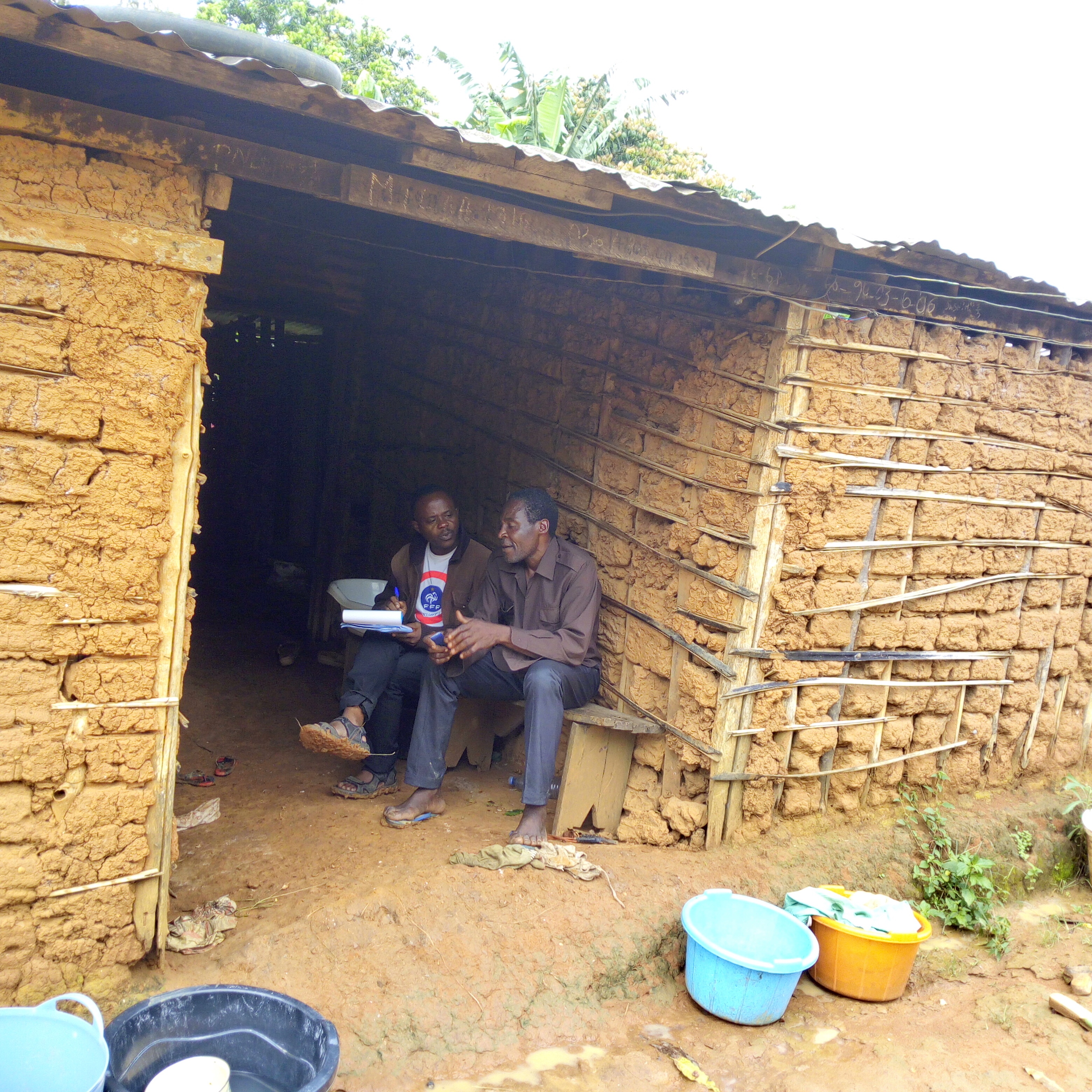
Photo 4: Mr Ngah Zobo and Daniel Nkemleke in a question and answer session relating to the account of the Myth of Mount Loua.











 Our Mythical Childhood Blog