Blog for the international research project "Our Mythical Childhood… The Reception of Classical Antiquity in Children’s and Young Adults’ Culture in Response to Regional and Global Challenges", financed by the ERC Consolidator Grant led by Prof. Katarzyna Marciniak, Faculty of "Artes Liberales" of the University of Warsaw. Team members: Prof. Susan Deacy and Steve K. Simons, University of Roehampton; Prof. Elizabeth Hale and Dr Miriam Riverlea, University of New England; Prof. Lisa Maurice and Dr Ayelet Peer, Bar-Ilan University; Prof. Daniel A. Nkemleke, Dr Divine Che Neba and Dr Eleanor A. Dasi, University of Yaoundé I; Dr Elżbieta Olechowska, Dr Hanna Paulouskaya, Dr Sonya Nevin, Dott. Edoardo Pecchini, Marta Pszczolińska, Angelina Gerus and the Project Officers: Magdalena Andersen, Maria Makarewicz, and Olga Strycharczyk from the Faculty of "Artes Liberales" UW.
Our partner school, Gymnasium Schäftlarn in Munich, was visited by a journalist and a photographer from the Frankfurter Allgemeine Zeitung (FAZ) – the only school in the entire state of Bavaria to receive such a visit – and was given a multifaceted portrait offering direct insights into everyday school life.
The visit also included a Latin lesson taught by our cooperation partner, Dr Michael Stierstorfer. He conducted a lesson with his advanced Latin class on the reception of Seneca in the film Seneca (Robert Schwentke, 2023) and in contemporary politics. The students not only analyzed texts from Seneca’s De ira (On Anger), but also connected them with film images and scenes from the aforementioned movie as well as with current political developments in Germany and all over the world.
Working in groups, the students selected suitable quotations for current German and international politicians, which they symbolically passed on to them as advice for their political work.
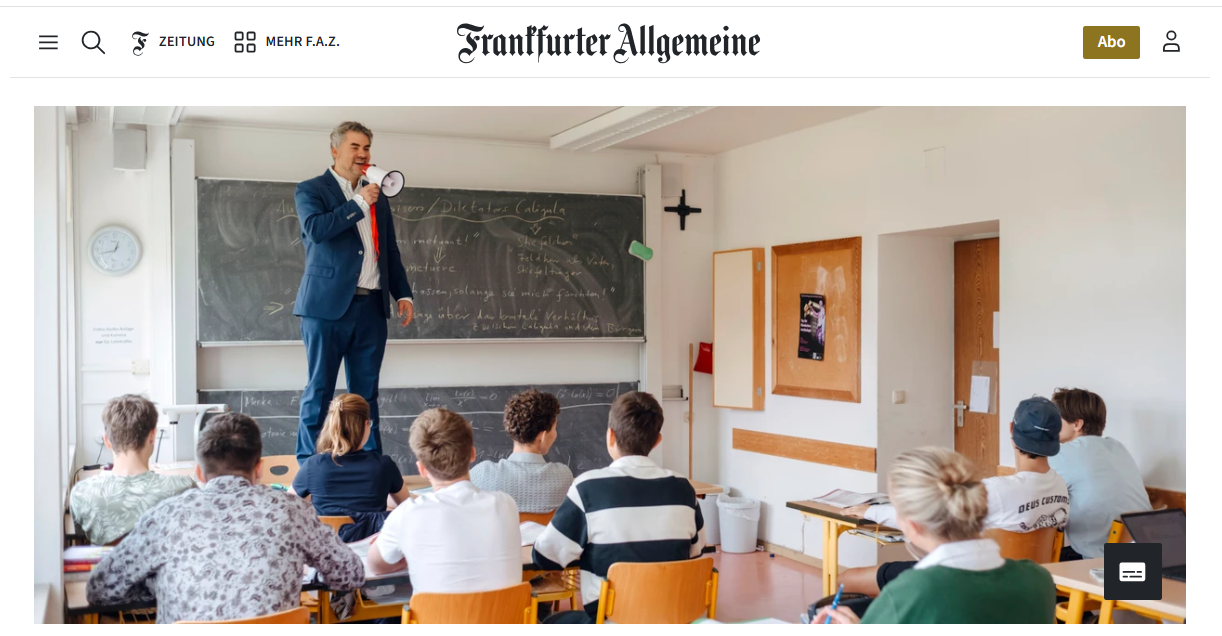
Dr Michael Stierstorfer in the reportage by Uwe Ebbinghaus, Schulbesuch in Bayern “Was heißt Glaube auf Lateinisch”, Frankfurter Allgemeine Zeitung, 21 August 2026, phot. Maria Irl [source].
The renowned FAZ cultural journalist Uwe Ebbighaus wrote:
Seneca’s Wisdom for Today’s Politics In preparation, we had hoped to gain an insight into ‘advanced Latin’. First, we observe Magdalena Kusterer’s basic-level class, followed by Michael Stierstorfer’s advanced-level class. The translation work is dealt with almost like basic arithmetic, while textual interpretation takes centre stage.
Advanced Latin Class with Michael Stierstorfer Michael Stierstorfer, who has been known to dress up as Caesar and climb onto his desk to call out through a megaphone, ‘Tacete omnes!’ (‘Silence, everyone!’), projects scenes from Robert Schwentke’s Seneca onto the wall during his lesson on De ira. The scenes show John Malkovich in the title role alongside his pupil Nero.
Throughout the lesson, he repeatedly offers tips for the final school-leaving examination, encourages the students to memorize Latin quotations, and asks them to pass on cautionary passages from Seneca’s work On Anger to a contemporary politician as advice. The lesson flies by thanks to Stierstorfer’s teaching style, which engages the students in a very direct and immediate way.
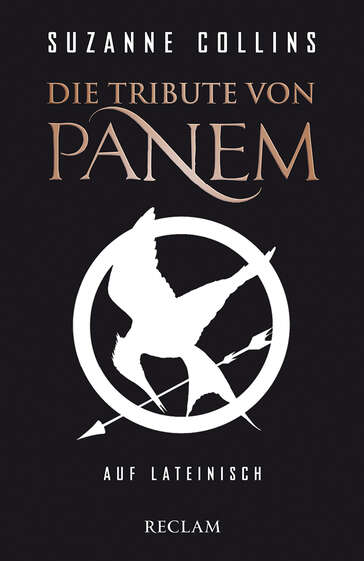
During the COVID-19 pandemic, he kept himself occupied by translating The Hunger Games into Latin; the translation was subsequently published as a book by Reclam.
Book cover of Suzanne Collins’s The Hunger Games translated into Latin by Prof. Markus Janka and Dr Michael Stierstorfer [source].
On this translation see also the lecture by Prof. Markus Janka and Dr Michael Stierstorfer at the International Students’ and PhD Students’ Conference “Antiquity Today: Fascinating, Relevant, Beneficial”: https://www.youtube.com/watch?v=QW1Ck_Tsgag&.
Große Reportage über unsere Kooperationsschule und deren Lateinunterricht inklusive Antikenrezeption
Unsere Kooperationsschule, das Gymnasium Schäftlarn in München, wurde von einem Journalisten und einer Fotografin der Frankfurter Allgemeinen Zeitung (FAZ) besucht – als einzige Schule in ganz Bayern – und erhielt ein vielseitiges Portrait mit direkten Einblicken in den Schulalltag.
Hierbei wurde auch der Lateinunterricht von unserem Kooperationspartner Dr. Michael Stierstorfer besucht, der eine Schulstunde in seinem Latein Oberkurs zum Thema der Rezeption von Seneca im Film „Seneca“ (Robert Schwentke, 2023) und in der aktuellen Politik hielt. Dabei analysierten die Schülerinnen und Schüler nicht nur Texte aus Senecas „De ira“, sondern setzten diese mit Filmbildern und Filmszenen aus dem gerade genannten Film und auch mit der aktuellen Politik in Deutschland und in anderen Ländern in Verbindung.
In Gruppen suchten die Schülerinnen und Schüler passende Zitate für aktuelle deutsche und internationale Politiker heraus, die sie ihnen als Tipps für deren Politik symbolisch mitgaben.
Dr. Michael Stierstorfer in der Reportage von Uwe Ebbinghaus, Schulbesuch in Bayern „Was heißt Glaube auf Lateinisch?“, Frankfurter Allgemeine Zeitung, 21 August 2026, Fot. Maria Irl [source].
Dazu schrieb der renommierte FAZ-Feulleton-Journalist Uwe Ebbighaus:
Seneca-Weisheiten für die Politik von heute In der Vorbereitung hatten wir uns einen Einblick in „Latein für Fortgeschrittene“ gewünscht. Zuerst sehen wir den Grundkurs von Magdalena Kusterer, dann den Leistungskurs von Michael Stierstorfer. Die Übersetzungsarbeit wird dabei fast wie das kleine Einmaleins abgehandelt, die Textinterpretation steht im Vordergrund.
Lateinleistungskurs bei Michael Stierstorfer Michael Stierstorfer, der sich auch schon mal als Caesar verkleidet und auf sein Pult steigt, um mit dem Megafon ‚Tacete omnes!‘ (Schweigt alle!) auszurufen, projiziert während seiner Unterrichtseinheit zu De ira-Szenen aus dem Seneca-Film von Robert Schwentke an die Wand, die John Malkovich in der Titelrolle mit seinem Schüler Nero zeigen.
Immer wieder gibt er in der Stunde Tipps für das Abitur, ermutigt zum Auswendiglernen von lateinischen Zitaten und fordert seine Schüler dazu auf, mahnende Stellen aus Senecas Zorn-Schrift einem aktuellen Politiker mit auf den Weg zu geben. Die Stunde vergeht wie im Flug dank Stierstorfers die Schüler ganz unmittelbar ansprechenden Unterrichtsführung.
Die Zeit während der Corona-Pandemie hat er sich mit der Übersetzung der Tribute von Panem ins Lateinische vertrieben, sie ist bei Reclam als Buch erschienen.
Buchdeckel von Suzanne Collins Die Tribute von Panem, übersetzt ins Lateinische von Prof. Markus Janka und Dr. Michael Stierstorfer [source].
Zu dieser Übersetzung siehe von Prof. Markus Janka und Dr. Michael Stierstorfer an der Tagung für Internationale Studierende und Doktoranden „Antiquity Today: Fascinating, Relevant, Beneficial“: https://www.youtube.com/watch?v=QW1Ck_Tsgag&.
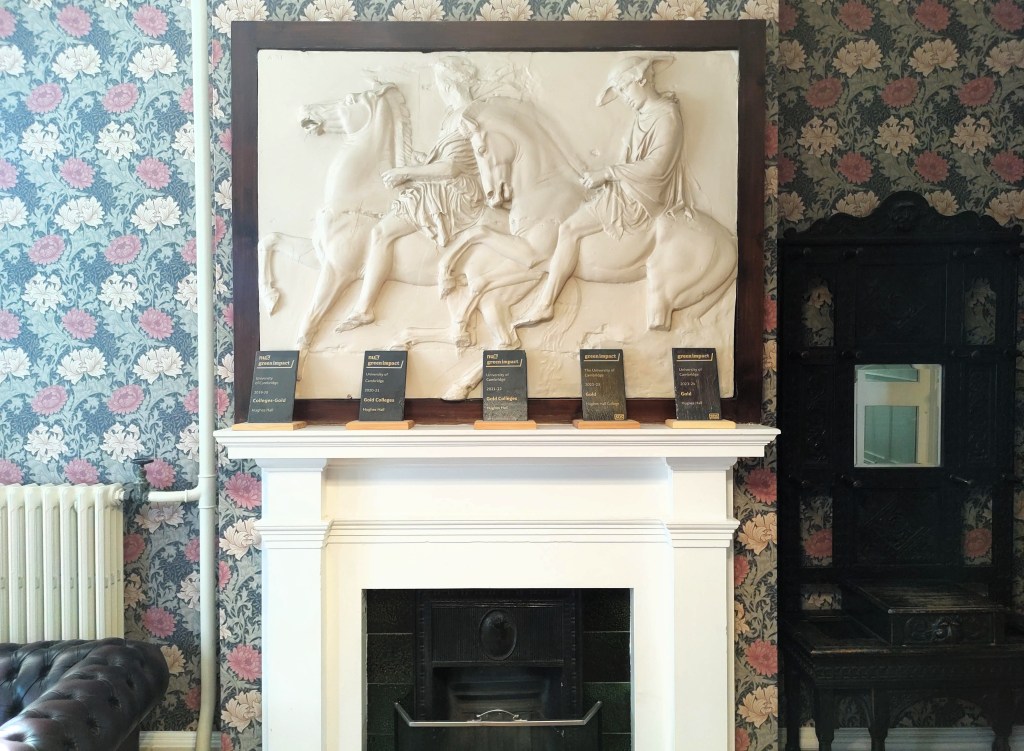
We are most pleased to share the great news. Dr Sonya Nevin has joined Hughes Hall as a by-fellow (a research post). Dr Nevin is also a supervisor (an academic post for small group teaching), and a tutor (a pastoral care role).
Hughes Hall is one of the 31 colleges that belong to the University of Cambridge. It accepts postgraduate and mature undergraduate students, with a very international community. It has a strong showing in education, law, and finance, though it takes students from other subjects too. It prides itself on developing students’ skills and having good contacts with the wider world.
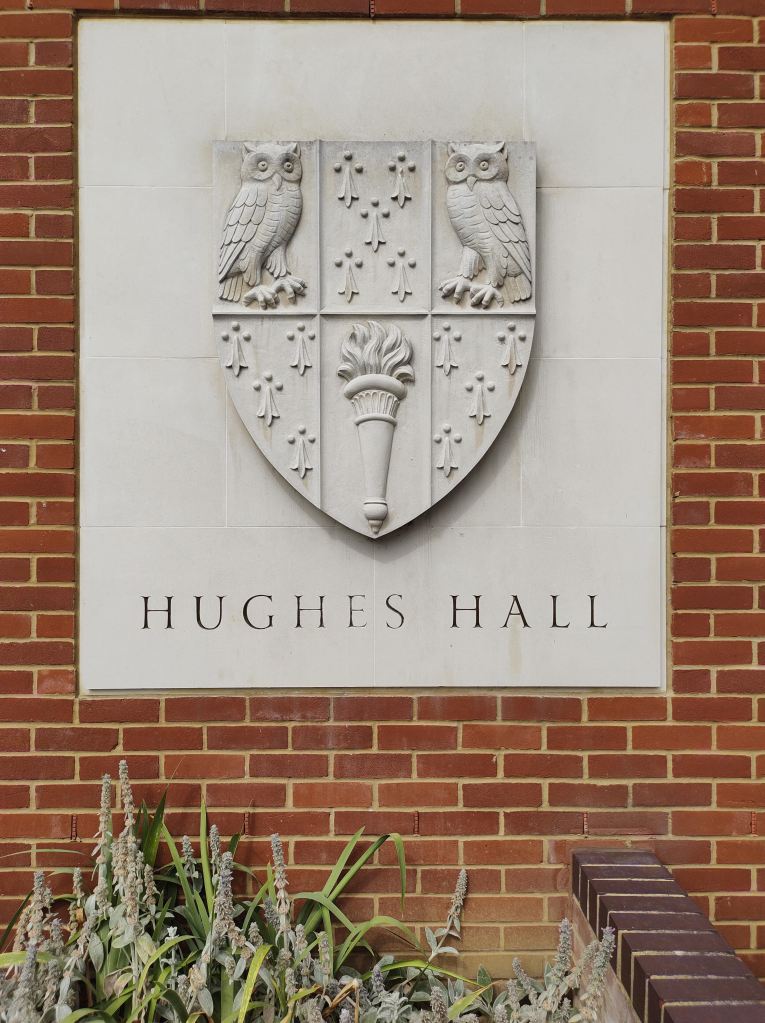
Margaret Wileman Building, the main building of the Hughes Hall, designed by William Fawcett, inaugurated in 1895. Phot. Sonya Nevin.Hughes Hall shield with the owl, symbol of wisdom, and the torch, sign of enlightenment and truth. Phot. Sonya Nevin.
Acknowledgements We are most grateful to Professor Katarzyna Marciniak and her team at the University of Warsaw for this opportunity to publish coursework by University of Roehampton Study Abroad. Below statement and essay by international student Alexandria Kilmartin who joined us at Roehampton all the way from Australia.
***
My name is Alexandria Kilmartin, but I go by Alex, and I am a study abroad student at the University of Roehampton. When not abroad, I study at Macquarie University, in Sydney, Australia, where I am completing a double degree of a Bachelor of Arts, majoring in Ancient History and a Bachelor of Linguistics and Language Sciences. I am a first-generation University student in my family and when I complete my undergraduate studies, I am aiming towards completing a masters in either speech pathology or furthering my historical research studies. Personally, and in my leisure time, I enjoy reading novels, I love the beach and going on long walks and getting coffees with my friends. I decided to select the Art & Life in the Ancient World course at Roehampton because I have always loved and appreciated art, and I was intrigued in developing deeper ideas surrounding art in Antiquity. The course connected with my purpose and decision to select the University of Roehampton and its specific location in proximity to the British Museum, as it has been a dream of mine to visit.
The Art & Life in the Ancient World module has significantly impacted how I view, interpret and interact with ancient art and has helped me develop ideas and evolve concepts in my academic work. Winklemann’s ideas originally interested me because of his perception of aesthetic and beauty standards. His ideas are incredibly evident in society today and, drawing from personal experiences as a young woman, I feel the connection between beauty and (face) value. Many ideas that are elaborated on in my essay I personally resonate with and that is why I was and am so passionate about this topic. I wanted to acknowledge that ideas of beauty are multifaceted and that beauty is in the eye of the beholder. Having the opportunity to be able to publish my work is an incredible opportunity and I am honoured to have been considered for this. I believe that this opportunity will significantly help my career in an overwhelmingly positive way and help me take a step closer to achieving my academic goals of completing a masters, furthering my education and deeper understanding of the world.
To what extent can we apply Winckelmann’s ideas about beauty to small and portable functional objects from Classical Antiquity? Discuss with reference to at least two objects.
Johann Joachim Winckelmann (1717–1768) has provided valuable ideas and perspectives on aesthetic, beauty, knowledge and understanding in his 1764 publication History of the Art of Antiquity (Geschichte der Kunst des Alterthums, 1764).[1] Winckelmann has significantly contributed and inspired the classical archaeology discipline and study of neoclassical art. This essay will elaborate on how Winckelmann’s ideas about beauty can be successfully placed on humble, portable and functional objects. The pieces under discussion are a “Bronze Mirror with a support in the form of a draped woman” (mid-5th century BCE)[2] and secondly a “clay lekythos” (1st quarter of 5th century BCE) attributed to the Manner of the Haimon Painter.[3]
These functional objects are kept in the Metropolitan Museum of Art in New York and the study of these humble objects with reference to Winckelmann’s ideas can significantly contribute to an understanding of the importance of beauty juxtaposed to functionality, and if these concepts are exclusive. I will argue that Winckelmann’s ideas of subjective aesthetics can be used as a foundational assessment in attributing beauty and overall purpose. Specifically, that a more nuanced and less context-specific approach is required in assessing beauty and that functionality is more significant and equally as beautiful. There is scope for a more in-depth study of small finds in museum collections for a broader appreciation of ancient art and life.
Figure 1 Anton Raphael Mengs, Johann Joachim Winckelmann (1717–1768), ca. 1777, The Metropolitan Museum of Art, no. 48.141, Public Domain [source].
Winckelmann is commonly attributed as “a source of inspiration for neo-classical art in the late eighteenth and early nineteenth century” and is seen as the father of the classical archaeology discipline.[4] His History of the Art of Antiquity became a foundational text in neoclassical thought, shaping ideas about specific aesthetics and the idealized European body. Winckelmann believed that Greek art was the epitome of artistic creation and the experience of viewing it provoked joy. Based primarily on sculpture of the human physique, Winckelmann’s ideas are characterized by an unrealistic physical representation of the most elite and sophisticated Greek aesthetics. Winckelmann’s ideas assessed aesthetics in a philosophical and context specific manner that inspired subsequent generations of historians, artists and museum professionals. His publications encouraged enlightened intellectual inquiry on art history and philosophical aesthetics in eighteenth-century Germany. Classical scholar Katherine Harloe, for example, explores how Winckelmann’s ideas impacted German classicists from the 1840s.[5]
In my view, Winckelmann’s ideas provoke thoughtful discussions about ancient objects, their representations, and their surrounding context. The objects selected have been chosen because of their interaction with and representation of the human body, as well as their functional incorporation of movement. A key idea of Winckelmann’s “Rules of perspective” is that “[a]ll the arts have a double goal: they should give pleasure and at the same time instruct”.[6] This highlights that Winckelmann believed that something should be learnt from art. Thus, the objects under discussion are significant and I believe that the basic principles of Winckelmann’s ideas can be applied. Arguably, the rich historical, social and human interactions with functional material culture and the aesthetics of daily life are all ultimately beautiful and educational.
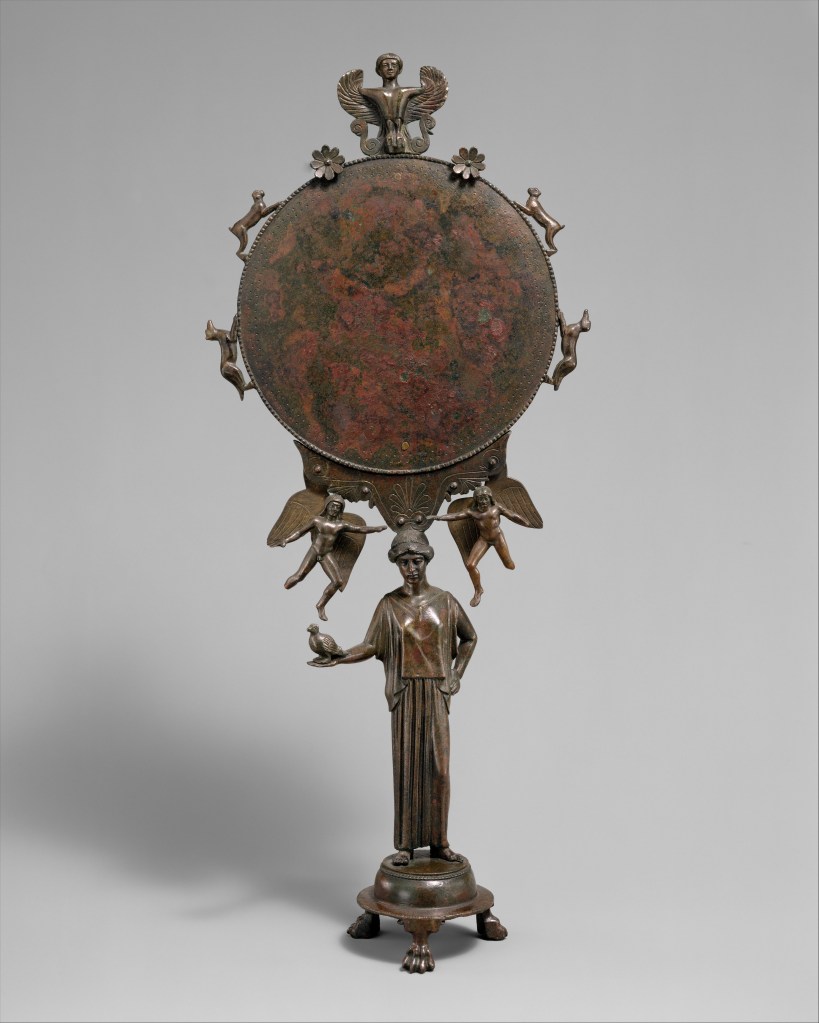
Figure 2 Greek, Argive bronze mirror with a support in the form of a draped woman, mid-5th century BCE, The Metropolitan Museum of Art (number 1972.118.78) [source].
The first object under analysis is a finely crafted bronze mirror from the mid-5th century BCE (Figure 2). The mirror incorporates a statuette of a three-dimensional female figure as a base that supports the mirror. The design of a statuette figure in a functional object is a “hallmark of Greek art”[7], thus I believe that this particular representation of the human body would be an object that Winckelmann’s ideas can be applied to. The mirror features a collection of lively elements such as a human figure as well as animal and mythological creatures. Winged Erotes fly above the female statue’s head. Surrounding the mirrored disk are symmetrical pairs of hounds chasing hares, leading to the top of the mirror where a part bird, part woman siren is perched. Made out of a bronze, approximately 40,4 cm heigh and weighing 0,9 kg, the mirror was found in an Argive grave. The object relates to the human body by sensory, visual and physical touch experiences and displays visual aspects that reflect the classical period and context in which it was made.
The imagery and simplistic action of the woman ultimately holding up the mirrored disk contributes to a deeper metaphor and symbolism of beauty and connects to Winckelmann’s ideas about aesthetics. The stance and posture of the female statuette supports the mirror, simultaneously supporting the female or user of the mirror in their quest for beauty and their interaction with their appearance. “Her serious expression and quiet stance are typical of the retrained early Classical statues that were created from about 480 to 450 BC”, according to the MET online entry.[8] This mirror preserves and perpetuates symbolism of an idea of beauty that must be obtained, societal standards and epitome of beauty and self image. The entirety of the object includes symbolic motifs of beauty and subconscious undertones of elements of feminity. The object itself serves a functional purpose of providing a reflection. The statuette that supports the mirror is beautiful and delicate as it does reflect and reminds the viewer of monumental statues in stone, such as marble statues of Archaic korai dedicated on the Athenian Acropolis. Although the statuette aesthetically contributes to the overall beauty of the mirror, ultimately the most beautiful person is the user of the mirror and the human whose reflection is present. The functionality of the mirror provides a valuable and non-context specific idea of beauty that can be related to any human who uses the mirror.
Figure 3 Attributed to the manner of the Haimon Painter, Greek, Attic lekythos, 1st quarter of 5th century BCE, The Metropolitan Museum of Art (number 41.162.226) [source].
The second object chosen for discussion in reference to Winckelmann’s ideas is a cursorily decorated oil flask, a lekythos from ca. 480 BCE (Figure 3). The lekythos depicts a four-horse chariot, a charioteer and a warrior. Originating from the late Archaic period the medium used is terracotta and the technique is black figure. This is a small container of oil that measures approximately 18 cm. The lekythos is connected to Athens’ international trade and to how “between ca. 500 to 450 BCE Mediterranean markets were flooded with low grade products in black figure”.[9] The lekythos depicts the Apobates Race, in which a fully armed warrior, the apobates, jumped off a four-horse chariot, ran alongside it, and mounted the charion again. The image is symbolic of athletic achievement and victory at the Panathenaia, Athens’ most celebrated religious festival. Thus, the iconography is connected with Winckelmann’s ideas about the human body and its capabilities. Unlike the finely crafted and detailed sculptures in which Winckelmann’s views are mostly applied to, the lekythos lacks detail and refinement in its decoration. Nonetheless, it depicts a most significant Athenian cultural event and that is what makes it culturally important and pleasing to the eye.
Although Winckelmann’s ideas may have only specifically been intended for sculpture and the human body, particular ideas about beauty can be reimagined also in the context of humble and everyday functional objects. Ultimately, these objects immortalize beauty and remind us that beauty is in the eye of the beholder. Aesthetically, the mirror statuette is more beautiful than the sketchy drawing on the oil flask. The human figures on the lekythos lack any anatomical details. Winckelmann does state that “[t]he most beautiful human body in our world would probably not resemble the most beautiful Greek body”[10] and argues that the idealistic bodies sculpted were acquired through their lifestyle. To me, this signals an elite culture of training in the gymnasium and enjoying healthy food ways. Both objects, the mirror and the lekythos, require functional and bodily interactions when placed in the hands of ancient participants. More importantly perhaps, both objects related to ancient beautification and body care. A woman presumably saw her reflection in the mirror. Another person probably used the olive oil in the lekythos to spice food and/or for skin care after exercising. The mirror signals a pleasing appearance where one acts and sculpts one’s appearance to fit the cultural context of beauty, presumably as in monumental religious objects such as the Acropolis korai. Similarly, the lekythos depicts a male in his prime physical fitness who is able to run besides horses. The lekythos also incorporates the action of achievement and greatness which embodies accomplishment, the human spirit and its idealism.
Winckelmann’s formulations encompass multiple imaginary ideas about perfection and the capabilities of the (male) human body. They may apply to a beautifully crafted mirror handle and a drawing of a warrior-athlete, even when both these representations of the human form are small scale and entangled with the function of their respective objects. Surely, Winckelmann’s ideas are rigid and context-specific. Nonetheless, they hold merit and can be applied to small and portable functional objects from ancient art and life. Although these objects are not grand and fine artistic creations, they represent how functionality and beauty need not be mutually exclusive. Winckelmann’s ideas can serve as a platform to nuance the study of daily-life objects from the ancient world, beyond monumental sculpture and architecture that tend to receive masses of scholarly attention.
[1] Johann Joachim Winckelmann, “History of the Art of Antiquity”, in: Johann Joachim Winckelmann and David Carter, Johann Joachim Winckelmann on Art, Architecture, and Archaeology, trans., introduction and notes by David Carter, Rochester (NY): Camden House, 2013, pp. 32–55, 127–128.
[4] Amy C. Smith, “Winckelmann, Greek Masterpieces, and Architectural Sculpture. Prolegomena to a History of Classical Archaeology in Museums”, in: Achim Lichtenberger and Rubina Raja, eds., The Diversity of Classical Archaeology, “Studies in Classical Archaeology” 1, Turnhout: Brepols, 2017, pp. 1–33, via Central Archive at the University of Reading, https://centaur.reading.ac.uk/70169/1/Smith2018_preprint.pdf (accessed 3 November 2025).
[5] Eric M. Moormann, “[Review of] Winckelmann and Curiosity in the 18th-Century Gentleman’s Library: Christ Church Upper Library, 29 June – 26 October 2018 by Cristina Neagu, Katherine Harloe, and Amy Claire Smith”, Bryn Mawr Classical Review (2019) 2019.02.20, https://bmcr.brynmawr.edu/2019/2019.02.20 (accessed 3 November 2025).
[6] Johann Joachim Winckelmann, “History of the Art of Antiquity”.
[7] “Bronze mirror with a support in the form of a draped woman”, The Metropolitan Museum of Art.
[8] Ibidem.
[9] Jenifer Neils and Peter Schultz. “Erechtheus and the Apobates Race on the Parthenon Frieze (North XI–XII)”, American Journal of Archaeology, vol. 116, no. 2, 2012, pp. 195–200, DOI: 10.3764/aja.116.2.0195 (accessed 3 November 2025).
[10] Johann Joachim Winckelmann, “History of the Art of Antiquity”.
Moormann, Eric M. “[Review of] Winckelmann and Curiosity in the 18th-Century Gentleman’s Library: Christ Church Upper Library, 29 June – 26 October 2018 by Cristina Neagu, Katherine Harloe, and Amy Claire Smith”, Bryn Mawr Classical Review (2019) 2019.02.20, https://bmcr.brynmawr.edu/2019/2019.02.20 (accessed 3 November 2025).
Neils, Jenifer and Peter Schultz. “Erechtheus and the Apobates Race on the Parthenon Frieze (North XI–XII)”, American Journal of Archaeology, vol. 116, no. 2, 2012, pp. 195–200, DOI: 10.3764/aja.116.2.0195 (accessed 3 November 2025).
Orrells, Daniel “[Review of] Winckelmann and the Invention of Antiquity: History and Aesthetics in the Age of Altertumswissenschaft. Classical presences by Katherine Harloe”, Bryn Mawr Classical Review (2014) 2014.12.06, https://bmcr.brynmawr.edu/2014/2014.12.06 (accessed 3 November 2025).
Smith, Amy C. “Winckelmann, Greek Masterpieces, and Architectural Sculpture. Prolegomena to a History of Classical Archaeology in Museums”, in: Achim Lichtenberger and Rubina Raja, eds., The Diversity of Classical Archaeology, “Studies in Classical Archaeology” 1, Turnhout: Brepols, 2017, pp. 1–33, via Central Archive at the University of Reading, https://centaur.reading.ac.uk/70169/1/Smith2018_preprint.pdf (accessed 3 November 2025).
Winckelmann, Johann Joachim “History of the Art of Antiquity”, in: Johann Joachim Winckelmann and David Carter, Johann Joachim Winckelmann on Art, Architecture, and Archaeology, trans., introduction and notes by David Carter, Rochester (NY): Camden House, 2013, pp. 32–55, 127–128.
Post by Alexandria Kilmartin, prepared under tutorship by Dr Katerina Volioti, placed by Olga Strycharczyk