Blog for the international research project "Our Mythical Childhood… The Reception of Classical Antiquity in Children’s and Young Adults’ Culture in Response to Regional and Global Challenges", financed by the ERC Consolidator Grant led by Prof. Katarzyna Marciniak, Faculty of "Artes Liberales" of the University of Warsaw. Team members: Prof. Susan Deacy and Steve K. Simons, University of Roehampton; Prof. Elizabeth Hale and Dr Miriam Riverlea, University of New England; Prof. Lisa Maurice and Dr Ayelet Peer, Bar-Ilan University; Prof. Daniel A. Nkemleke, Dr Divine Che Neba and Dr Eleanor A. Dasi, University of Yaoundé I; Dr Elżbieta Olechowska, Dr Hanna Paulouskaya, Dr Sonya Nevin, Dott. Edoardo Pecchini, Marta Pszczolińska, Angelina Gerus and the Project Officers: Magdalena Andersen, Maria Makarewicz, and Olga Strycharczyk from the Faculty of "Artes Liberales" UW.
Attention! Children’s book full of mythical monsters!
“Greece! Rome! Monsters!”, written by John Harris and illustrated by a Southern California illustrator – Calef Brown, was published in 2002 by The J. Paul Getty Museum (Los Angeles). The official age range of the target audience is between 9-12 years old.
In the book we find twenty different monsters from mythology (described in an alphabetical order), such as Basilisk, Centaur, Cerberus, Medusa, Minotaur, Pegasus, Sirens, etc. The authors often refer to the famous myths and well known works of literature and art in which the creatures were presented.
See more:
Another publication by John Harris, titled “Strong Stuff: Herakles and His Labors” – link
“Greece! Rome! Monsters!” in Barbara Weinlich’s article “The Metanarrative of Picture Books: ‘Reading’ Greek Myth for (and to) Children” (in: “The Reception of Ancient Greece and Rome in Children’s Literature: Heroes and Eagles”, ed. by Lisa Maurice) – link
Dorota Rejter is a PhD student at the Faculty of “Artes Liberales” and a team member of the Our Mythical Childhood project.
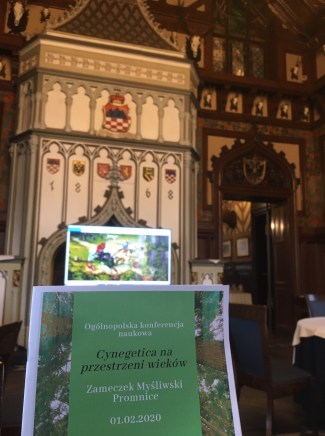
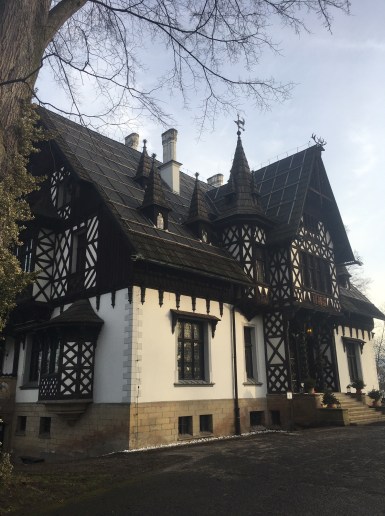
On the 1st February 2020 I had the pleasure to give a speech about the “Image of the Goddess of Hunting – Artemis (Diana) in Contemporary Children’s and Young Adults’ Literature Inspired by Antiquity” at a scientific conference “Cynegetica Over the Centuries” that took place in Hunting Palace in Promnice (Poland).
The conference speakers were presenting numerous texts, thanks to which we could get to know the hunting practice in ancient times and later, through the centuries. We were also focusing on the changing nature of hunting expeditions, that today are mostly interpreted and described in works of literature through the prism of ethics and issues related to ecology and the protection of animal rights.
Conference booklet and in the background – beautiful palace interiors
Based on the study of the transformation of the image of mythological female characters in contemporary children’s and young adults’ literature (conducted for the needs of my doctoral dissertation), I chose some interesting examples of the reception of Artemis (Diana) and presented them to the audience. I focused mainly on the new contexts in which the authors decide to place the character of Artemis, on the metamorphoses of her image (including her modern attributes), as well as all the new abilities linked to her character.
In my presentation I analyzed the character of Sidney “Sid” Madison (modern incarnation of Artemis) from the fantasy series “Girls of Olympus” (2008) written by Italian author Elena Kedros, and the character of Artemis from the comic book “Artemis. Wild Goddess of the Hunt” (2017) by George O’Connor. Presenting this two characters I was trying to prove that Artemis in contemporary children’s literature is often presented as a modern character, detached from the ancient sources, and that her creations concentrate mainly on her strong personality, independence, her respect to animals, and her will to protect the nature and innocent people.
Sidney “Sid” Madison
Artemis
Sidney “Sid” Madison
Artemis
I would like to thank the conference organisers for the invitation, especially Dr. Edyta Gryksaand Dr. Patrycja Matusiak from the University of Silesia.
Read more:
The official website of the Hunting Lodge in Promnice – link
The official website of the Institute of Literature. Faculty of Humanities at the University of Silesia – link
The official website of the Castle Museum in Pszczyna – link
The official website of the Polish Philological Society (Katowice branch) – link
Post prepared by Dorota Rejter
All the photos were taken by the author of this post.
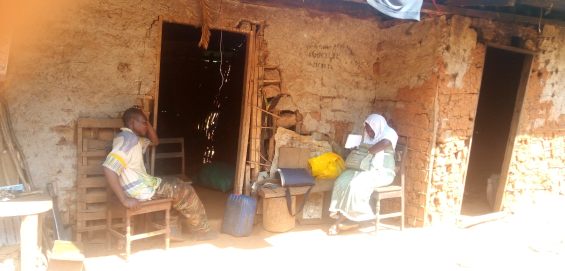
Aïcha Larissa Saïd (see phot. below) from the University of Yaoundé 1 in Cameroon, one of the most valiant students in the Project, went to the villages of Awae, Ngat, Ekekelan, and Nkolesong in the Centre region of Cameroon (Nov. 29–Dec. 1, 2019), to collect myths.
She met with several people of ages from 60 to 92, who are considered as some of the most important custodians of the Beti Fang culture. Beti Fang is one of the biggest ethnic groups in Cameroon. They extend even to neighboring Gabon and Equatorial Guinea. The following are some images, indicating a live situation of myth narration, and questions from Larissa.
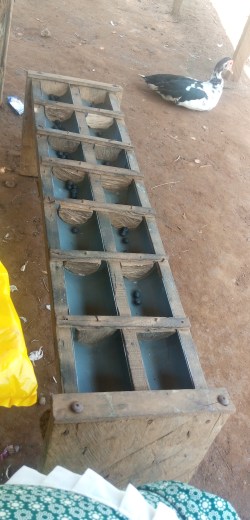
Larissa is planning another trip to the distant Eastern region of Cameroon for the same exercise. Also, in January 2020, she will travel to neighboring Chad, to explore the area and collect myths which we believe have never really been told to anyone. Below you can see a famous traditional instrument of the Beti-Fang:
As you can see in the photos, Larissa’s head is covered as she listens to one of the narrators. This is a specific cultural index for women from a Muslim background, who are often required to cover their heads when in the presence of men. Larissa comes from the Northern region of Cameroon, and is from a Muslim family, even though she is a practicing Christian.
Follow us to discover more on the fascinating storytelling tradition in Cameroon!
“Antiquity Quest” is a card game for 2 to 8 players (ages 10+), created by Grandpa Beck’s Games and illustrated byApryl Stott. The game box contains: 6 player reference boards, set of 220 cards (antiquity cards, treasure cards, character cards), score pad, and a rulebook:
In the game the players become “prospective” archaeologists, who are searching for the stolen artefacts from ancient civilisations, trying to collect as many collections (sets of cards) as they can. Who becomes the owner of the most precious sets of objects, wins!
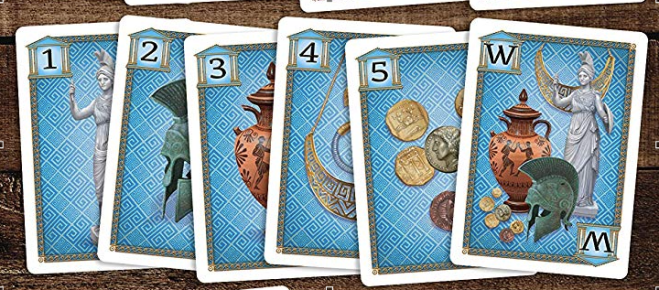
The sets of cards are six different ancient civilisations. We can find there some objects related to Ancient Egypt and Ancient Greece. There are for example: ancient coins, an ancient vase, ancient jewellery, an ancient helmet, and the statue of Athena:
Set of cards [source]Ancient Greece – set of cards [source]You can check the rules of the game on the Grandpa Beck’s Games’ website (link) or you can watch the short video below:
Post prepared by Dorota Rejter
See more:
The official website of Grandpa Beck’s Games’ website – link
Do you remember our post about the upcoming “GODs’ School” animation project by Gaylord Cuvillier Libessart? We wish to announce that the two first episodes of the series are already out on YouTube!
In the first pilot episode, we get to know all the Olympic Gods and Goddesses, as well as and the mythical monsters, who start a new year in the “Mount Olympus” school. The main character of the episode is Eris who always gets in trouble:
The second episode is titled “The New Olympian” and it is dedicated to the character of Paris, who joins the school:
“Sapiens: Human History…” is a family card game created by a Spanish project Londji, with beautiful illustrations by Sebastian Serra known mainly as a children’s books illustrator. It contains 7 sets of cards showing families from different ages of history. The rules are simple – who collects all the members from one family wins!
Box of cards “Sapiens: Human History Card Game Multicoloured” [source]
Two families come from the ancient times – one from the Ancient Egypt, the second one from the Ancient Rome. We can see there for example the Great Sphinx of Giza, the Roman Senate, and the Senatus Populusque Romanus flag:
Two sets of cards – families from the Ancient Egypt and the Ancient Rome [source]
Full set of “Sapiens: Human History…” cards [source]
See the animation about “Ulysses” toy created by Londji: https://vimeo.com/210416637 (he travels to Ithaca and meets the Sirens and the Cyclops on his way)
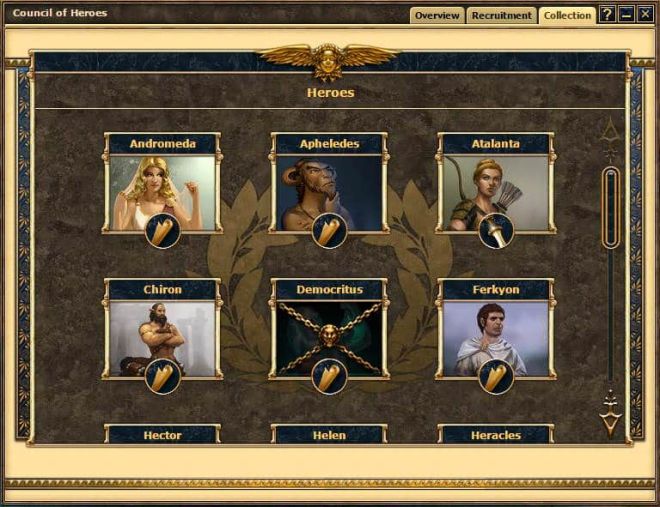
“Grepolis” is a free on-line strategic game created in 2009 by InnoGames GmbH, in which the main task is to build a city (polis), create a huge army, and finally expand your lands and conquer other islands. During the game you can operate with various materials that help you build houses, temples, and famous ancient buildings. You can also enter into alliances with the great Greek gods such as (inter alia) Zeus, Athena, and Poseidon, and mythical monsters. The game developers are constantly introducing some new boards and taking care of the game development, adding new characters and features. Below you can find some screens from the game and its trailer in English:
Log in page – Polish version of the game [source]Description of Zeus character [source]Council of Heroes [source]
Today we wish like to present you our recent discovery – the book series “So you think you’ve got it bad?” by Chae Strathie (author) and Marisa Morea (illustrator), published by Nosy Crow Ltd in collaboration with the British Museum in 2019. It is recommended for the children in the age of 5-8.
In the series we can find three interesting publications related to Antiquity: about children’s life in Ancient Greece, Ancient Rome, and Ancient Egypt. They present the ancient culture and history to the young readers in a simple and accessible way, mainly through the fun facts and colourful illustrations. All the parts of the series are constructed in a similar way, so the children can get to know about, for example, the clothes & hairstyles, the family time, home, education, food & diet, health & medicines, myths & legends, Ancient Gods, fun and games. At the end of the books they can also find helpful glossaries.
ISBN 9781788004794. Cover (source)ISBN 9781788004756. Cover (source)ISBN 9781788004794. Chapter about the myths and legends, Ancient Greece edition (source)
The main topic of this year’s competition is “Ecology” in relation to the Ancient culture of Greece and Rome.
The participants should consider how they want to present the main topic in their works and what theme to choose, e.g. the myth of Arcadia, heroes of mythology working for the protection of the environment, Cleopatra praising ecological cosmetics, etc.
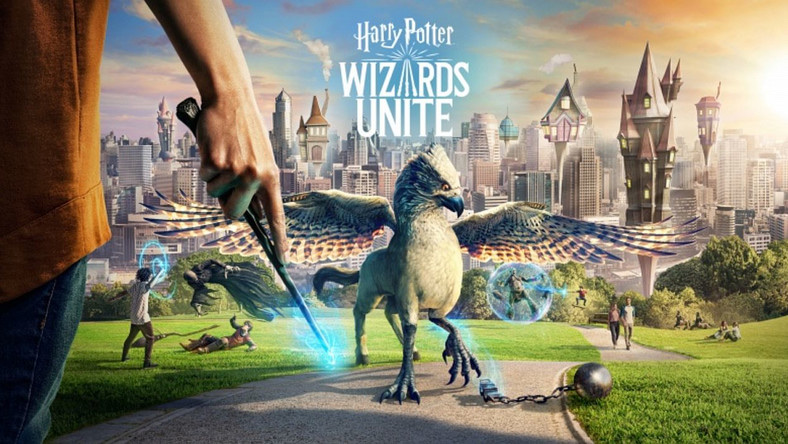
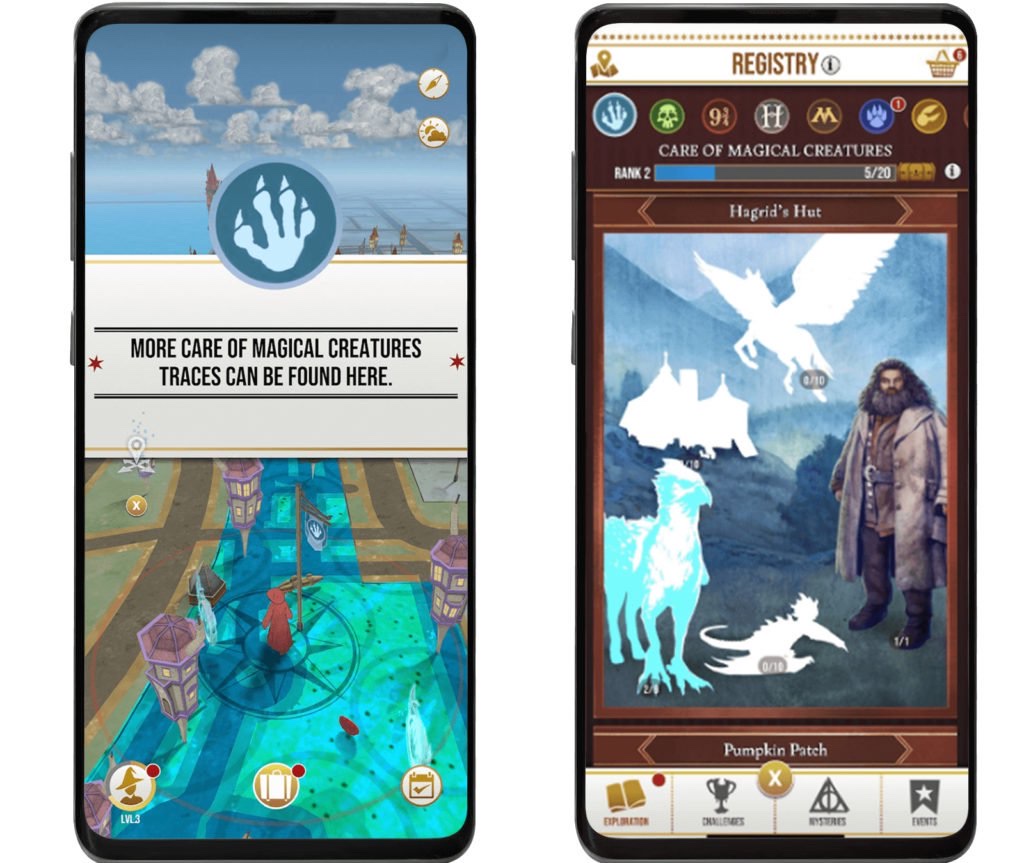
After the great success of “Pokémon GO” (2016), Niantic – the world famous American software development company, decided to create another mobile game based on the augmented reality. It is “Harry Potter: Wizards Unite“ (the joint producers are: Portkey Games,Warner Bros. Interactive Entertainment,WB Games, Inc.):
In the game the players become the members of the Statute of Secrecy Task Force, who is taking care of fixing the negative consequences of a catastrophe that took place between the Wizards’ and Muggles’ worlds. In its effect, some traces of magic started to appear in the “normal” world, risking to reveal all the magical secrets. In the game, while walking around the city with their mobile phones, the players try to remove magic items (“foundables”) from the Muggles’ world, as well as they fight against the magical beasts, enter the inns, greenhouses, and fortresses.
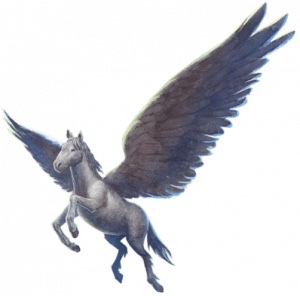
Among all the creatures we can find while playing the game, there are of course the mythical characters form the Care of Magical Creatures (a category in the Registry of Harry Potter Wizards Unite) such as for example Pegasus, the Centaur (Firenze), Phoenix and Hippogriff. As soon as we find them, we can return them to their proper Location in the Registry, such as the Forbidden Forest, Pumpkin Patch or Hagrid’s Hut.
Below we are presenting you some examples of their images and interactions related to their presence in the game.















 Our Mythical Childhood Blog


